Sixtiers (Shistdesiatnyky)
Шістдесятники
A generation of Ukrainian artists, writers and intellectuals who emerged during the post-Stalin Thaw and pushed back against imposed Socialist Realism by reconnecting with Ukrainian folk form, Byzantine and Cossack-era sources, and European modernism. Centred in Kyiv on the Club of Creative Youth 'Suchasnyk' (founded 1959–62), the circle included Alla Horska, Opanas Zalyvakha, Halyna Sevruk, Liudmyla Semykina and Veniamin Kushnir. Most were expelled from official structures, blacklisted or imprisoned after the 1965 and 1972 waves of arrests, and much of their work was destroyed or hidden until the late 1980s.
Artists of the Movement
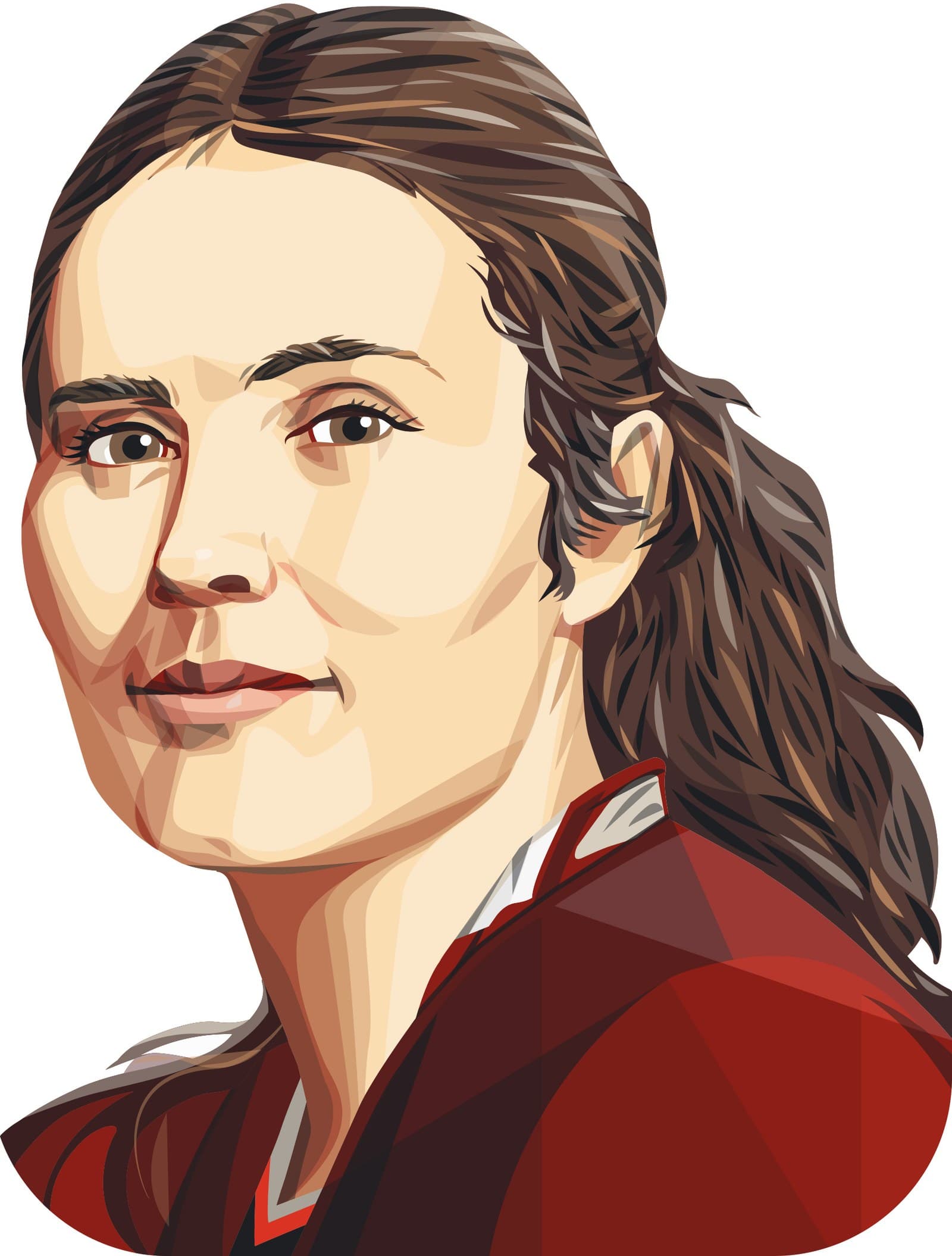
Tetiana Yablonska
1917–2005
Tetiana Yablonska was one of the defining painters of twentieth-century Ukraine, whose sixty-year career ran from prize-winning Socialist Realist canvases to intensely personal late pastels. Trained in Kyiv under Fedir Krychevskyi, she won three USSR State Prizes yet repeatedly collided with the Party over its control of art. Her 1969 canvas 'Youth' and her folk-inflected paintings of the 1960s mark her as one of the artists who reopened Ukrainian painting to something other than official doctrine.
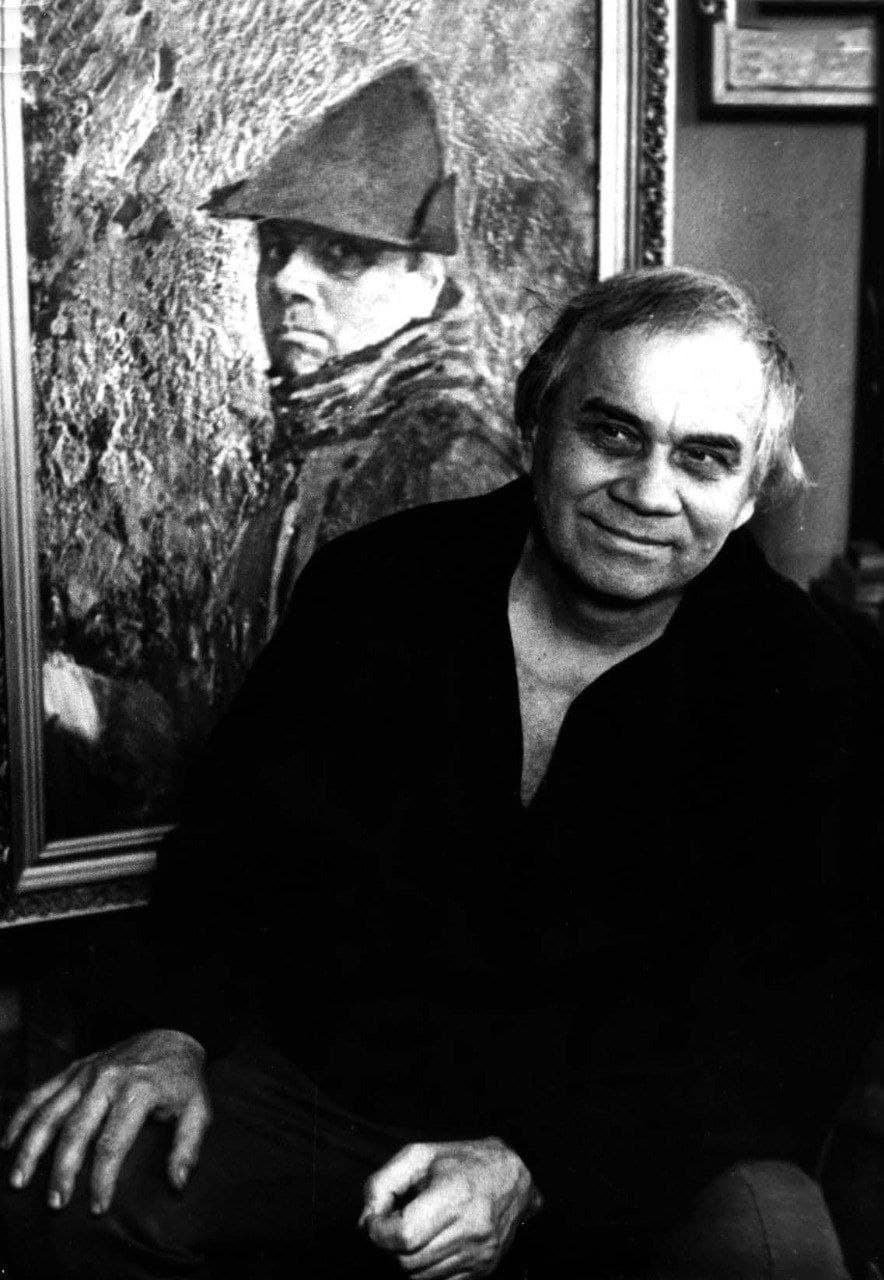
Viktor Zaretskyi
1925–1990
Viktor Zaretskyi (1925–1990) was a Ukrainian painter, monumentalist and teacher, husband of Alla Horska and one of the leaders of the Sixtiers generation. After beginning with a socially observant Donbas miners' cycle he turned in the 1980s to an ornamental, gold-laden manner indebted to the Vienna Secession that earned him the nickname "the Ukrainian Klimt".
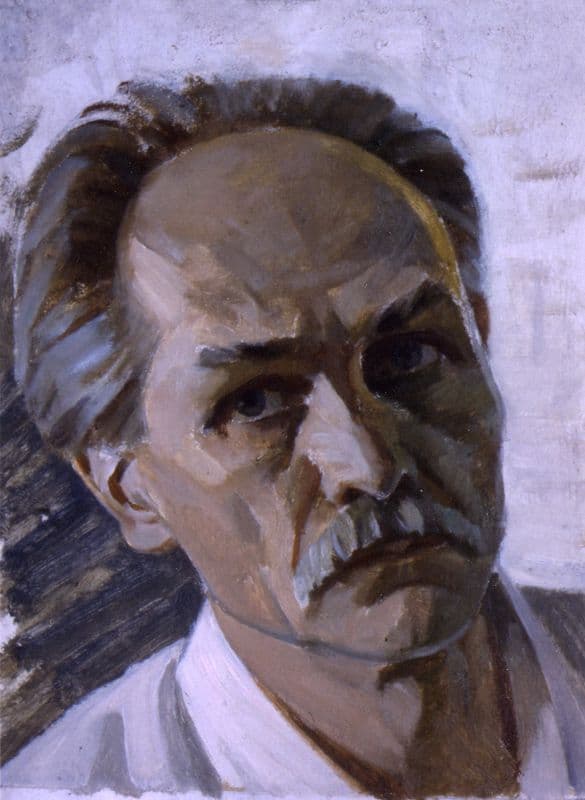
Veniamin Kushnir
1926–1992
Veniamin Kushnir was a Ukrainian painter and monumentalist, and one of the founders of the Kyiv Club of Creative Youth 'Suchasnyk' that gave the Sixtiers movement its centre. He fused Carpathian and Podillian folk form with modernist colour in paintings of motherhood, horses, musicians and Hutsul landscape, and was pushed to the margins of official art for his Ukrainian national convictions.
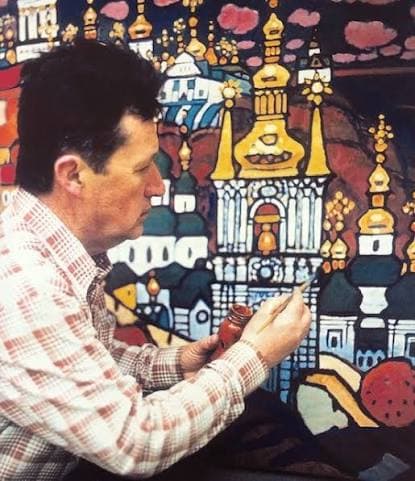
Yurii Khymych
1928–2003
Yurii Khymych was a Ukrainian architect turned painter, the outstanding master of the architectural landscape in twentieth-century Ukrainian art. By the late 1950s he was regarded as one of the finest watercolourists in the USSR, before abruptly switching to gouache, the medium of most of his mature work. Trained as an architect and steeped in years of copying church frescoes and mosaics, he painted what he called 'portraits of buildings' — flattened, open-coloured, black-contoured images closer to icons than to conventional views.
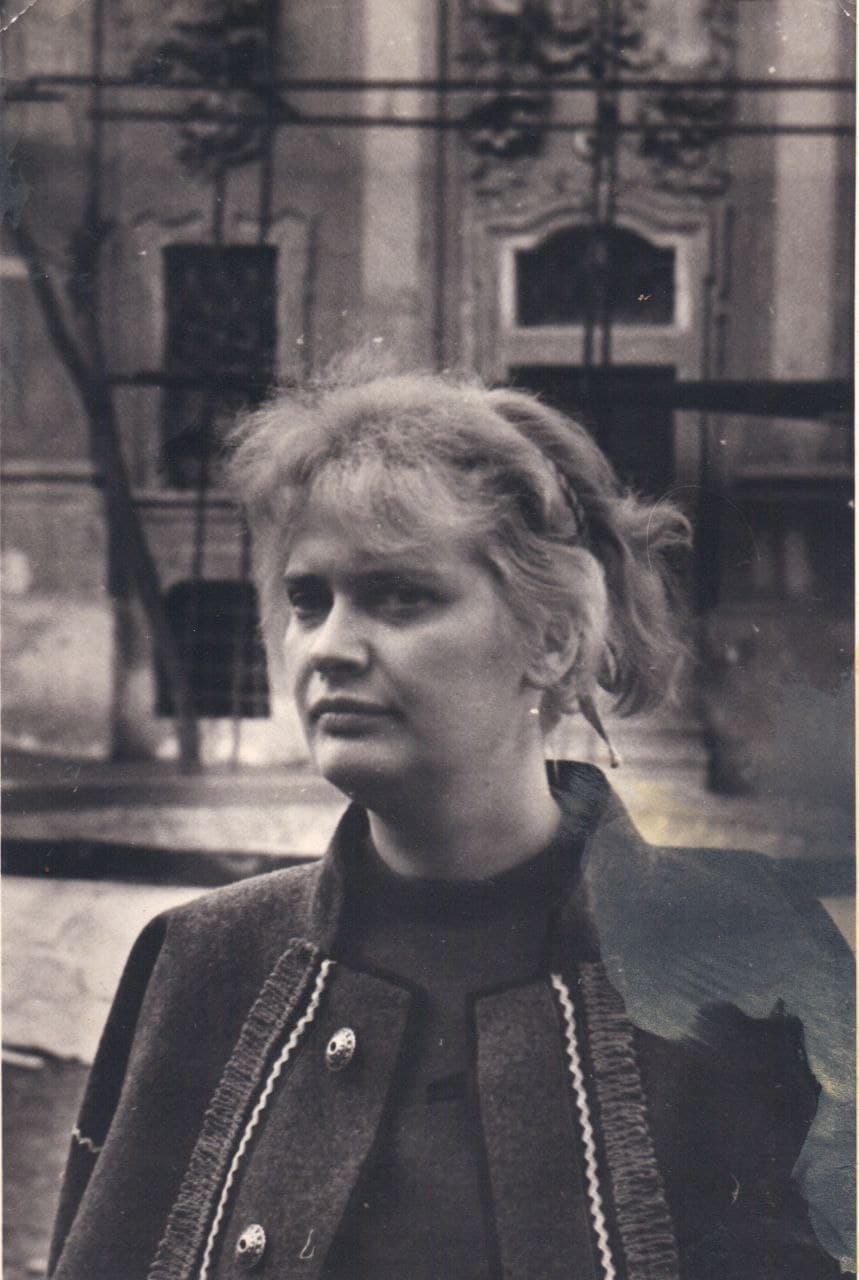
Alla Horska
1929–1970
Alla Horska (1929–1970) was a Ukrainian painter and monumentalist, and with her husband Viktor Zaretskyi a founder of the Club of Creative Youth "Suchasnyk" and a central figure of the Sixtiers and the dissident movement. Her output spans easel painting and portrait drawing, banned stage designs for Les Taniuk, and large mosaic and stained-glass cycles. She was murdered in Vasylkiv in November 1970 at the age of 41, and much of her monumental work has since been destroyed or is endangered.
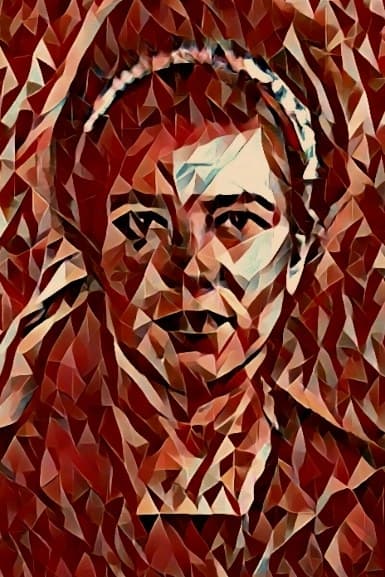
Liubov Panchenko
1938–2022
Liubov Panchenko (1938–2022) was a Ukrainian artist and fashion designer of the Sixtiers generation who worked across clothing design, textile appliqué, embroidery, watercolour, gouache and linocut, always through a Ukrainian ornamental idiom. Blacklisted by the Soviet authorities, she was never admitted to the Union of Artists and neither exhibited nor published for decades. She spent a month under Russian occupation in Bucha in 2022 and died on 30 April that year, aged 84, after starvation and exhaustion.
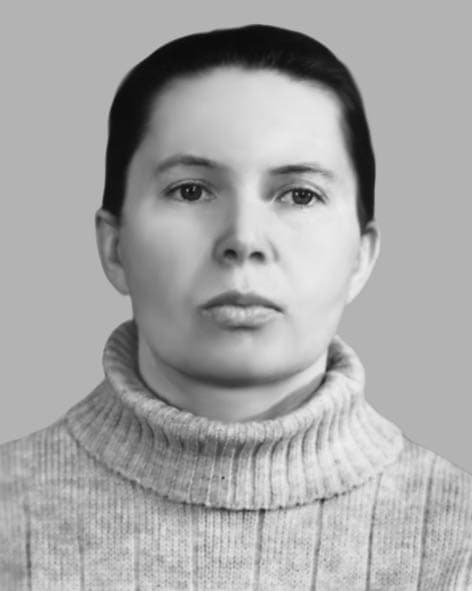
Nataliia Verhun
1938–2026
Nataliia Verhun was a Ukrainian painter based in Kharkiv, People's Artist of Ukraine (1997) and the daughter of the poet Ivan Vyrhan. Trained at the Repin Institute in Leningrad under Andrei Mylnikov, she devoted her career to the life of the Ukrainian village — harvests, field meals, self-portraits and seasonal still lifes. The Kharkiv Art Museum holds the largest body of her work, enlarged by a gift of some 400 pieces in 2025.
Works from this Movement
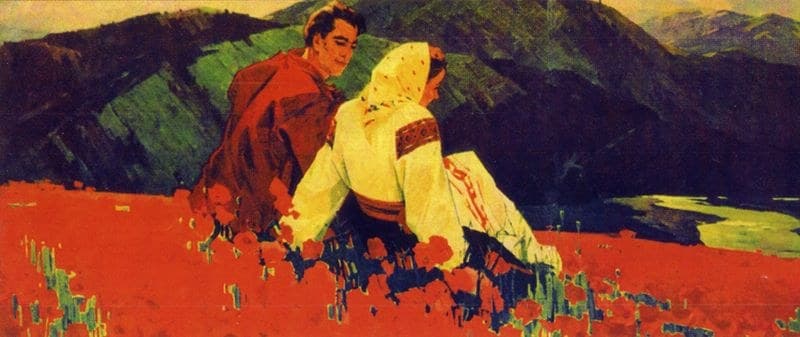
Red Poppies
Veniamin Kushnir
One of the two 1961 canvases, alongside 'Trembita', that established Kushnir's reputation among the Sixtiers, its blazing red poppies read at the time as an unmistakable statement of Ukrainian national feeling.
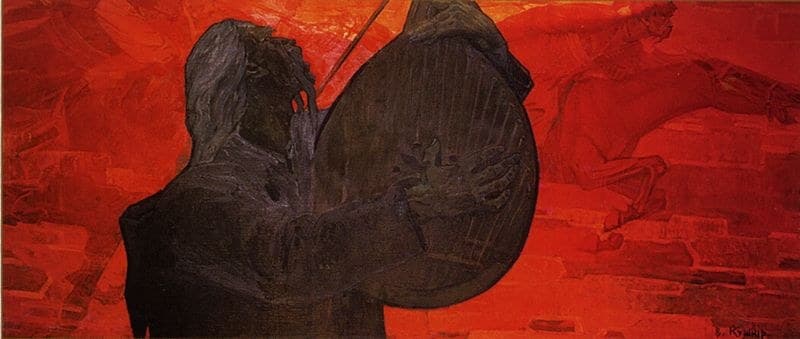
Kobza
Veniamin Kushnir
A kobzar with his instrument, one of Kushnir's recurring images of the blind wandering singer as bearer of Ukrainian memory, drawn in the flattened, contour-led manner he took from folk painting.
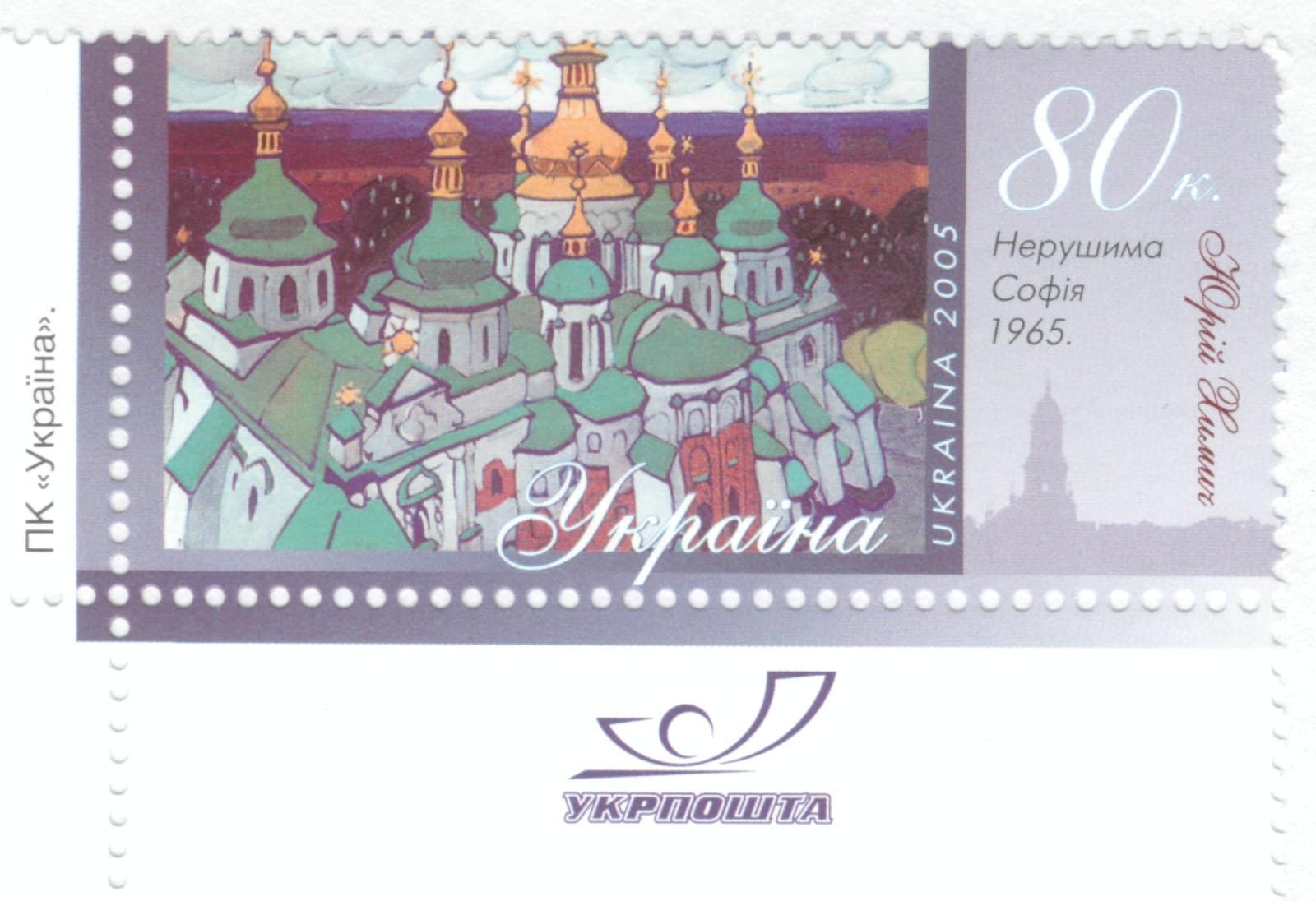
The Indestructible Sophia of Kyiv
Yurii Khymych
Saint Sophia Cathedral rendered in Khymych's mature manner of open colour and heavy black contour, the title borrowed from the ancient epithet of the Kyivan cathedral. Ukrposhta reproduced the painting on an 80-kopiyka stamp in 2005.
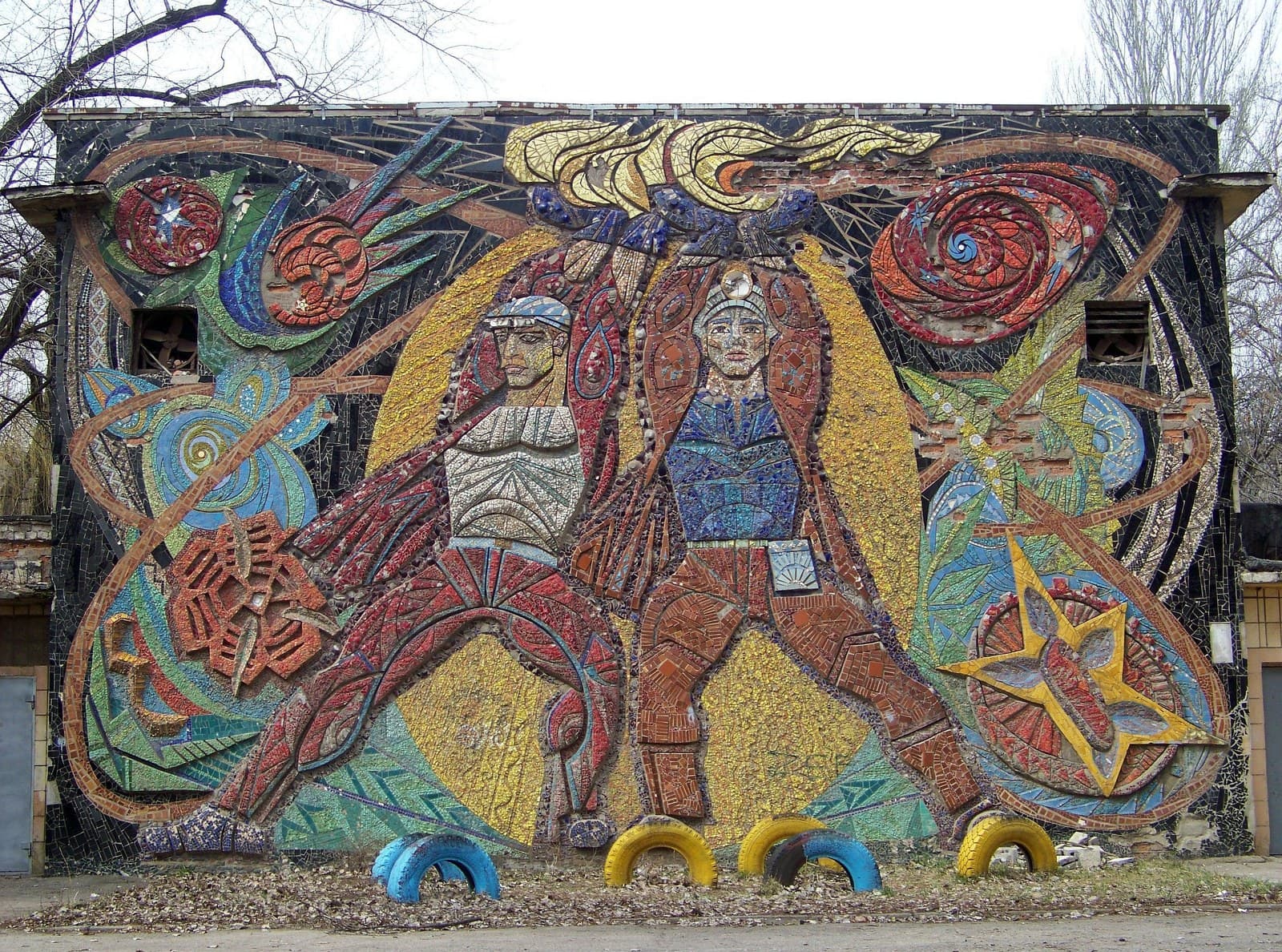
Prometheuses (mosaic cycle of School No. 5, Donetsk)
Alla Horska
The central panel of a nine-part cycle made in 1965–1966 by a collective led by Hryhorii Synytsia with Alla Horska, Halyna Zubchenko, Viktor Zaretskyi and Hennadii Marchenko: two figures raise a flame between cosmic spirals and folk-ornament suns. Eight smaller panels — «Космос», «Вода», «Вогонь», «Земля», «Життя», «Надра», «Сонце», «Повітря/Верба» — were completed in 1965, the central «Прометеї» in 1966.
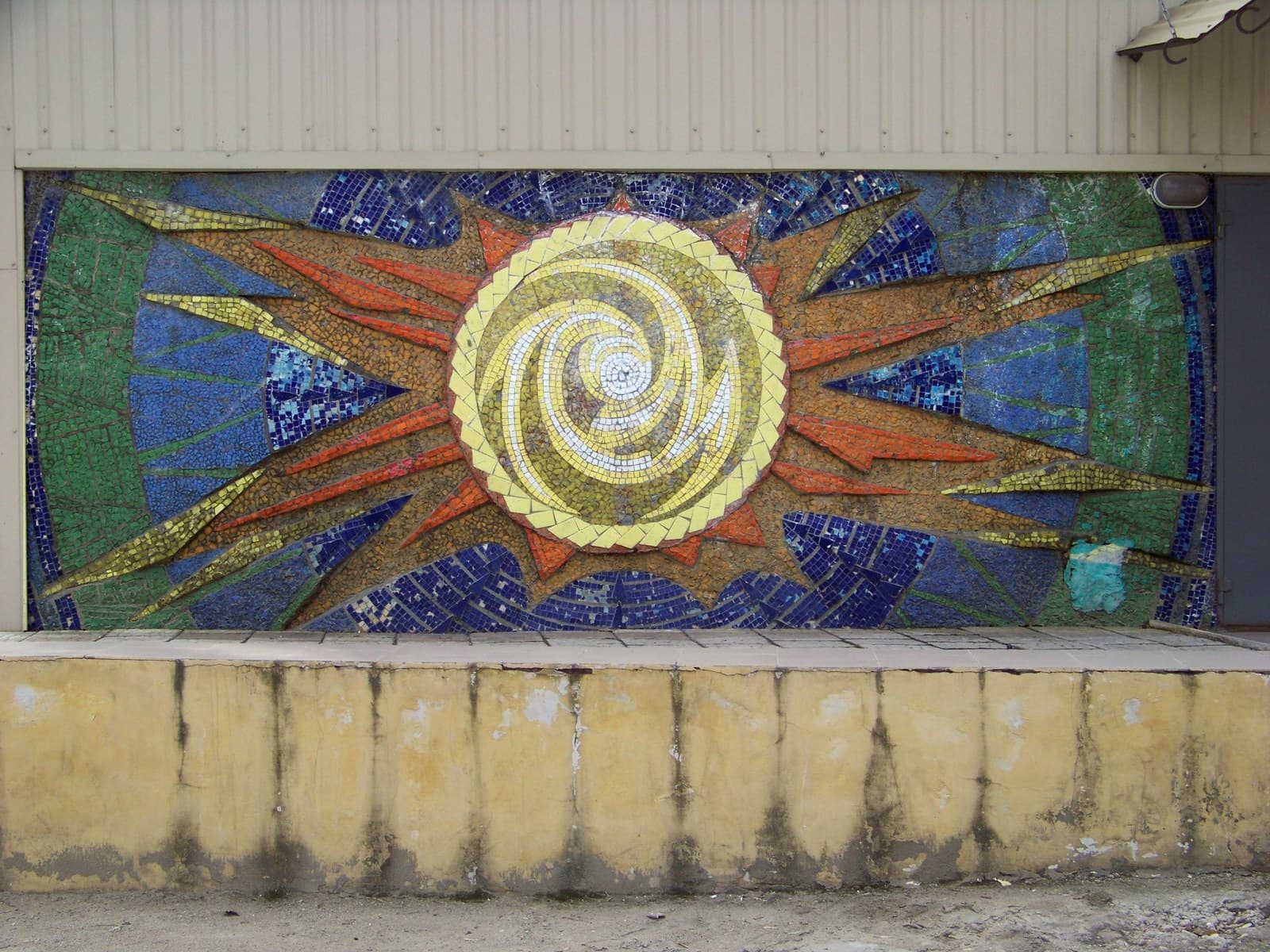
Prometheuses, Earth, Fire (mosaics of School No. 5, Donetsk)
Viktor Zaretskyi
Zaretskyi's contribution to the nine-panel mosaic cycle made in 1965–1966 by a collective led by Hryhorii Synytsia with Alla Horska, Halyna Zubchenko and Hennadii Marchenko. The central «Прометеї» panel sets two figures raising a flame among cosmic spirals and folk-ornament suns; the cycle fuses Ukrainian folk decoration, Baroque and Mexican muralism.
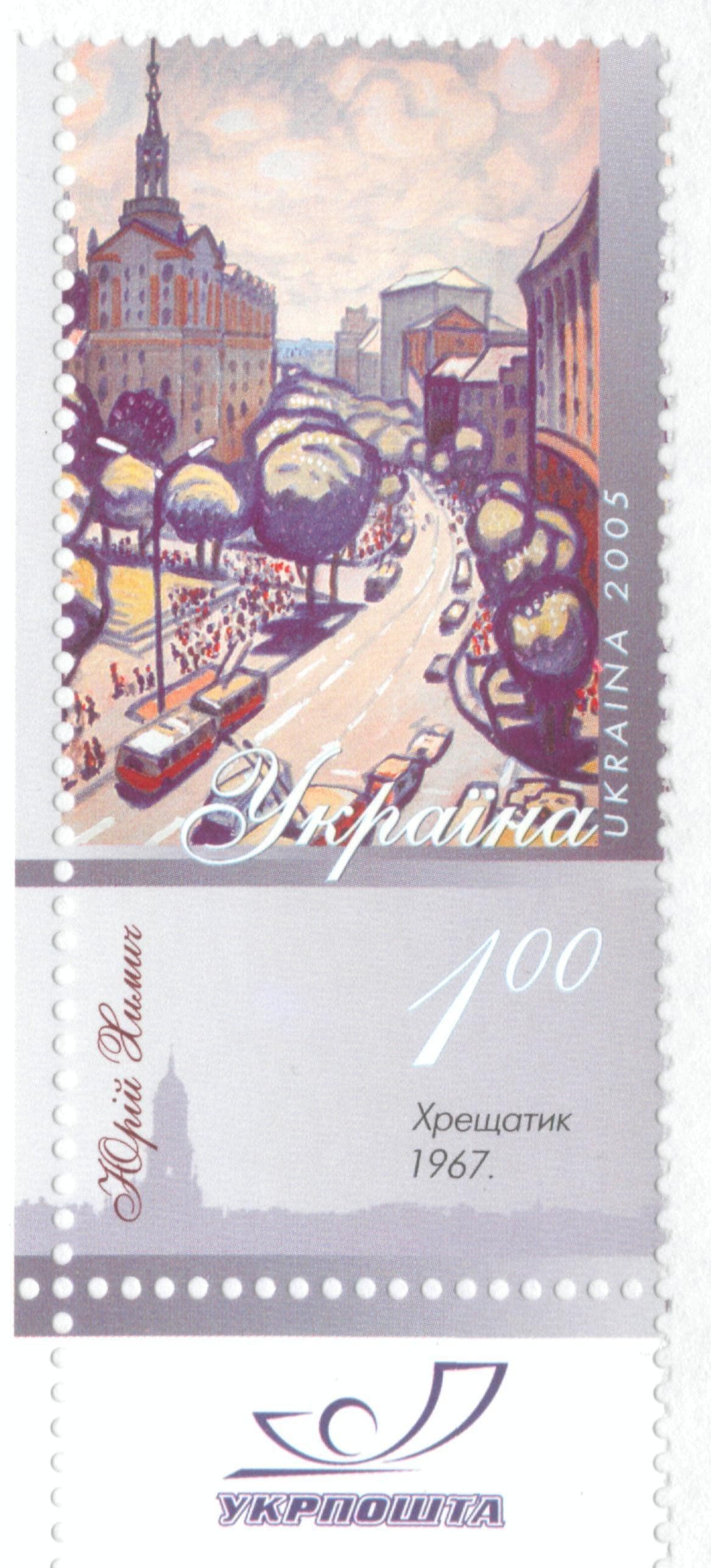
Khreshchatyk
Yurii Khymych
Kyiv's main avenue seen as a stacked, frontal composition of post-war facades — one of the city subjects that made Khymych's reputation as a painter of 'portraits of buildings'. Reproduced by Ukrposhta on a 2005 stamp.
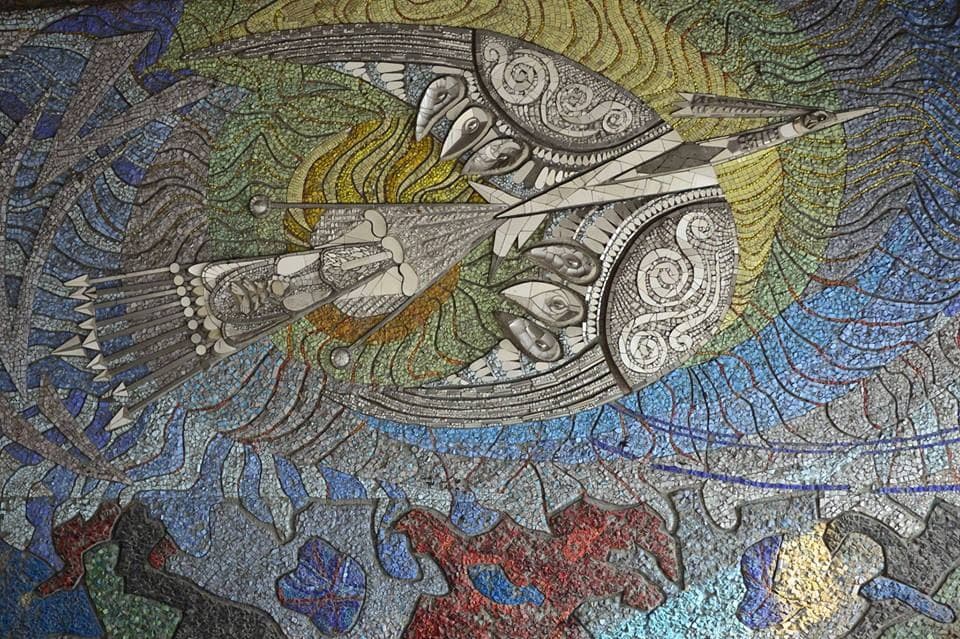
Kestrel (Boryviter)
Alla Horska
A hovering kestrel built from smalt, its silver-grey plumage spread across a sun and a field of blue that answered the sea visible from the restaurant windows; the bird was read as an emblem of artistic freedom. Made with a team including Viktor Zaretskyi, Halyna Zubchenko, Borys Plaksii, Hryhorii Pryshedko, Vasyl Prakhnin and Nadiia Svitlychna in under two months, rediscovered behind a wall during a 2008 renovation, and destroyed with its companion panel during the Russian bombardment of Mariupol in 2022. It gave its name to Horska's 2024 retrospective at the Ukrainian House in Kyiv. Also referred to in Ukrainian sources as «Птах-мрія».
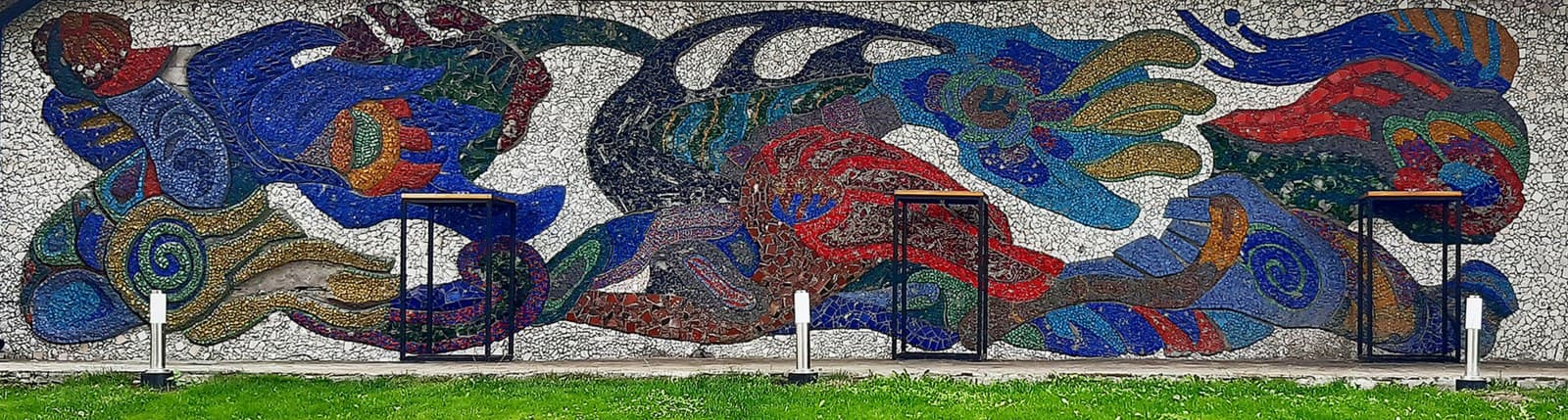
Wind
Alla Horska
An abstract composition begun in 1967 and finished in 1968 by Horska with Viktor Zaretskyi and Borys Plaksii, fusing folk-ornament motifs with a Ukrainian avant-garde vocabulary. It is one of the few Horska mosaics still in place in Kyiv.
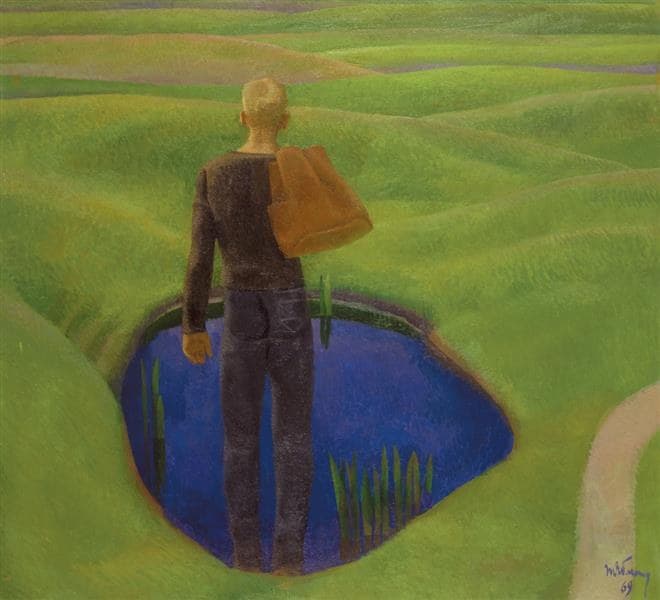
Youth
Tetiana Yablonska
A boy with a rucksack stands at the edge of a small blue pond on a green pasture; Yablonska began the picture as a study of the pond at Sedniv and asked the boy, who wandered over from a nearby sports camp, to pose. Ukrainian critics read it as a manifesto of solitary self-possession and a step away from doctrinal Socialist Realism.
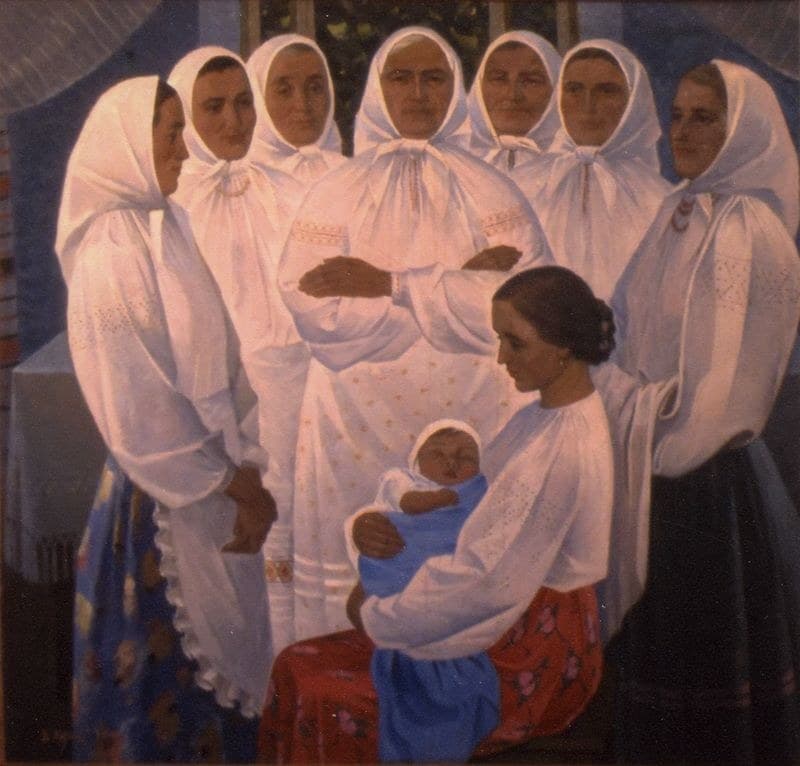
Mothers
Veniamin Kushnir
A group of Ukrainian mothers rendered as near-iconic, monumental figures — the central work in the cycle on motherhood that runs through Kushnir's painting from the 1960s onward.
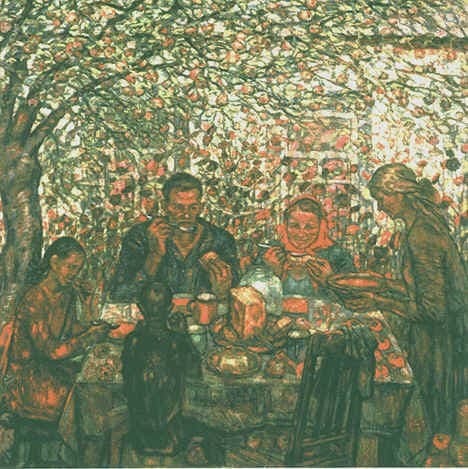
Supper of the Grain Growers
Nataliia Verhun
A large square canvas of farm workers at their evening meal in the field, the best-known of Verhun's village genre paintings and the work chosen to represent her in the Kharkiv artists' directory.
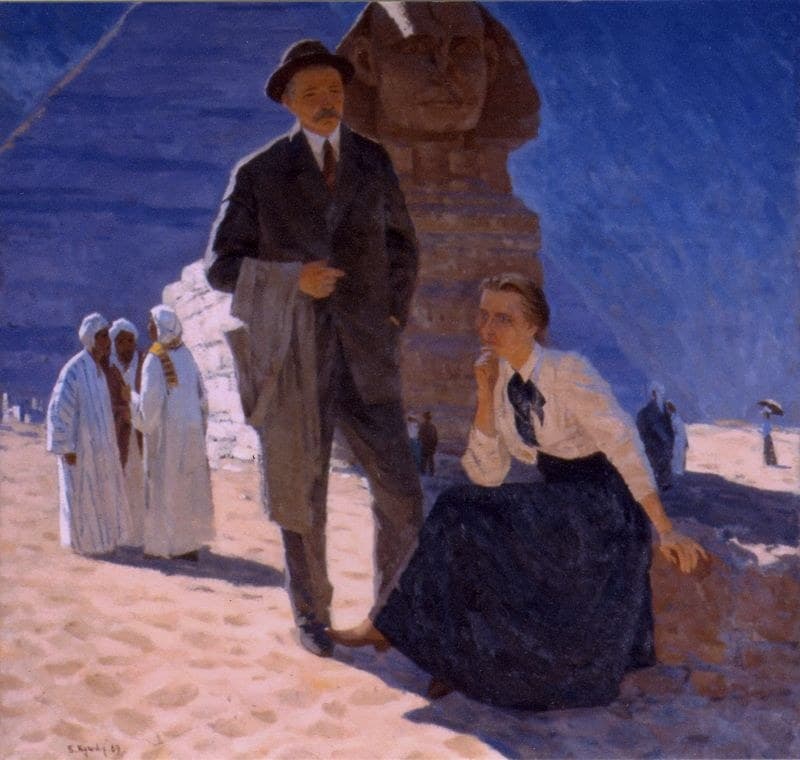
Lesia Ukrainka in Egypt
Veniamin Kushnir
A late imagined portrait of the poet Lesia Ukrainka during her convalescent travels in Egypt, painted as the Soviet system was collapsing and Kushnir's work turned openly to Ukrainian cultural heroes.