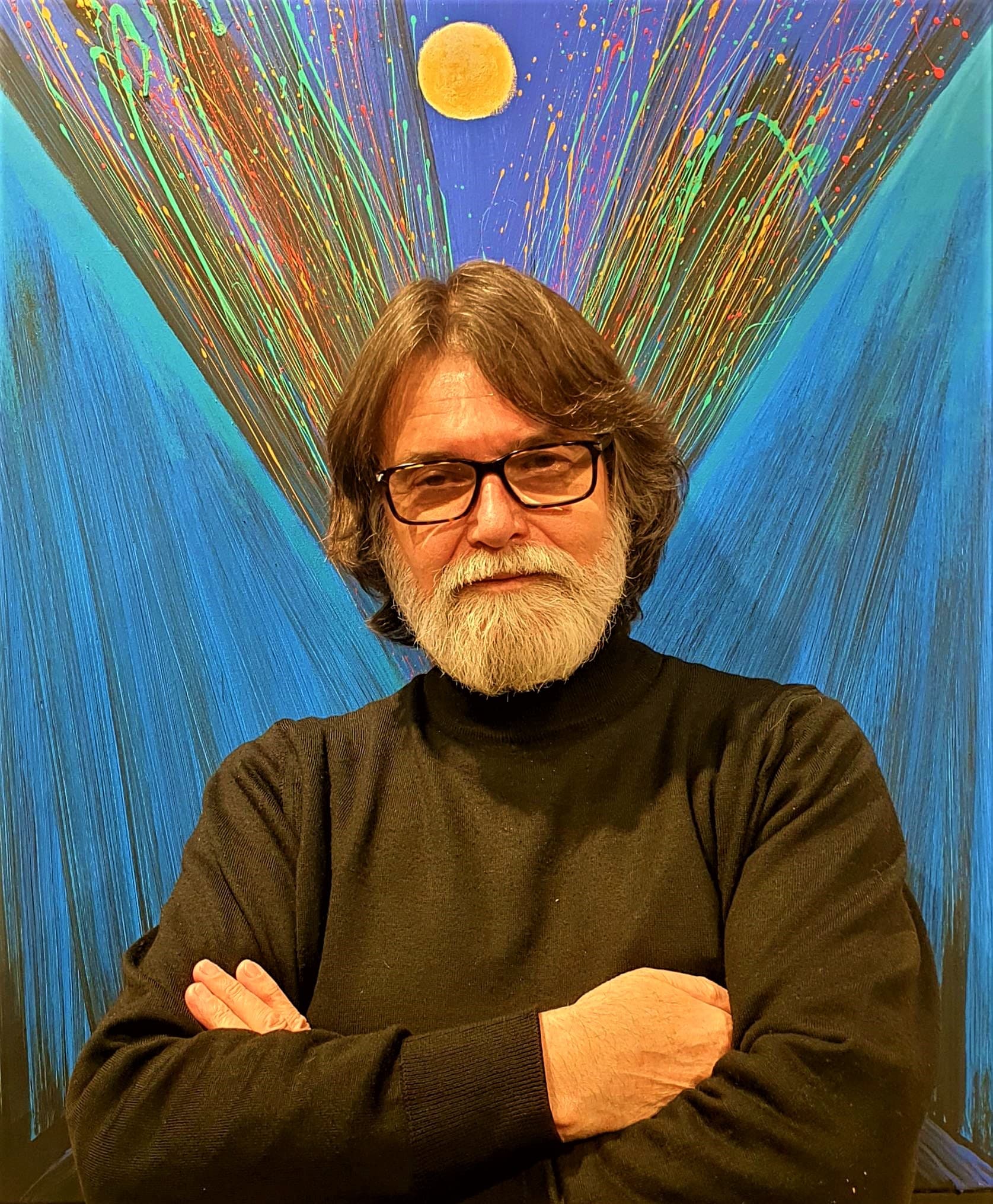
Artist, writer, philosopher, creator of hundreds of paintings, recipient of art awards, and author of books. He was born in Zdolbuniv to a family of teachers. On his father’s side, he came from a Cossack family; on his mother’s side, from Ukrainian and Polish nobility.
Art Movements
Realism
Realism is an artistic movement that sought to depict reality as accurately and objectively as possible, holding that the purpose of art is to reflect all aspects of existence, rather than merely its idealized representation. The term was introduced by the French literary critic Jules Champfleury in the 1850s to denote art that opposed Romanticism and Academicism. In the visual arts, the significance of Realism as a style is quite controversial, and its boundaries are undefined. In a narrower sense, realism is understood as positivism, a movement in the visual arts of the second half of the 19th century. One of the first realists was the French artist Gustave Courbet (1819–1877), who opened his solo exhibition “The Pavilion of Realism” in Paris in 1855. Before him, artists of the Barbizon School—Théodore Rousseau, Jean-François Millet, and Jules Breton—worked in a realistic style. In the 1870s, realism split into two main movements: naturalism and impressionism. In contemporary painting, realism borders on the grotesque and anti-glamour.
Explore movement →Monumentalism
Monumentalism is an architectural and artistic approach emphasizing grand scale, durability, and intense symbolism, designed to evoke awe and project authority or historical significance. It often features austere, symmetrical, and geometric forms crafted from permanent materials like stone or concrete, frequently used to promote political, state, or civic power. Key Characteristics Colossal Scale: Focuses on immense size to dominate the landscape. Permanence & Stability: Utilizes materials intended to last for centuries. Symbolic Power: Commonly used to glorify specific regimes, ideologies, or historical events. Simple Aesthetics: Often features geometric shapes, strong symmetry, and simplified, austere, and massive structures.
Explore movement →1880s–1910sSymbolism
A late nineteenth- and early twentieth-century movement that turned away from the documentary aims of realism toward myth, allegory, dream and inner experience. In Ukraine it arrived through Kyiv, Poltava, Kharkiv and Lviv art circles and through artists trained in Munich, Paris and St Petersburg, and it fed directly into Ukrainian Art Nouveau and early modernism. Ukrainian symbolists favoured antique and folk mythology, ritual and allegorical figure compositions over contemporary social subjects.
Explore movement →