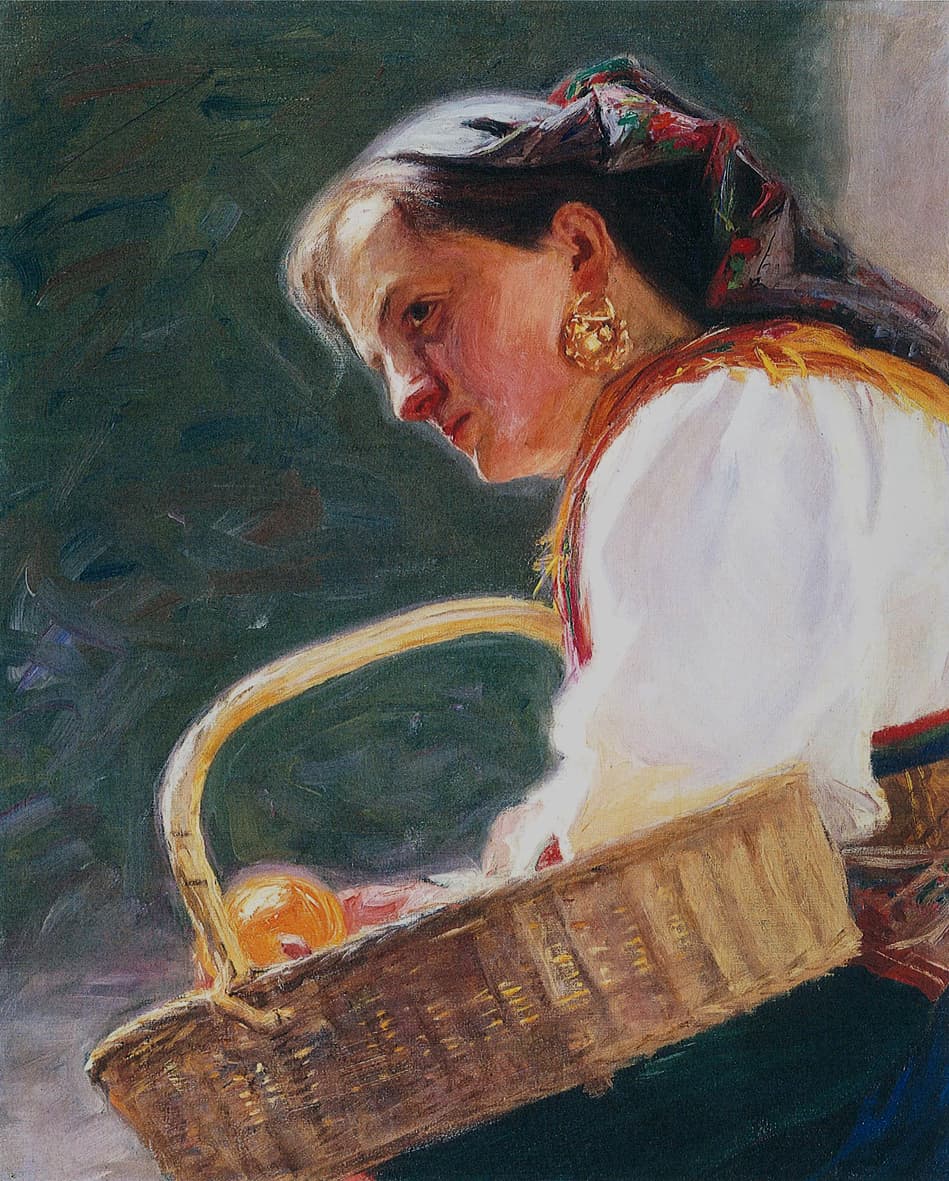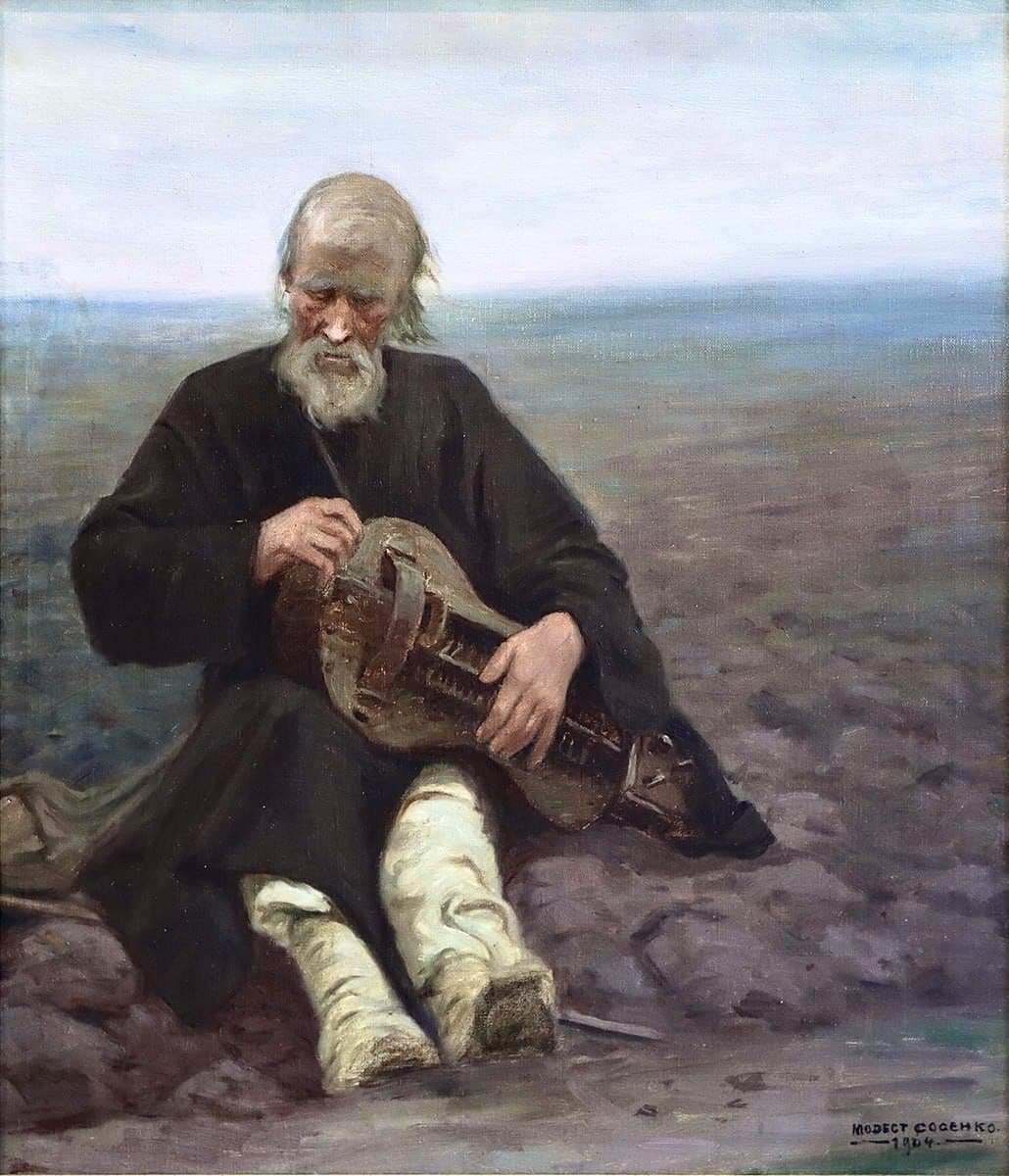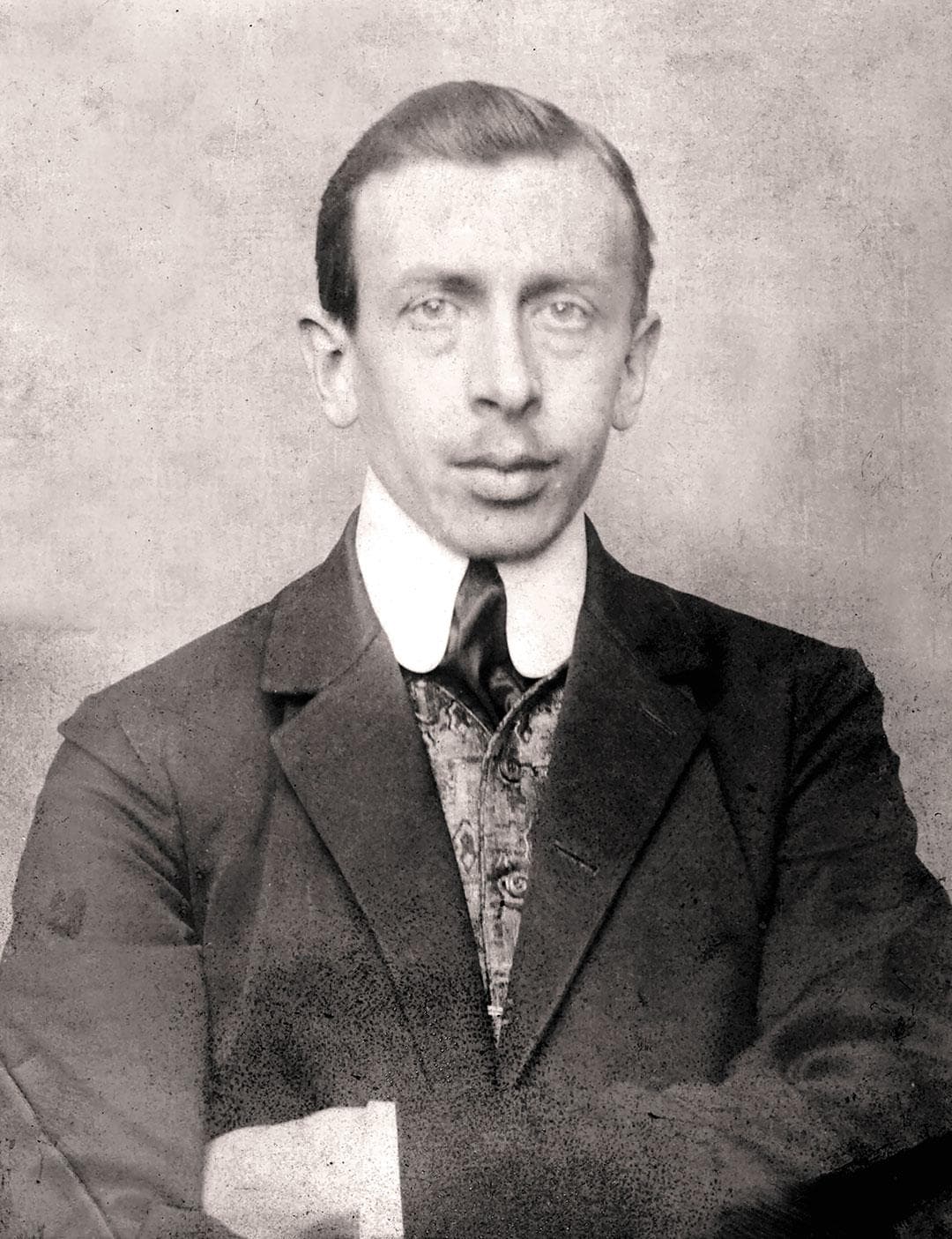
Modest Danylovych Sosenko (April 28, 1875, Porohy, Austro-Hungarian Empire – February 4, 1920, Lviv, West Ukrainian People’s Republic) was a prominent Ukrainian monumentalist whose work is characterized by a synthesis of ancient traditions and modern European trends. His style is often described as a synthetic style or Ukrainian Art Nouveau in sacred art.
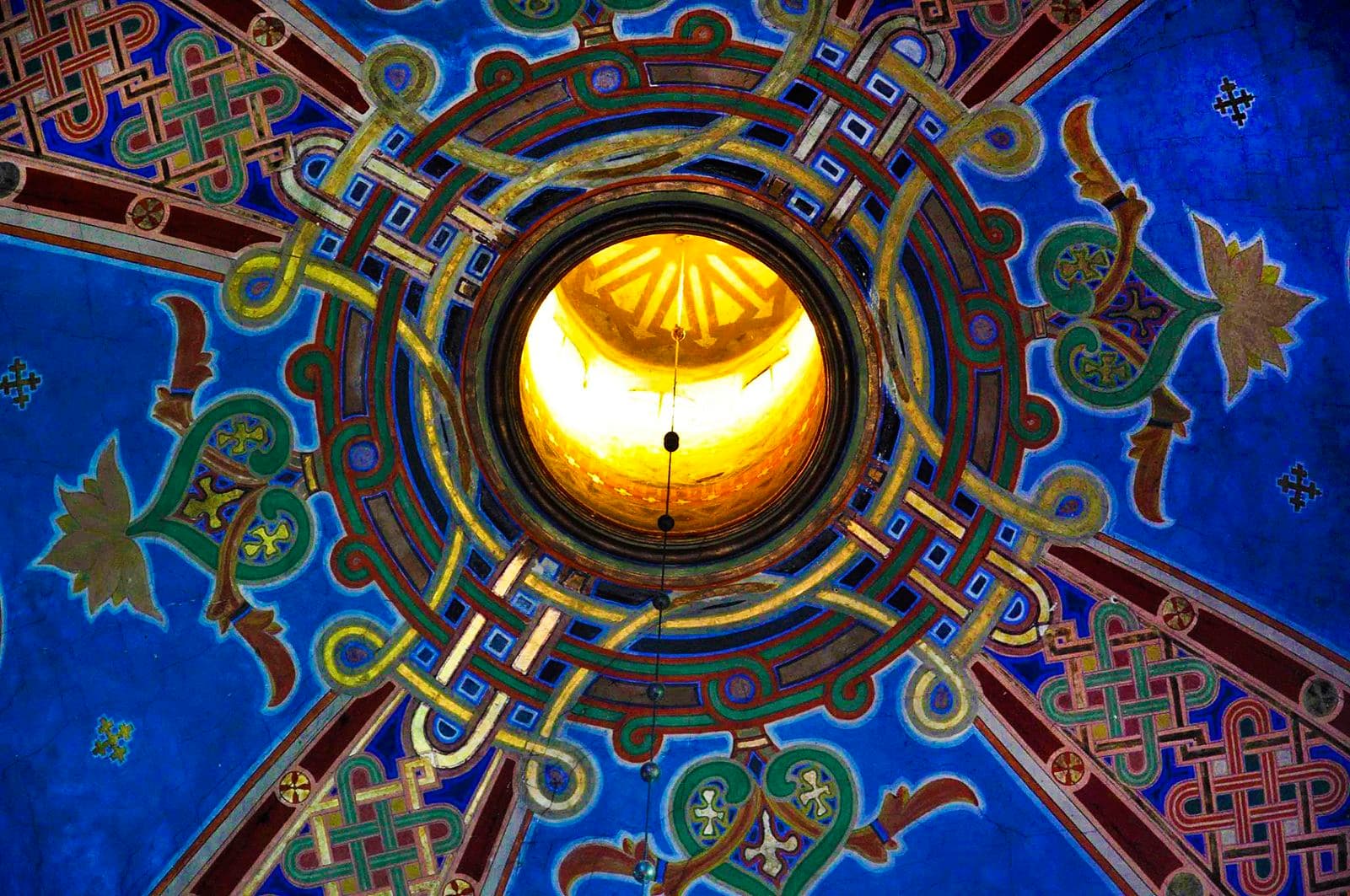
He was a pioneer in his attempts to synthesize Byzantine painting traditions with contemporary artistic achievements. In the early stages of his career, he worked in the landscape genre, later moving on to monumental and easel religious painting, which brought him fame. Sosenko became one of the first artists to develop his own system for decorating Ukrainian churches. There, he combined the Byzantine style with Western innovations, as well as ornamentalism and Art Nouveau.
Key characteristics of Modest Sosenko’s artistic style:
A fusion of Byzantine tradition and modernism: Sosenko was one of the first to combine the austere traditions of Byzantine church painting with the innovative European approaches of the late 19th and early 20th centuries.
Synthesis of the arts: In his monumental church murals, he harmoniously combined painting, ornamentation, and architectural forms to create cohesive images.
Reform in sacred art: He modernized church art, moving away from the copying of Western models—common in Galicia at the time—in favor of his own interpretation, which was based on Byzantine roots and Ukrainian folk motifs.
Stylization and flatness: His painting is distinguished by the clarity of lines and a flat treatment of images, characteristic of Art Nouveau (Secession), combined with spirituality and iconographic precision.
Modest Sosenko is the creator of his own synthetic style, which marked a new era in Ukrainian sacred art