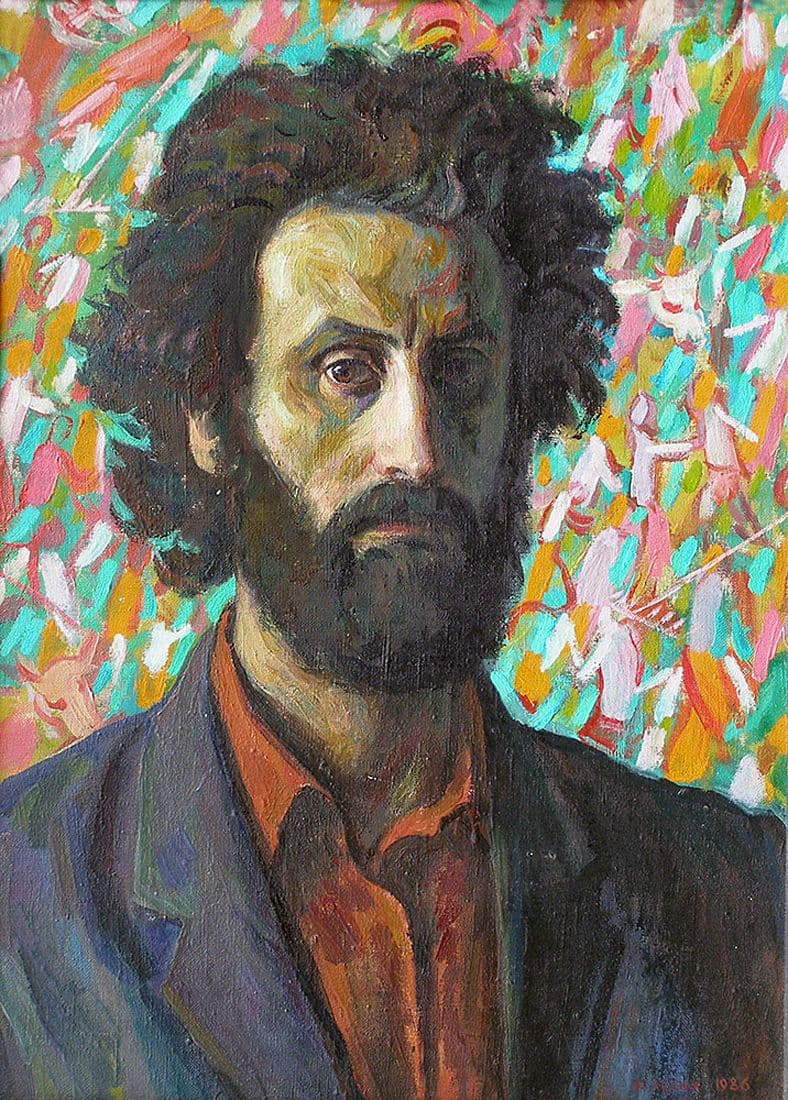
Yurii Lesiuk
Юрій Лесюк
b. 1947 · Kovalivka, Kolomyia district, Ivano-Frankivsk Oblast, Ukraine
Yurii Lesiuk is a Lviv painter, Honoured Artist of Ukraine, and head of the painting department at the Ivan Trush Lviv State College of Decorative and Applied Arts. His thematic canvases, landscapes, still lifes and portraits are emphatically national in character, mixing Hutsul and Pokuttia ritual and folk humour with a decorative, flattened treatment of form. He has taken part in more than ninety exhibitions and held eleven solo shows in Ukraine, Canada and the USA.
Yurii Petrovych Lesiuk was born on 1 May 1947 in the village of Kovalivka, then in the Yabluniv district of the Stanislav region and now in the Kolomyia district of Ivano-Frankivsk Oblast. He graduated from the Mykola Hrekov Odesa State Art School in 1968 and from the Kyiv State Art Institute in 1972, where his teachers included Vasyl Hurin, Anatolii Plamenytskyi and Ivan Tykhyi. He has worked at the Lviv College of Decorative and Applied Arts ever since, heading its painting board from 1988, and joined the National Union of Artists of Ukraine in 1988. He has shown in more than ninety Ukrainian, all-Union and international exhibitions since the late 1980s, with solo exhibitions in Lviv (1988, 1997, 2007, 2012), Regina and Saskatoon in Canada (1998), Kyiv (2000–01), Toronto (2001), New York (2002), Kolomyia (2010) and Ivano-Frankivsk (2011). Lesiuk paints thematic pictures, landscapes, still lifes and portraits; critics describe his work as a dialogue between the artist's inner world and the harmony of his surroundings, expressed in a modern idiom that synthesises the flattened decorative treatment of folk culture with impressionism, and shot through with folk humour. Easter and other ritual subjects recur across his output — «Писанки. Мати» (1979), «Славайсу» (1996), «До храму» (1991), «Як писанка село» (2004), «Великодня ніч» (2006) — alongside an extensive Shevchenkiana. He published an autobiographical essay, «Аромат червоних йон» (Ivano-Frankivsk, 2010). His paintings are held by the Andrey Sheptytsky National Museum in Lviv, the Lviv Art Gallery, the Taras Shevchenko National Museum and the National Art Museum of Ukraine in Kyiv, the Borshchiv Local History Museum, the National Museum of Hutsulshchyna and Pokuttia in Kolomyia, and the Ukrainian Museum of Art in Saskatoon, Canada. He was named Honoured Artist of Ukraine in 2009.
Art Movements
Impressionism
Impressionism was a 19th-century French art movement (1870s-1880s) that revolutionized Western art by capturing fleeting moments and the shifting effects of light using visible brushstrokes, open composition, and vibrant colors. Focusing on modern life and landscapes, key artists included Claude Monet, Pierre-Auguste Renoir, Camille Pissarro, and Berthe Morisot. Usage Examples & Characteristics: Plein Air Painting: Painting outdoors to capture natural light, such as Monet’s studies of Rouen Cathedral or haystacks in varying weather conditions. Visible Brushwork: Thick, rapid, or broken brushstrokes intended to convey a sense of motion and the ephemeral nature of a scene. Everyday Subjects: Depicting leisure activities, urban life in Paris, or landscapes rather than historical or mythological scenes. Unusual Visual Angles: Inspired by photography, artists like Degas used candid-style, unconventional framing of subjects, such as dancers or laundresses. "Impressionist Music": A similar approach in music and dance, focusing on mood and atmosphere over rigid structure, with artists like Claude Debussy and Maurice Ravel.
Explore movement →Folk Decorative Art
Folk decorative art is the visual language of a community, traditionally created by untrained artisans rather than academic artists. It combines utility with ornament, transforming everyday objects like furniture, textiles, and tools into works of cultural expression.
Explore movement →1991–presentContemporary Ukrainian Painting
Painting made in independent Ukraine, from the 1991 declaration of independence onward. It is pluralist rather than programmatic: plein-air landscape and psychological portraiture continue alongside conceptual, minimalist and symbolist strands, with a marked turn after 2014 and especially after 2022 toward wartime subjects, national memory and the vernacular Ukrainian village.
Explore movement →Works by Yurii Lesiuk
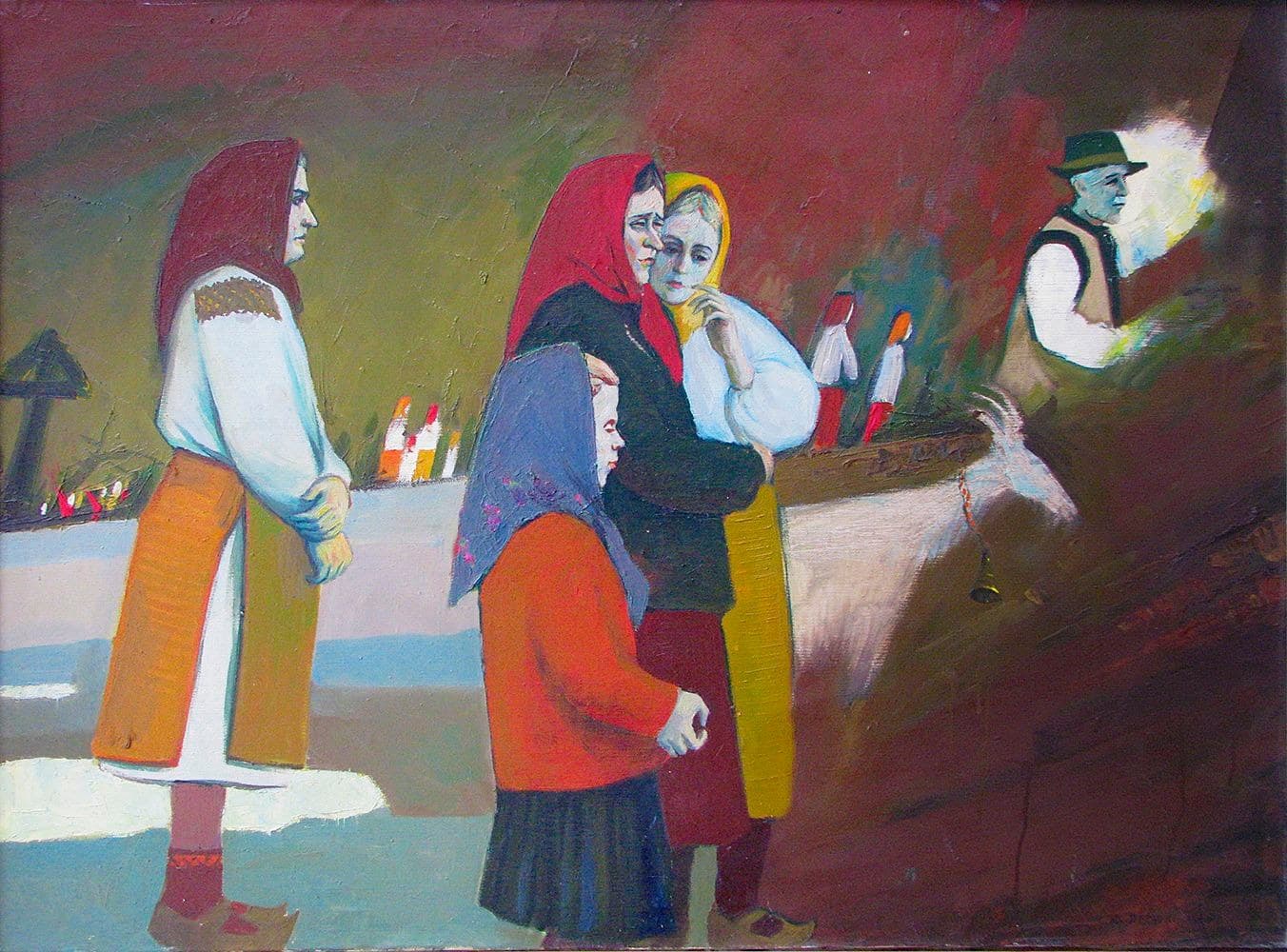
Waiting
One of the works cited by the Encyclopedia of Modern Ukraine among Lesiuk's principal canvases; a figurative composition built from flattened decorative planes.
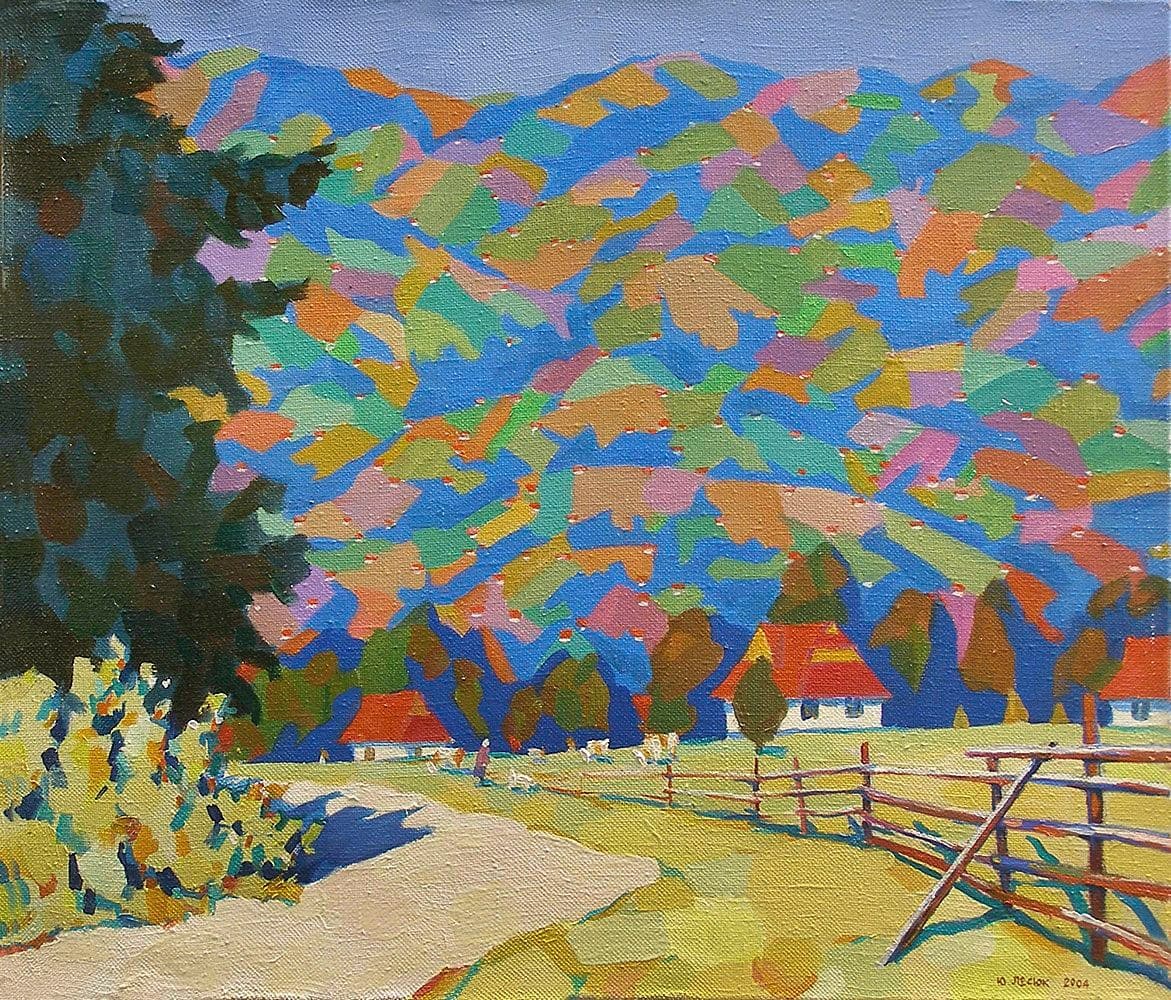
The Village Like a Pysanka
A Carpathian village rendered as brightly as a painted Easter egg — the closest thing in Lesiuk's reproduced work to an Easter picture, and a clear statement of his decorative, folk-rooted colour.
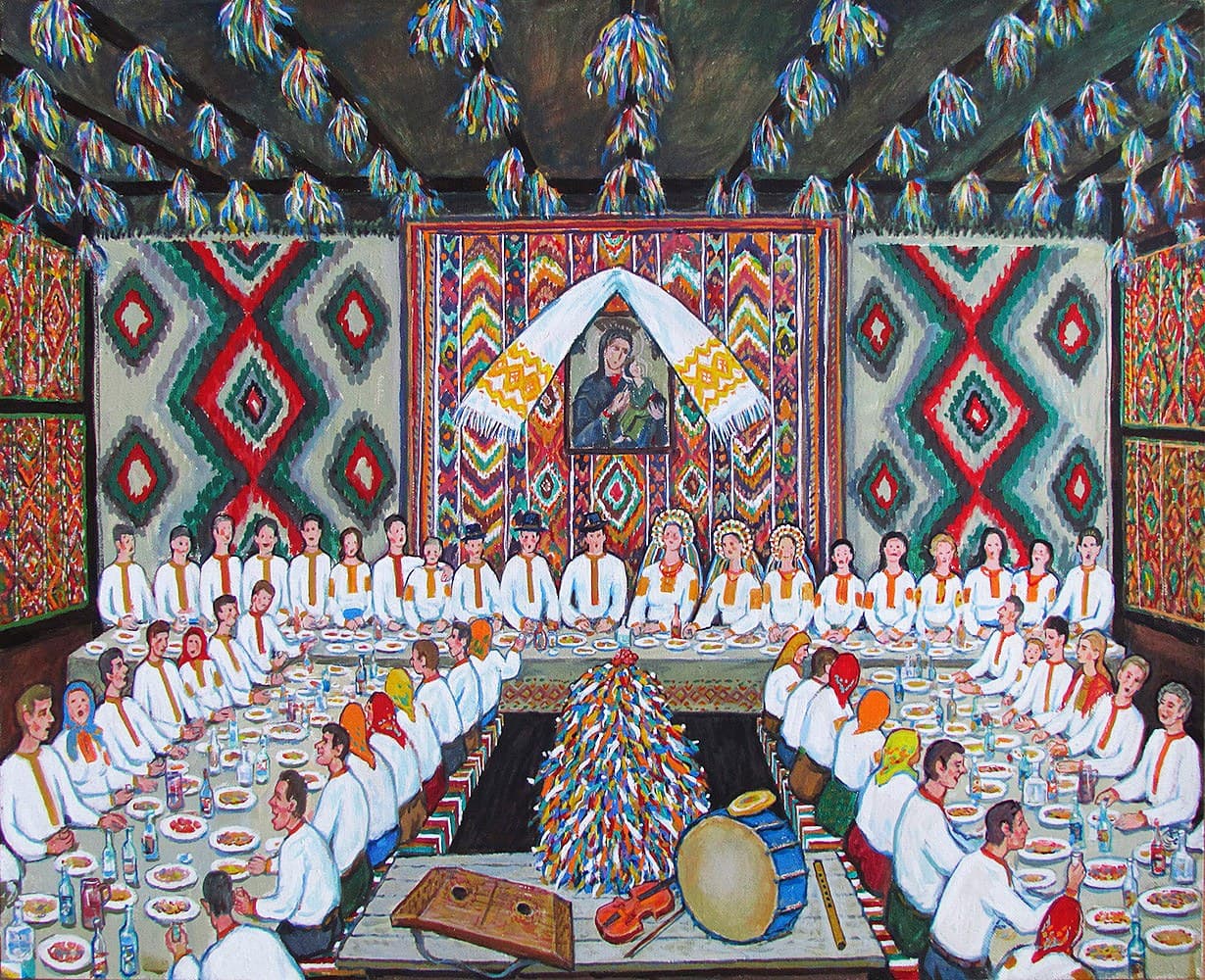
Wedding in Kovalivka
A large acrylic on paper set in the artist's native village, and the most recent work in the ESU list of his principal pictures. Village wedding ritual is one of his lifelong subjects.
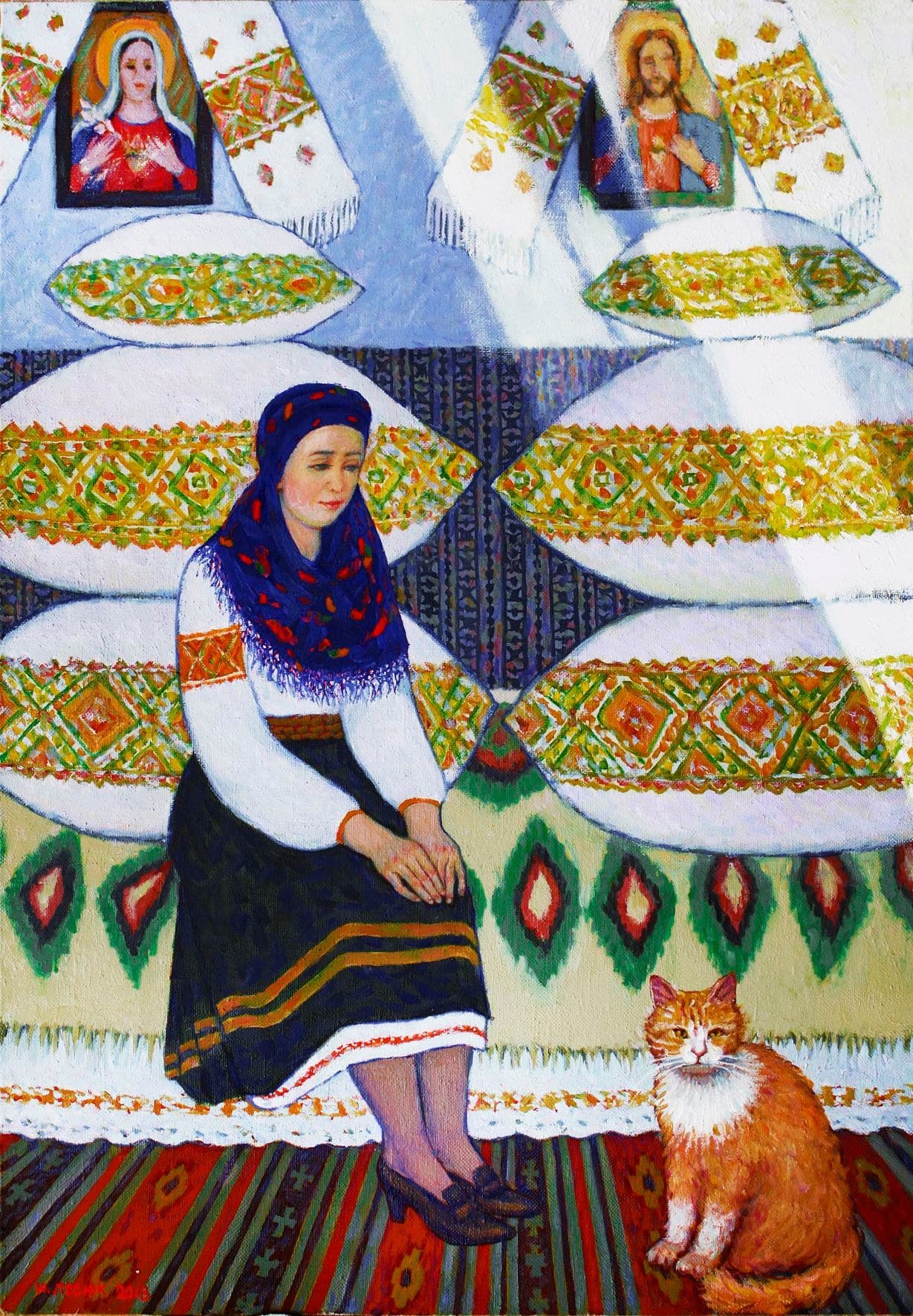
Young Married Woman
A late portrait in Lesiuk's decorative folk idiom, with the sitter's embroidered dress flattened into ornamental colour planes.