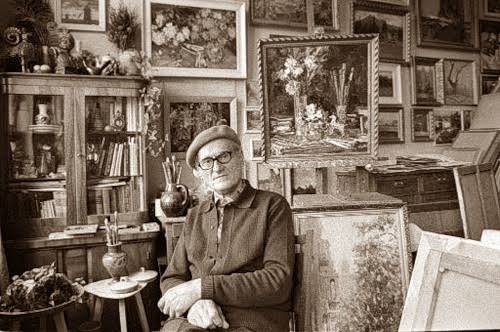
Serhii Shyshko
Сергій Федорович Шишко
1911–1997 · Nosivka, Chernihiv region, Ukraine (then Russian Empire)
Serhii Shyshko was a Ukrainian landscape painter who spent five decades recording Kyiv and its surroundings in a loose, light-filled plein-air manner. He is best known for the 'Kyivan Suite', a cycle of more than a hundred canvases of the city, and was among the most decorated landscapists of Soviet Ukraine.
Serhii Fedorovych Shyshko was born on 25 June 1911 in Nosivka, Chernihiv region, the son of a veterinarian, and had his first drawing lessons at school in Nizhyn. He entered the Kyiv Art Institute in 1929 and studied in the studio of Fedir Krychevskyi, then continued at the Leningrad Institute of Painting, Sculpture and Architecture under Boris Ioganson, graduating in 1943. He also worked in Samarkand during the wartime evacuation (1942), and afterwards travelled repeatedly to the Carpathians (from 1947) and Crimea (from 1956), but Kyiv remained his central subject for the rest of his life. Over four decades he built the 'Kyivan Suite' of more than a hundred landscapes of the city's streets, parks, hills and Dnipro embankments, painting rapidly on cardboard and canvas with broken, high-keyed brushwork closer to late Impressionism than to the doctrinaire Socialist Realism of his generation. He was named People's Artist of Ukraine in 1964 and People's Artist of the USSR in 1974, received the Shevchenko State Prize of Ukraine in 1982, and was decorated with the Order of Lenin and the Order of Friendship of Peoples. Shyshko died in Kyiv on 26 April 1997 and is buried at Baikove Cemetery. His work is held by the National Art Museum of Ukraine, the Kyiv Picture Gallery, the Museum of the History of Kyiv, the Nizhyn Local Lore Museum and Nizhyn State University, and two of his Kyiv landscapes were reproduced on Ukrainian postage stamps in 2005.
Art Movements
Realism
Realism is an artistic movement that sought to depict reality as accurately and objectively as possible, holding that the purpose of art is to reflect all aspects of existence, rather than merely its idealized representation. The term was introduced by the French literary critic Jules Champfleury in the 1850s to denote art that opposed Romanticism and Academicism. In the visual arts, the significance of Realism as a style is quite controversial, and its boundaries are undefined. In a narrower sense, realism is understood as positivism, a movement in the visual arts of the second half of the 19th century. One of the first realists was the French artist Gustave Courbet (1819–1877), who opened his solo exhibition “The Pavilion of Realism” in Paris in 1855. Before him, artists of the Barbizon School—Théodore Rousseau, Jean-François Millet, and Jules Breton—worked in a realistic style. In the 1870s, realism split into two main movements: naturalism and impressionism. In contemporary painting, realism borders on the grotesque and anti-glamour.
Explore movement →Impressionism
Impressionism was a 19th-century French art movement (1870s-1880s) that revolutionized Western art by capturing fleeting moments and the shifting effects of light using visible brushstrokes, open composition, and vibrant colors. Focusing on modern life and landscapes, key artists included Claude Monet, Pierre-Auguste Renoir, Camille Pissarro, and Berthe Morisot. Usage Examples & Characteristics: Plein Air Painting: Painting outdoors to capture natural light, such as Monet’s studies of Rouen Cathedral or haystacks in varying weather conditions. Visible Brushwork: Thick, rapid, or broken brushstrokes intended to convey a sense of motion and the ephemeral nature of a scene. Everyday Subjects: Depicting leisure activities, urban life in Paris, or landscapes rather than historical or mythological scenes. Unusual Visual Angles: Inspired by photography, artists like Degas used candid-style, unconventional framing of subjects, such as dancers or laundresses. "Impressionist Music": A similar approach in music and dance, focusing on mood and atmosphere over rigid structure, with artists like Claude Debussy and Maurice Ravel.
Explore movement →Social Realism
Social Realism is an international art movement—spanning painting, photography, literature, and film—that emerged in the mid-19th century and peaked in the 20th century to expose the harsh socio-political conditions of the working class. It functions as a critical, unidealized depiction of poverty, labor struggles, and structural inequality to challenge power structures. Key Characteristics and Context Purpose: To draw attention to the everyday hardships of the poor and working classes, often functioning as a critique of capitalist, industrial, or governmental systems. Origin: The movement grew from 19th-century French and Russian realism, reacting against romanticism and bourgeois art styles. Resurgence: It thrived between the World Wars and during the 1930s Great Depression, particularly in the U.S. and Mexico, focusing on themes of labor, community, and resilience. Style: It emphasizes subject matter over form, often using a descriptive, gritty, and direct visual language.
Explore movement →Works by Serhii Shyshko
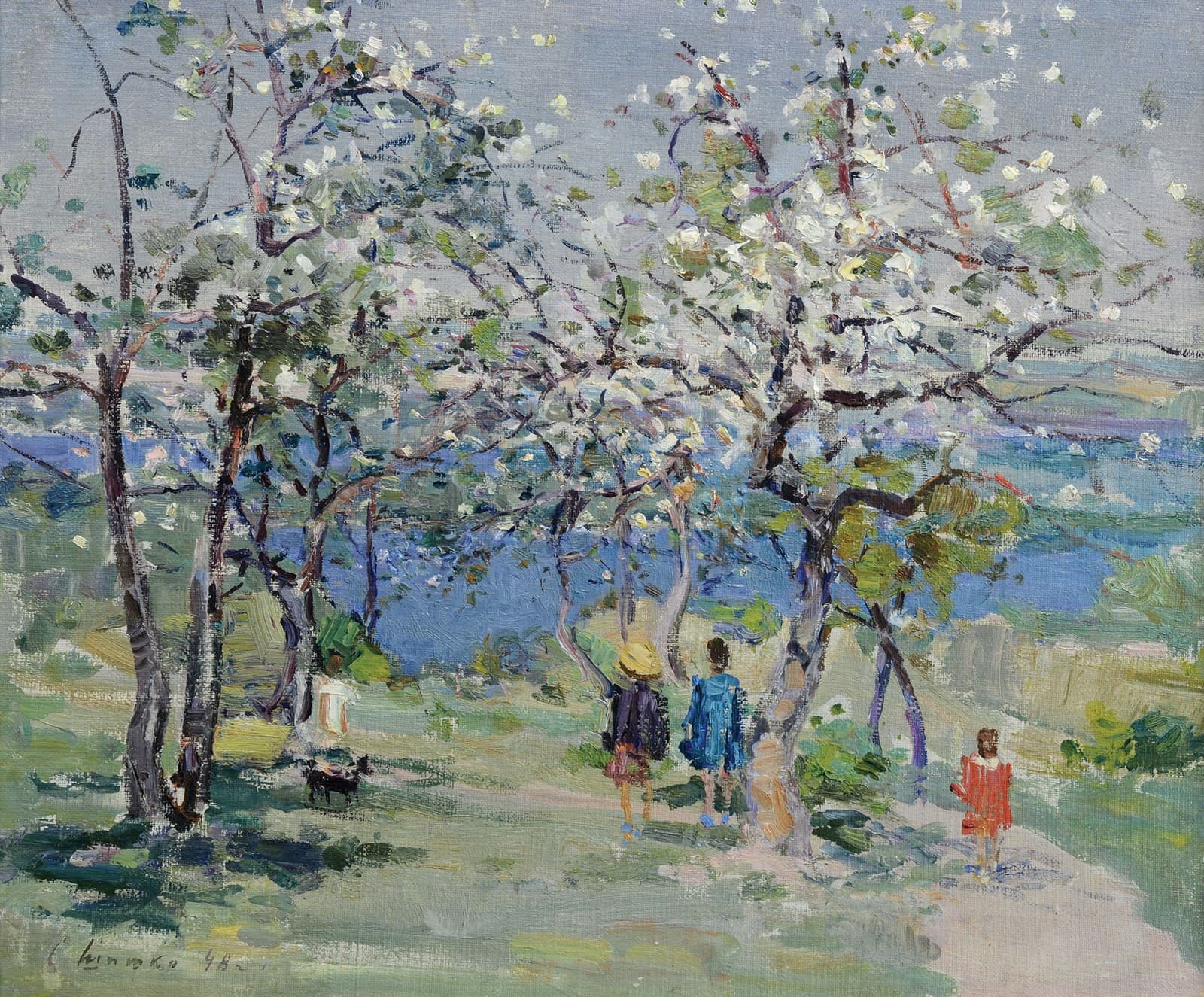
Spring
A blossoming orchard above a river bank, with a woman in a straw hat and two children in blue and red walking a sandy path under white-flowered branches. Signed and dated lower left 'С. Шишко 48', it is an early, wholly plein-air work in which Shyshko's Impressionist handling of broken colour is already fully formed.
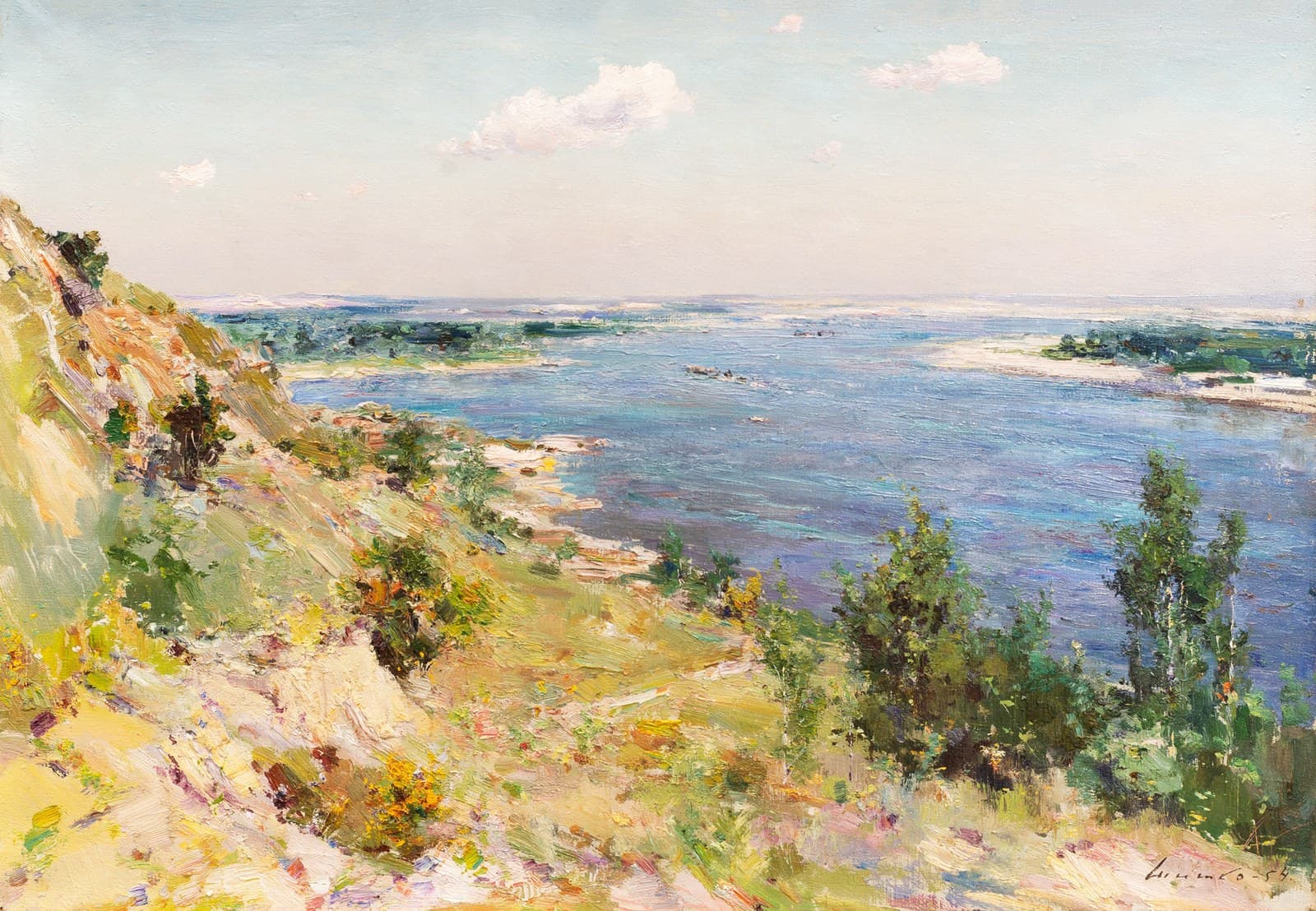
Fresh Morning. Kyiv
A large early-morning Kyiv landscape from the years in which Shyshko was beginning the Kyivan Suite, built on the cool, damp light he preferred for the city's river slopes.
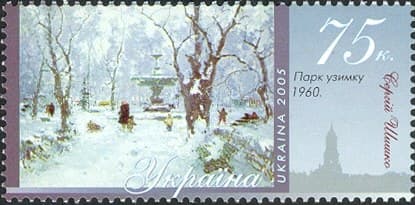
Park in Winter
A snow-covered Kyiv park with bare, sprawling trees, a frozen fountain and small figures with sledges, worked up in cool blues, greys and lilacs against warm white snow.
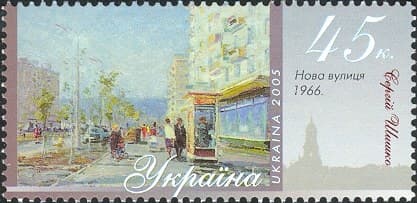
New Street
A wide new Kyiv thoroughfare of the 1960s seen in soft afternoon light — a modern apartment block, a glazed kiosk, street lamps, passers-by and cars — painted with the loose, silvery touch typical of Shyshko's Kyivan Suite.
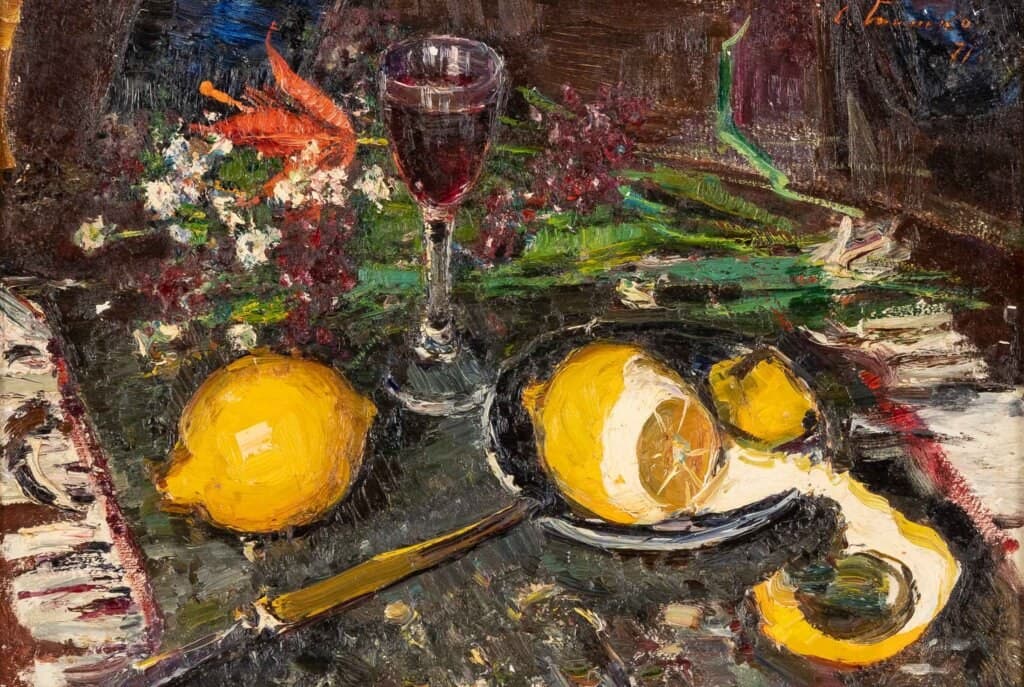
Still Life with Lemons
A small oil-on-cardboard still life of lemons from the strand of Shyshko's work that ran alongside his Kyiv cityscapes, where the loose, high-keyed handling of his landscape studies is turned on a table-top subject.
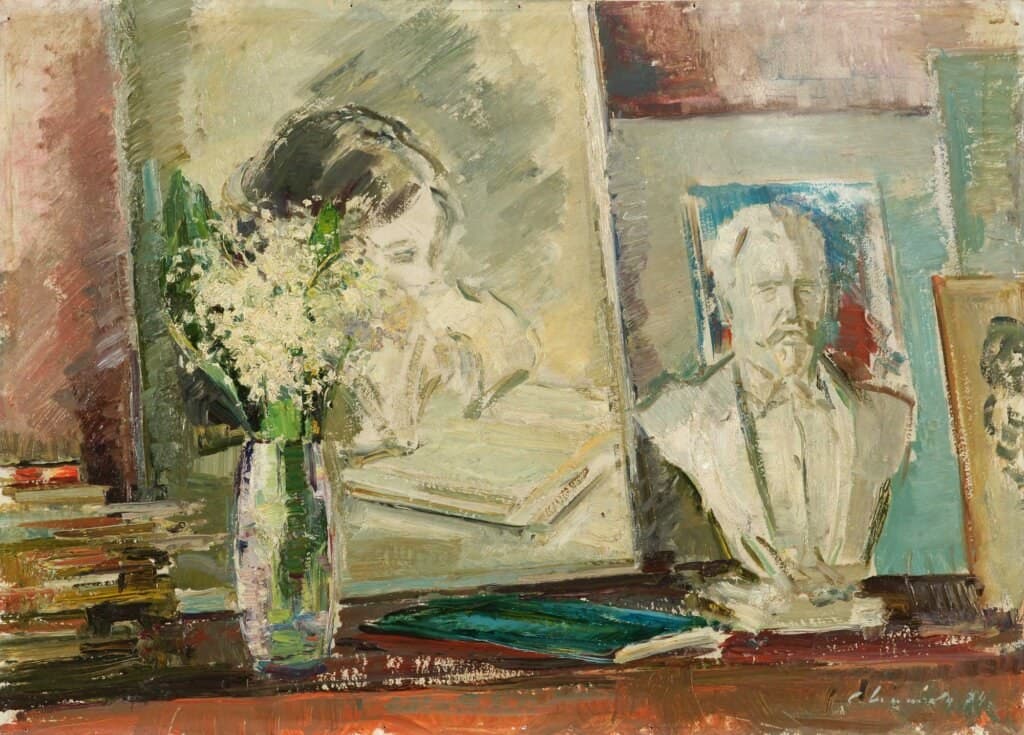
Still Life with Lilies of the Valley
A larger flower still life of lilies of the valley, exhibited in the 2006 Shyshko solo show at the Kyiv Museum of Russian Art and in NU ART's 'Ukrainian Still Life of the 20th Century' (2009). It belongs with the flower pieces gathered in the 1980 postcard set 'The Flowers of Serhii Shyshko'.
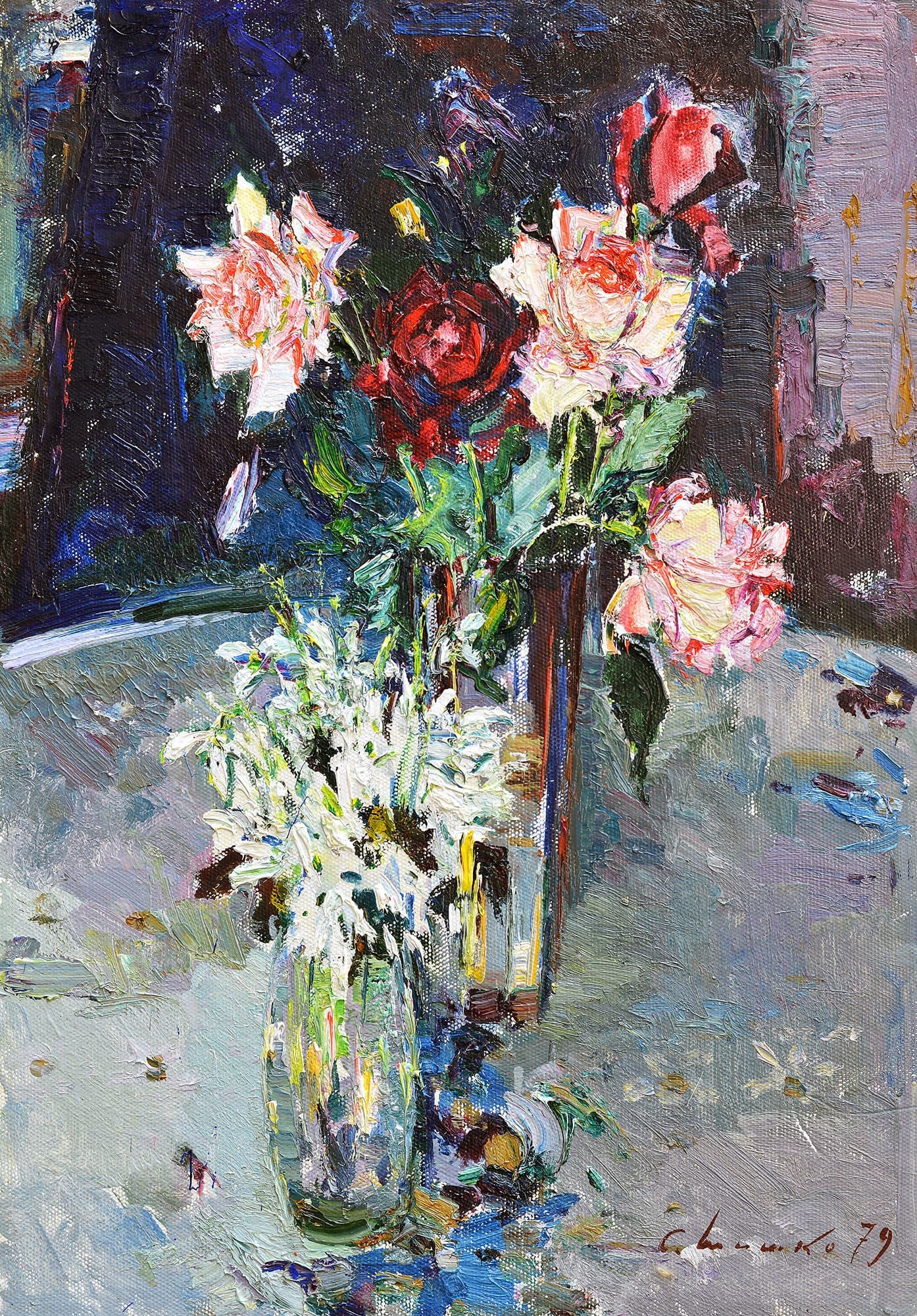
Roses and Snowdrops
An upright spring still life of cut roses and snowdrops, from the flower pieces Shyshko painted alongside his landscapes in the 1960s–80s.