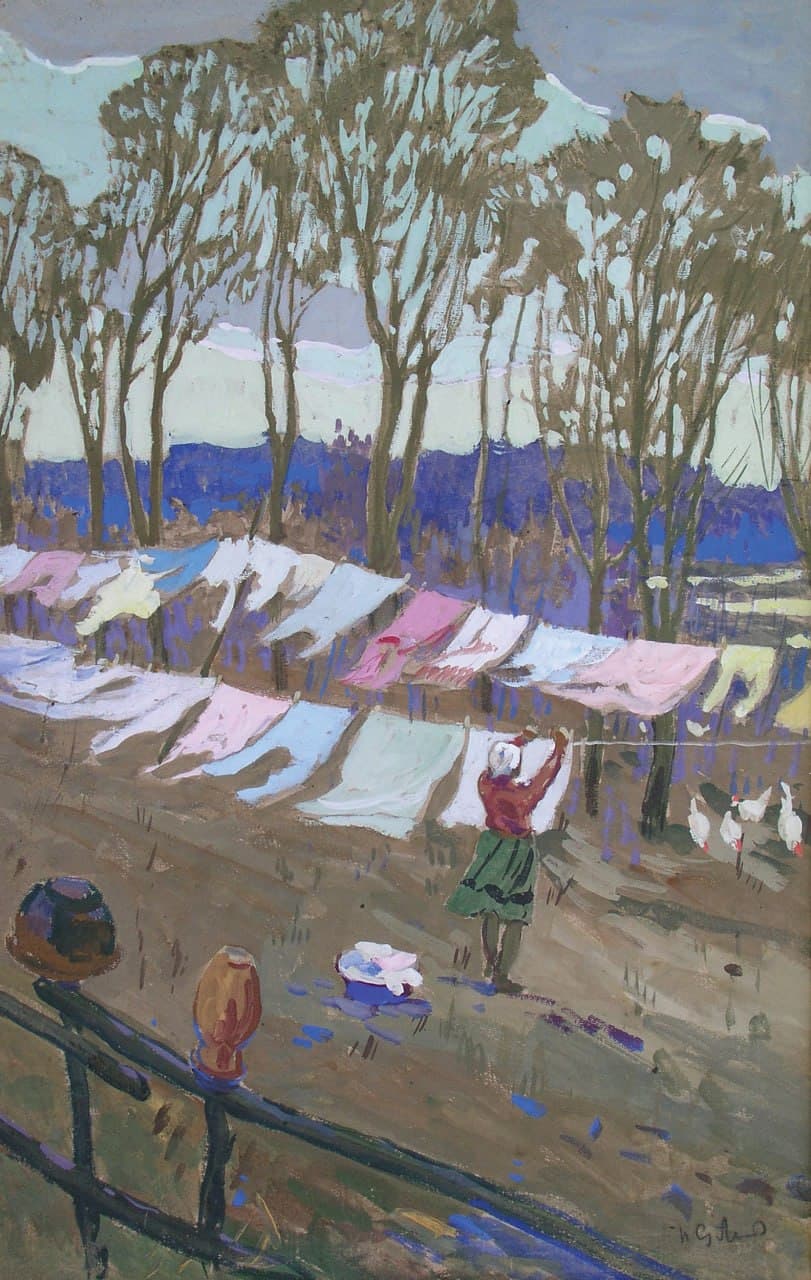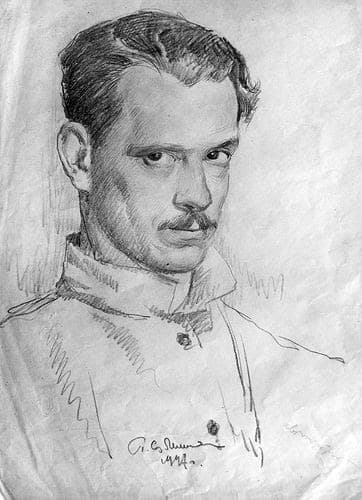
Petro Stepanovych Sulymenko (1914–1996) was a Ukrainian painter, landscape artist, and creator of thematic paintings. He was named an Honored Artist of Ukraine in 1974. He studied at the Kyiv Art Institute (1939–1947) under O. Shovkunenko. He traveled extensively. His most significant works are dedicated to the heroic deeds of naval soldiers on the fronts of World War II and during the October Revolution. Husband of artist Z. Zatsepina. He lived and worked in Kyiv.
Art Movements
Realism
Realism is an artistic movement that sought to depict reality as accurately and objectively as possible, holding that the purpose of art is to reflect all aspects of existence, rather than merely its idealized representation. The term was introduced by the French literary critic Jules Champfleury in the 1850s to denote art that opposed Romanticism and Academicism. In the visual arts, the significance of Realism as a style is quite controversial, and its boundaries are undefined. In a narrower sense, realism is understood as positivism, a movement in the visual arts of the second half of the 19th century. One of the first realists was the French artist Gustave Courbet (1819–1877), who opened his solo exhibition “The Pavilion of Realism” in Paris in 1855. Before him, artists of the Barbizon School—Théodore Rousseau, Jean-François Millet, and Jules Breton—worked in a realistic style. In the 1870s, realism split into two main movements: naturalism and impressionism. In contemporary painting, realism borders on the grotesque and anti-glamour.
Explore movement →Social Realism
Social Realism is an international art movement—spanning painting, photography, literature, and film—that emerged in the mid-19th century and peaked in the 20th century to expose the harsh socio-political conditions of the working class. It functions as a critical, unidealized depiction of poverty, labor struggles, and structural inequality to challenge power structures. Key Characteristics and Context Purpose: To draw attention to the everyday hardships of the poor and working classes, often functioning as a critique of capitalist, industrial, or governmental systems. Origin: The movement grew from 19th-century French and Russian realism, reacting against romanticism and bourgeois art styles. Resurgence: It thrived between the World Wars and during the 1930s Great Depression, particularly in the U.S. and Mexico, focusing on themes of labor, community, and resilience. Style: It emphasizes subject matter over form, often using a descriptive, gritty, and direct visual language.
Explore movement →