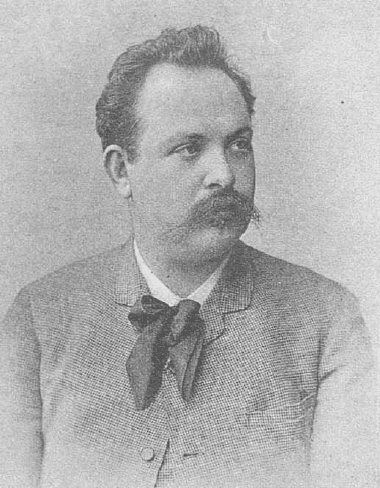
Mykola Serheiev was a landscape painter born in Kharkiv in 1855 who built his career in St Petersburg and died of typhus back in Kharkiv in 1919. Although catalogued almost everywhere as a Russian painter, his subjects were overwhelmingly Ukrainian: orchards, village gardens, the Dnipro and the Kharkiv-region countryside.
Mykola Oleksandrovych Serheiev was born in Kharkiv on 25 March 1855 into the family of a minor official and educated at the city's 2nd gymnasium. His first art teachers were Kharkiv figures — Dmytro Bezperchyi, who also taught Ilia Repin and Petro Levchenko, and the landscape painter Oleksandr Kyselov — and in 1876 he went to St Petersburg, where he took private lessons from the marine painter Lev Lagorio rather than enrolling directly; from 1878 he attended the Imperial Academy of Arts, taking a large encouragement medal in 1886. He was elected an honorary free associate of the Academy in 1887, received the Order of St Stanislaus 3rd class in 1889 for services to art, won an honourable mention at the Paris exhibition of the same year, and was made academician of landscape painting in 1910. He helped found the St Petersburg Society of Artists in 1890 and the Kuindzhi Society, and belonged to the Society of Russian Watercolourists. His painting is a quiet, unemphatic lyrical realism drifting towards impressionist handling: summer days, orchards in blossom, overgrown ponds, the edges of villages and gardens, worked in a soft light with little dramatic incident. The subjects are almost all Ukrainian — 'Fishing on the Dnipro' (1888), 'The Garden' (1889), 'Apple Trees in Blossom. In Ukraine' (1895) — and Russian critics of his own day noted that these were the landscapes 'dear to him' from his native region. He returned to Kharkiv and died there in the typhus epidemic of 1919. His works are scattered across the State Russian Museum and the provincial museums of Rybinsk, Irkutsk, Tomsk, Nizhny Novgorod and Pskov, with an 'Alley in the Garden' of 1906 in the National Museum in Warsaw.
Art Movements
Realism
Realism is an artistic movement that sought to depict reality as accurately and objectively as possible, holding that the purpose of art is to reflect all aspects of existence, rather than merely its idealized representation. The term was introduced by the French literary critic Jules Champfleury in the 1850s to denote art that opposed Romanticism and Academicism. In the visual arts, the significance of Realism as a style is quite controversial, and its boundaries are undefined. In a narrower sense, realism is understood as positivism, a movement in the visual arts of the second half of the 19th century. One of the first realists was the French artist Gustave Courbet (1819–1877), who opened his solo exhibition “The Pavilion of Realism” in Paris in 1855. Before him, artists of the Barbizon School—Théodore Rousseau, Jean-François Millet, and Jules Breton—worked in a realistic style. In the 1870s, realism split into two main movements: naturalism and impressionism. In contemporary painting, realism borders on the grotesque and anti-glamour.
Explore movement →Impressionism
Impressionism was a 19th-century French art movement (1870s-1880s) that revolutionized Western art by capturing fleeting moments and the shifting effects of light using visible brushstrokes, open composition, and vibrant colors. Focusing on modern life and landscapes, key artists included Claude Monet, Pierre-Auguste Renoir, Camille Pissarro, and Berthe Morisot. Usage Examples & Characteristics: Plein Air Painting: Painting outdoors to capture natural light, such as Monet’s studies of Rouen Cathedral or haystacks in varying weather conditions. Visible Brushwork: Thick, rapid, or broken brushstrokes intended to convey a sense of motion and the ephemeral nature of a scene. Everyday Subjects: Depicting leisure activities, urban life in Paris, or landscapes rather than historical or mythological scenes. Unusual Visual Angles: Inspired by photography, artists like Degas used candid-style, unconventional framing of subjects, such as dancers or laundresses. "Impressionist Music": A similar approach in music and dance, focusing on mood and atmosphere over rigid structure, with artists like Claude Debussy and Maurice Ravel.
Explore movement →Works by Mykola Serheiev
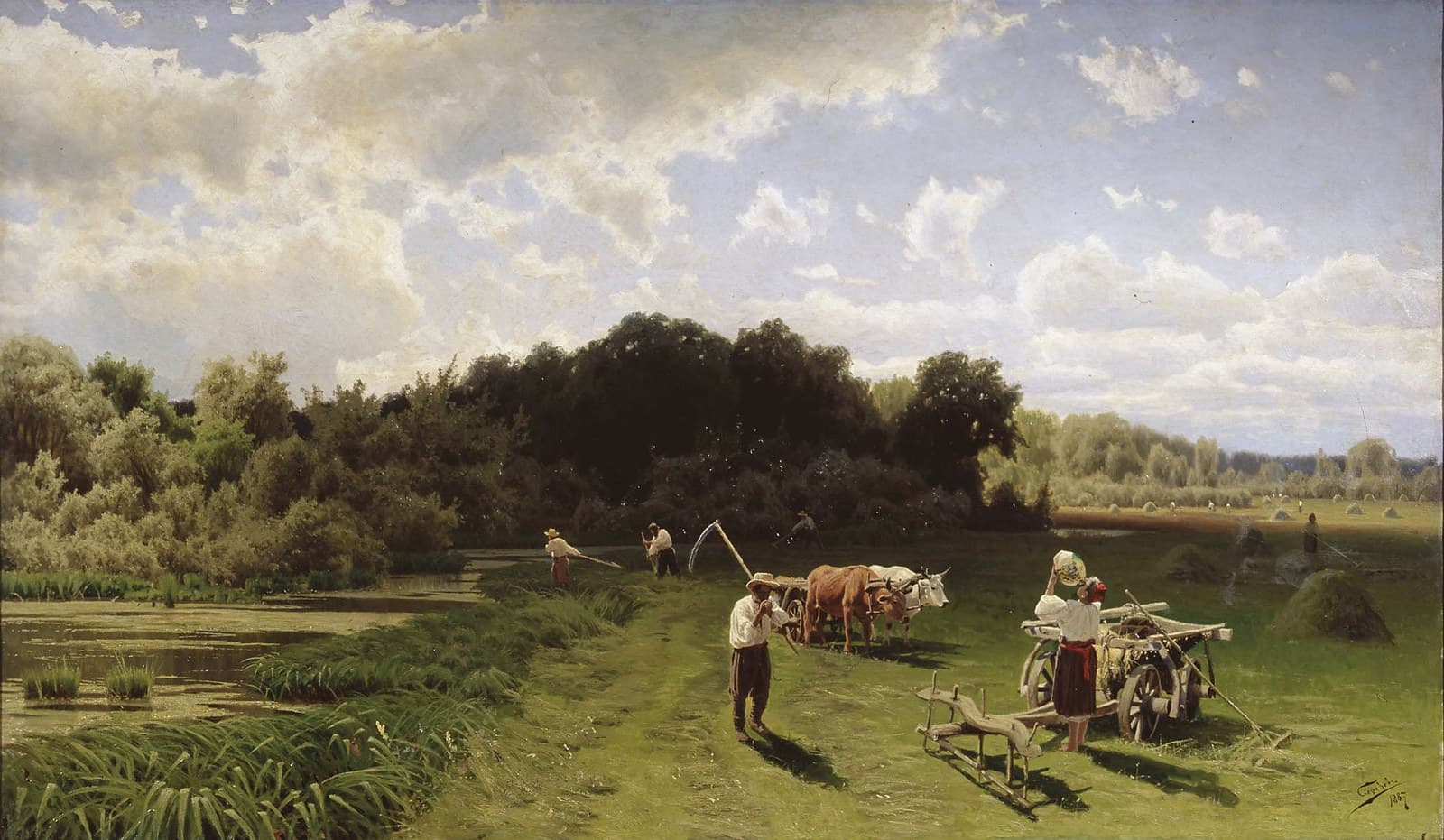
Haymaking
Mowers at work in a summer meadow, painted the year Serheiev was elected an honorary free associate of the Imperial Academy. The picture places its figures small inside a broad, hazy field rather than making them the subject.
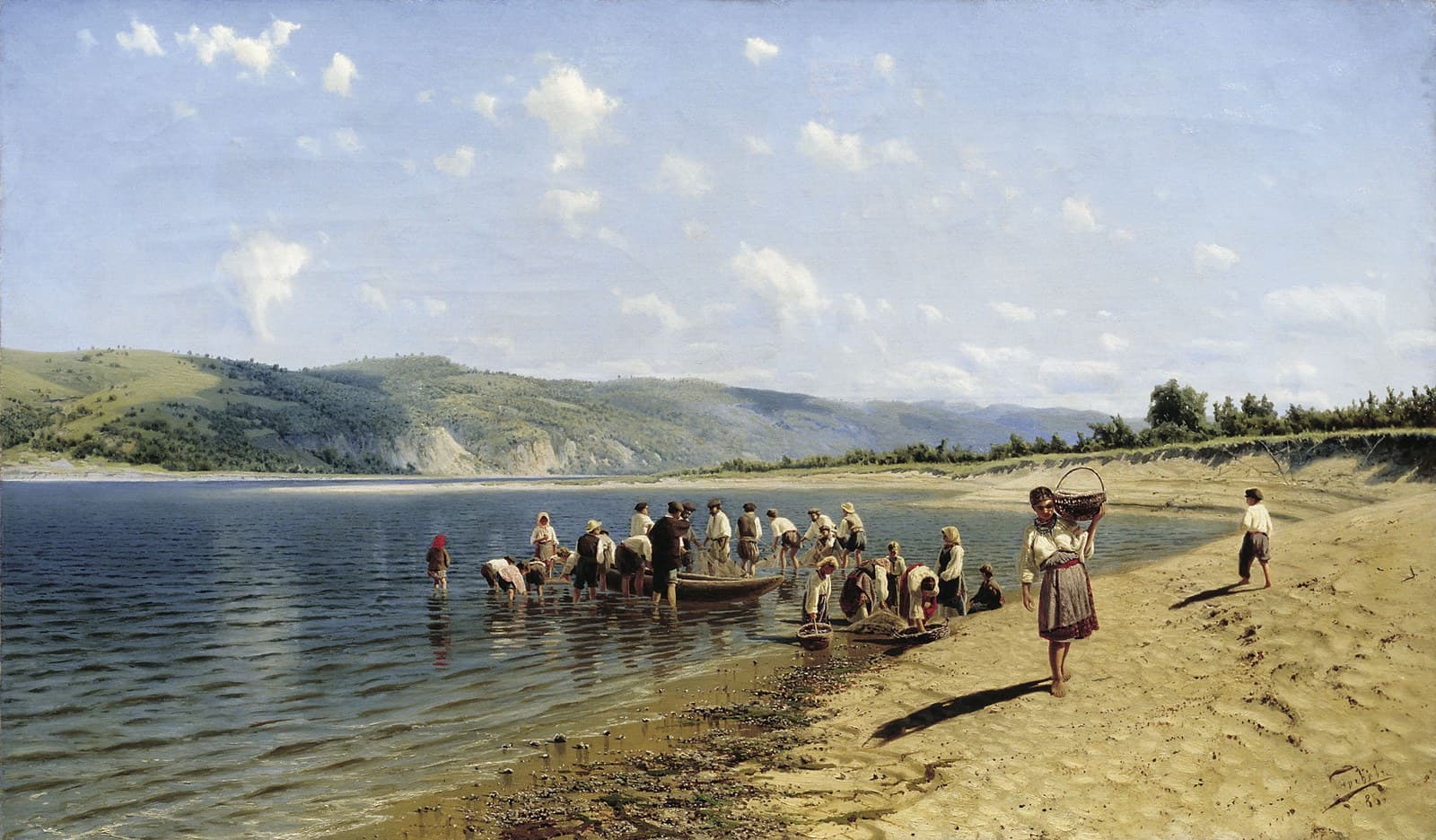
Fishing on the Dnipro
Fishermen working a seine net on the Dnipro, one of Serheiev's few compositions built around labour rather than pure landscape. The wide river and low bank are treated with the same soft, even light as his garden pictures.
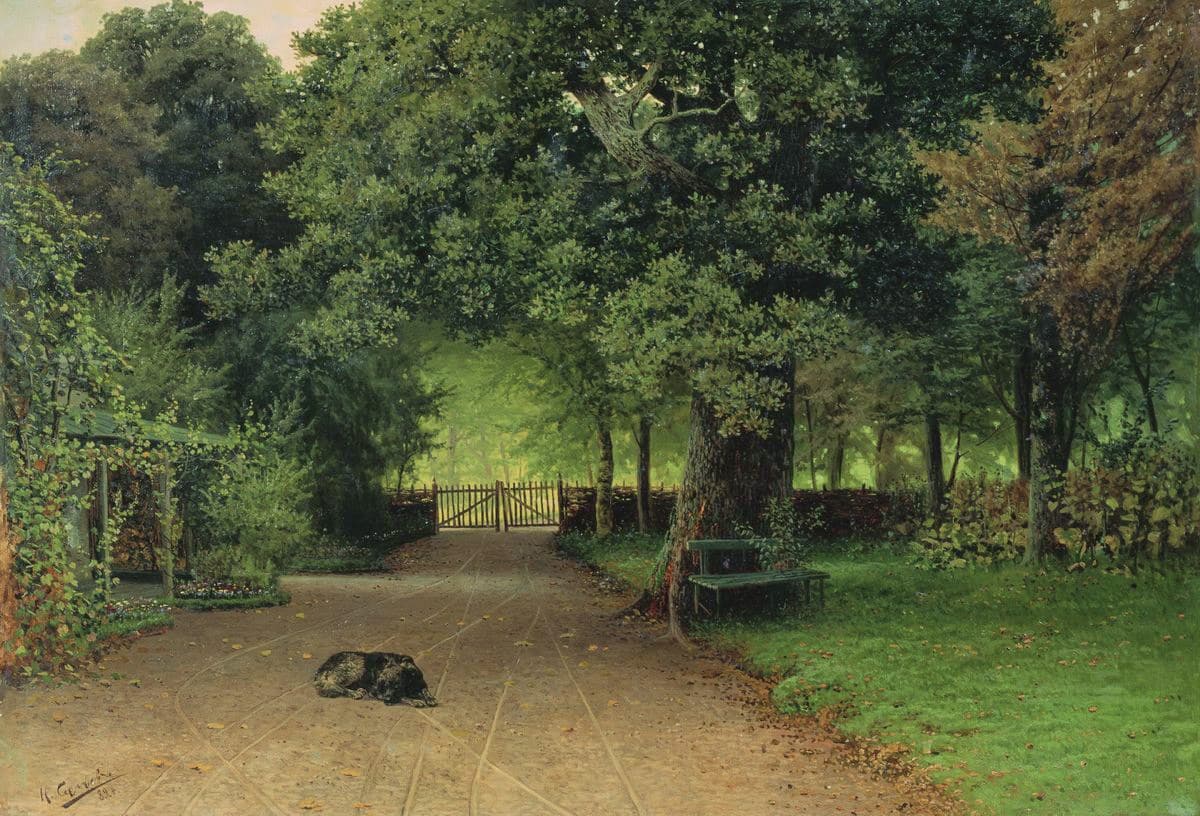
The Garden
An overgrown village garden painted in the year Serheiev received both the Order of St Stanislaus and an honourable mention in Paris. It is one of the clearest statements of his preferred subject: an enclosed, sun-filled garden with no anecdote in it.
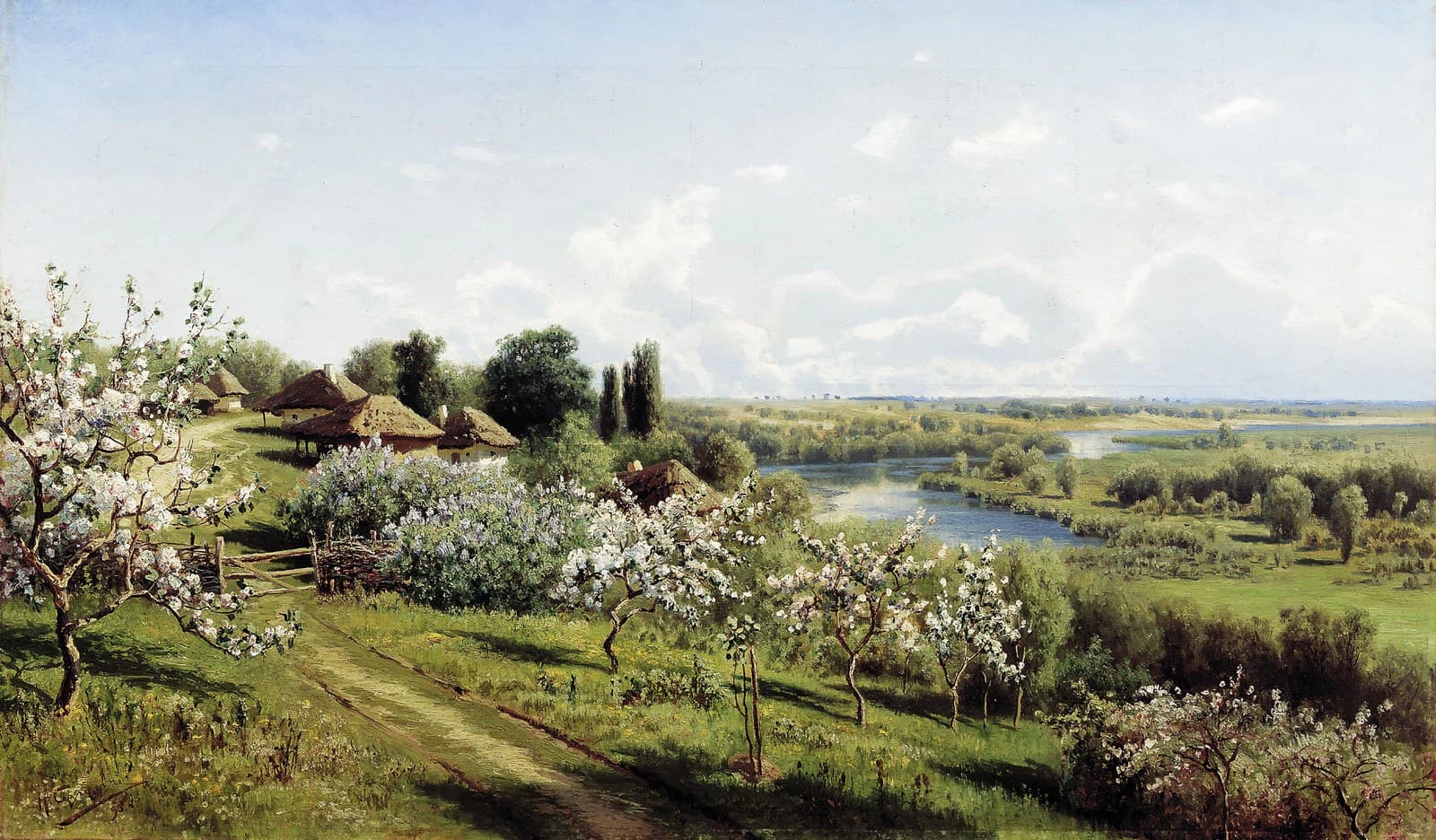
Apple Trees in Blossom. In Ukraine
A Ukrainian orchard in full flower, catalogued in the nineteenth century under the imperial term 'Little Russia'. The blossom is handled as a dense screen of broken white and pink, the closest Serheiev came to impressionist paint.
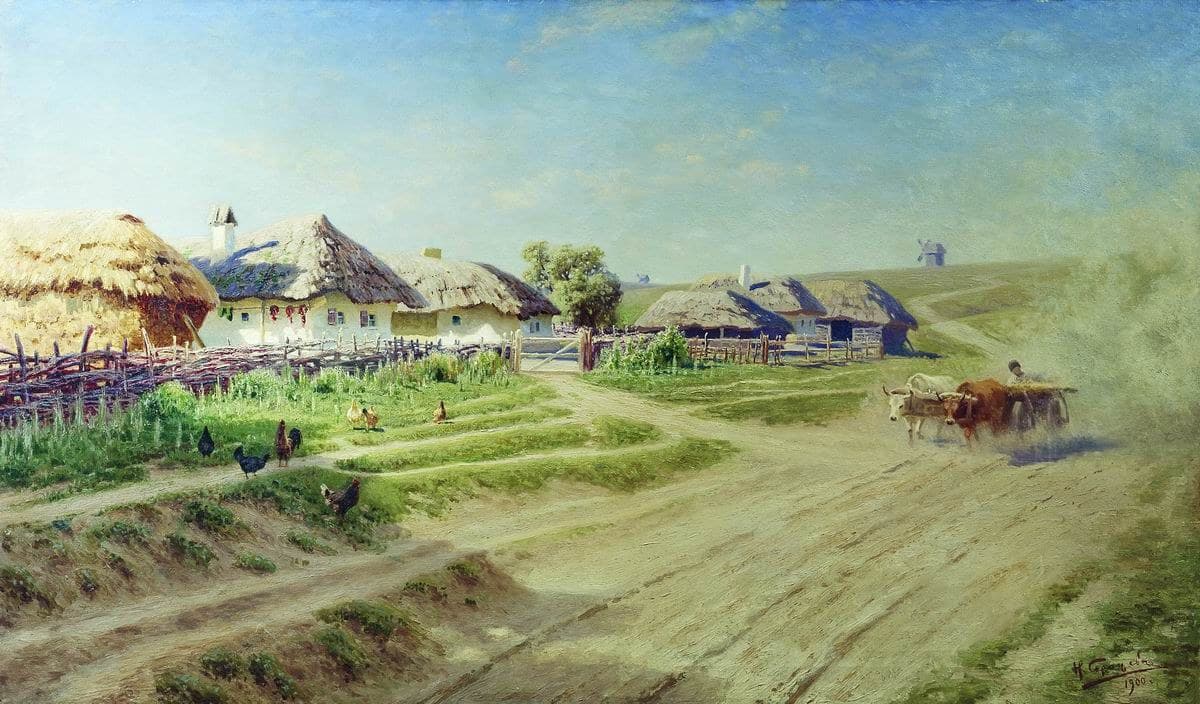
Street in a Ukrainian Village
Extra.
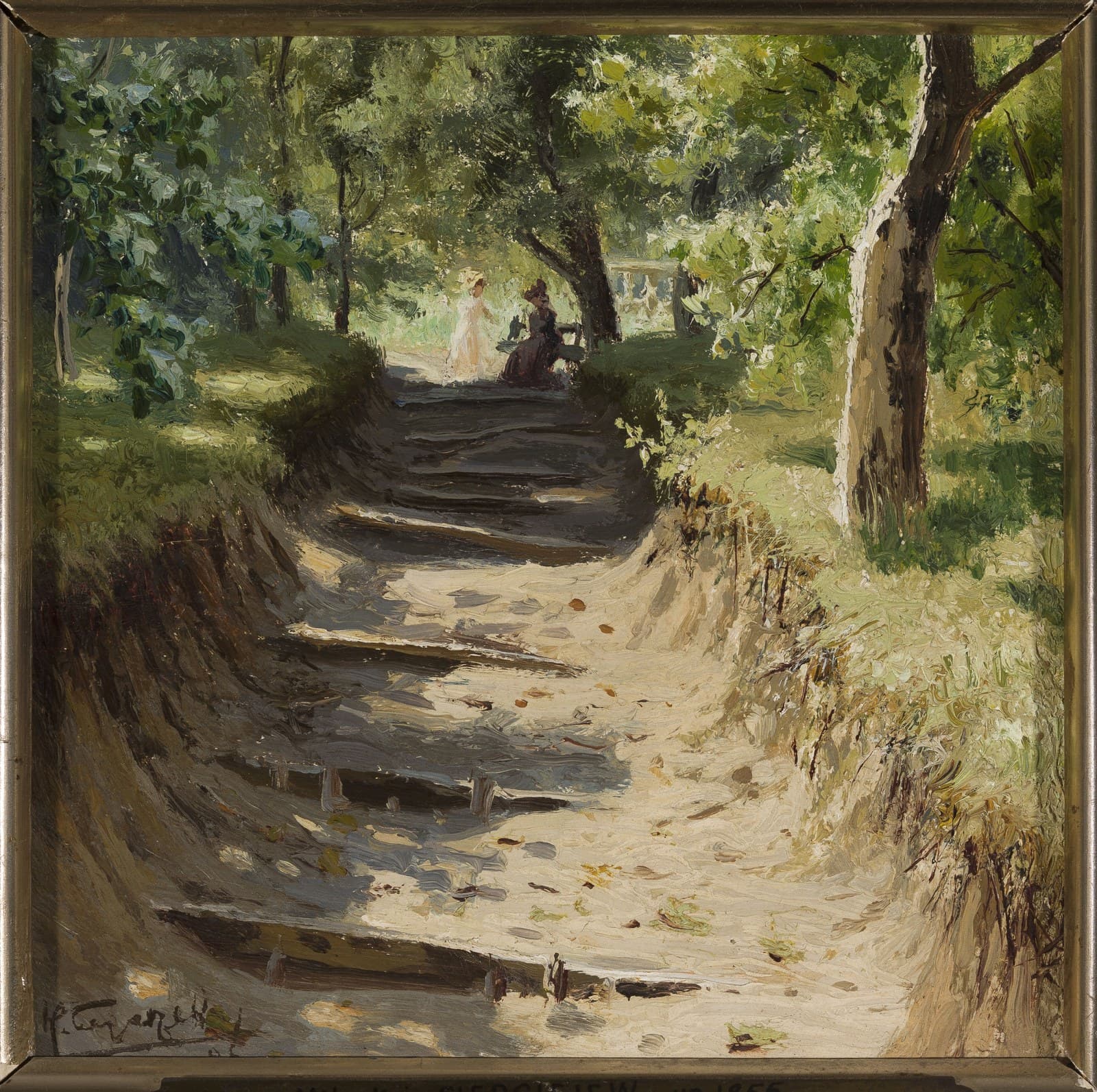
Alley in the Garden
A tiny square panel of a shaded garden path, painted late in Serheiev's career. Its scale and directness make it effectively a plein-air study raised to the status of a finished picture.