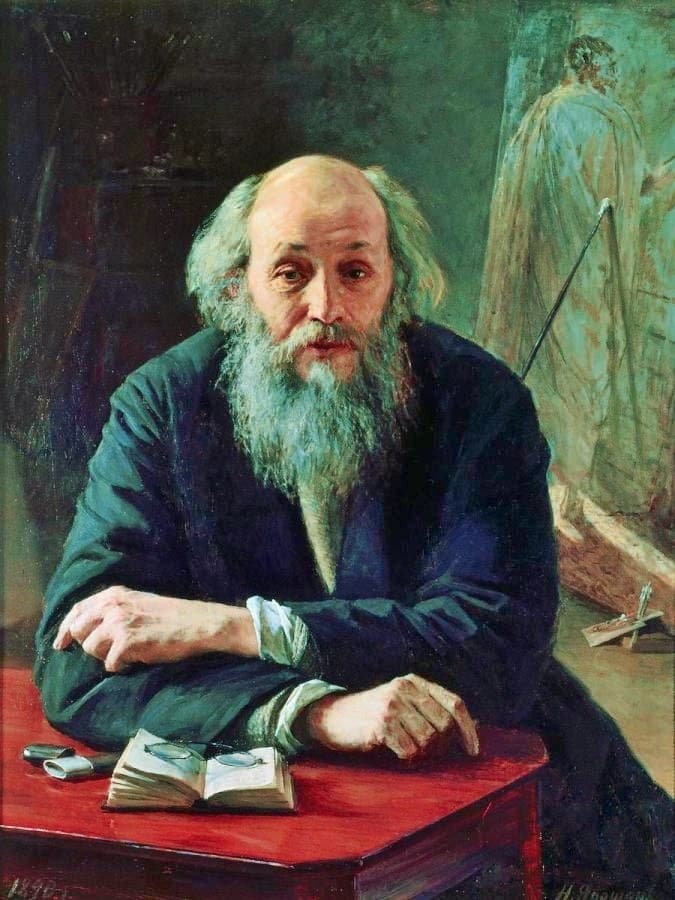
Mykola Ge (1831-1894) was a painter of Franco-Ukrainian descent, a leading figure of the Peredvizhniki generation and a radical reinterpreter of biblical subjects. From 1876 until his death he lived on the khutir Ivanivskyi in Chernihiv gubernia, where he painted Ukrainian landscapes and peasants alongside his late Passion cycle.
Mykola Ge was born in Voronezh in 1831 to a landowning family descended from a French emigre; his mother Olena Sadovska was Ukrainian, and he spent his early childhood on the family estate at Popelukhy in Podillia. At nine he was sent to the First Kyiv Gymnasium, where the historian Mykola Kostomarov and the pre-1848 atmosphere of freedom shaped him decisively; he enrolled in mathematics at Kyiv University in 1847 before transferring to St Petersburg and entering the Academy of Arts. His Last Supper (1863) was bought by Alexander II and made him a professor of historical painting, but he spent much of the 1860s and early 1870s in Italy, producing Florentine and Carrara landscapes and the psychologically searching portraits of Herzen, Nekrasov, Saltykov-Shchedrin and Kostomarov. In 1875 he bought the khutir Ivanivskyi near Plysky station in Chernihiv gubernia and settled there from 1876, farming, adopting a near-peasant way of life under the influence of his friendship with Leo Tolstoy, and turning back to the Gospel. The Ukrainian countryside also made a landscape painter of him: Moonlit Night, Pond at the Farmstead, Dawn, Portrait of a Ukrainian Boy and Old Peasant all date from these years. His late Passion pictures — What Is Truth? (1890), Judas (Conscience) (1891), The Judgment of the Sanhedrin (1892), Golgotha and the Crucifixions — were repeatedly banned by the censor and the Academy; his son had to smuggle the Crucifixions out of the Russian Empire, and some are now lost. He taught extensively in Ukrainian art schools, above all Mykola Murashko's Kyiv Drawing School, and financially supported the Gogol monument in Nizhyn in 1881. Ge died at Ivanivskyi in June 1894 and is buried there, in what is now the village of Shevchenka in Chernihiv oblast; a memorial stone was unveiled at Plysky on his 190th anniversary in 2021.
Art Movements
Realism
Realism is an artistic movement that sought to depict reality as accurately and objectively as possible, holding that the purpose of art is to reflect all aspects of existence, rather than merely its idealized representation. The term was introduced by the French literary critic Jules Champfleury in the 1850s to denote art that opposed Romanticism and Academicism. In the visual arts, the significance of Realism as a style is quite controversial, and its boundaries are undefined. In a narrower sense, realism is understood as positivism, a movement in the visual arts of the second half of the 19th century. One of the first realists was the French artist Gustave Courbet (1819–1877), who opened his solo exhibition “The Pavilion of Realism” in Paris in 1855. Before him, artists of the Barbizon School—Théodore Rousseau, Jean-François Millet, and Jules Breton—worked in a realistic style. In the 1870s, realism split into two main movements: naturalism and impressionism. In contemporary painting, realism borders on the grotesque and anti-glamour.
Explore movement →Existentialism
Existentialism is a 20th-century philosophical movement emphasizing individual freedom, responsibility, and subjectivity. It posits that "existence precedes essence," meaning people are not born with a pre-defined purpose but create their own meaning through choices and actions in an otherwise absurd, meaningless universe.
Explore movement →Works by Mykola Ge
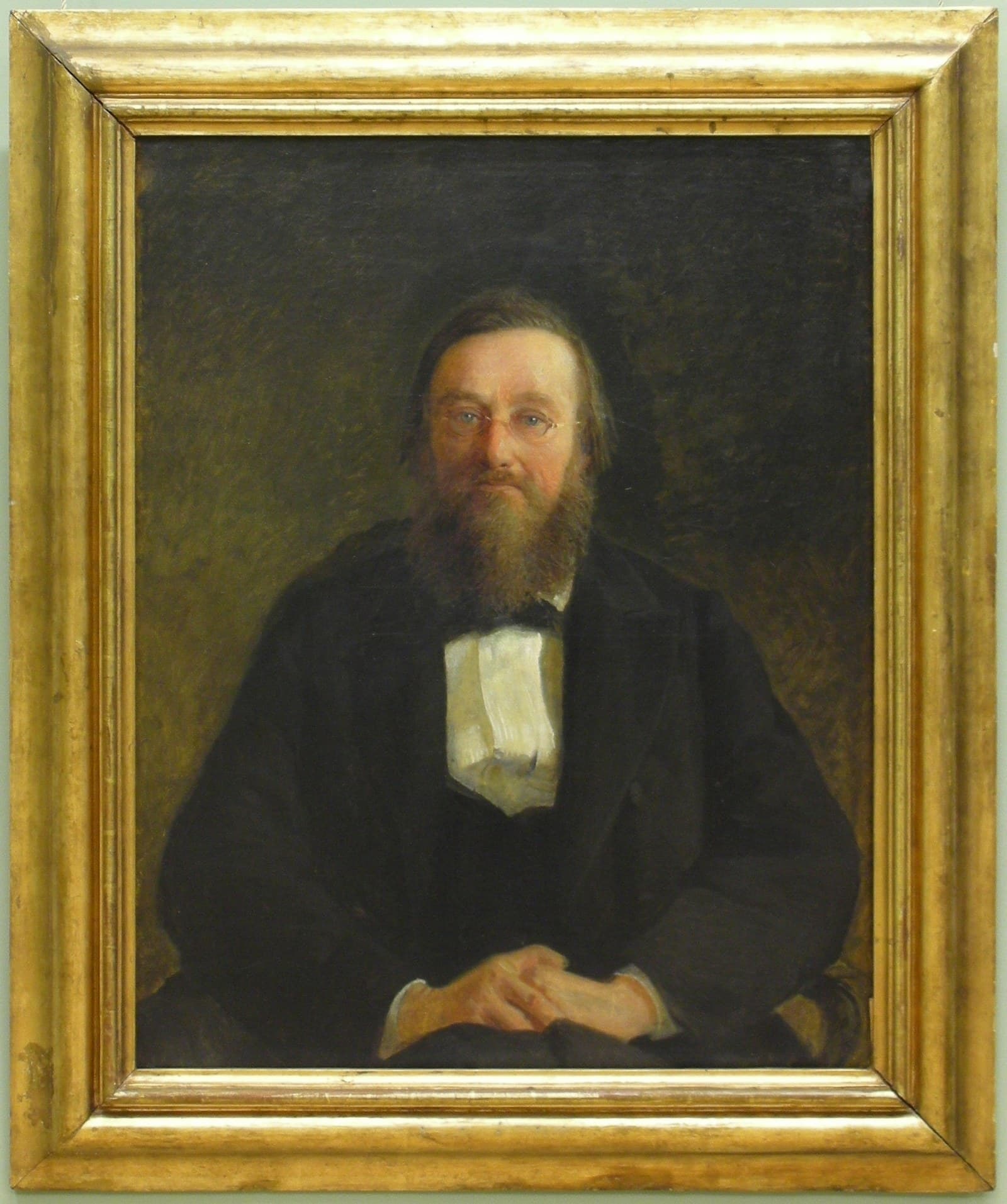
Portrait of the Historian Mykola Kostomarov
Ge's portrait of Mykola Kostomarov, the Ukrainian historian and Cyril and Methodius Brotherhood member who had taught him at the First Kyiv Gymnasium. Critics have long counted it, with the Saltykov-Shchedrin portrait, among his most intellectually charged likenesses.
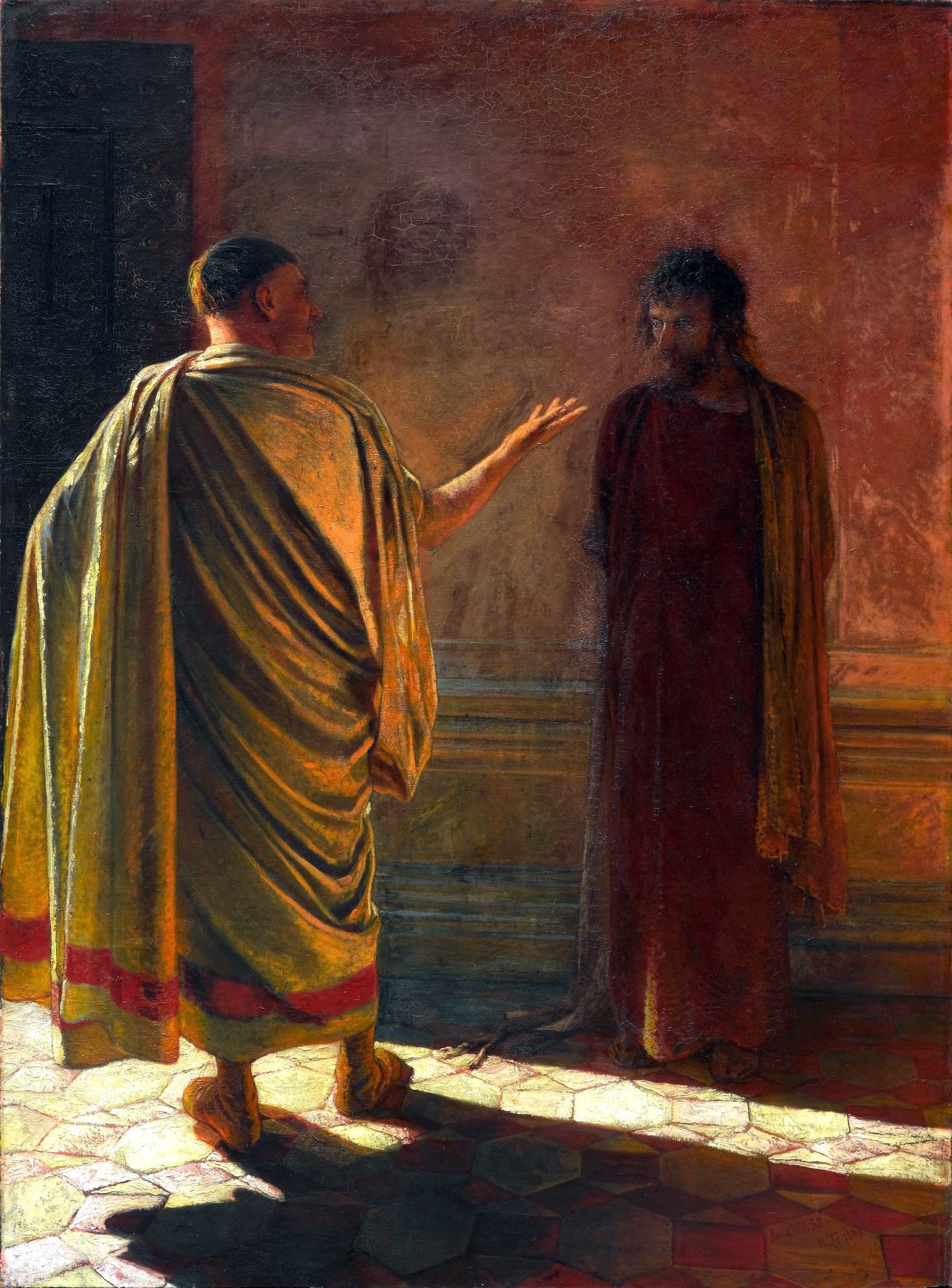
What Is Truth? Christ and Pilate
Painted over his earlier canvas Mercy, this is Ge's most notorious late work: a shadowed, exhausted Christ confronted by a Pilate standing in full light. Its refusal of any idealised Saviour outraged church and academy alike and the picture was withdrawn from exhibition.
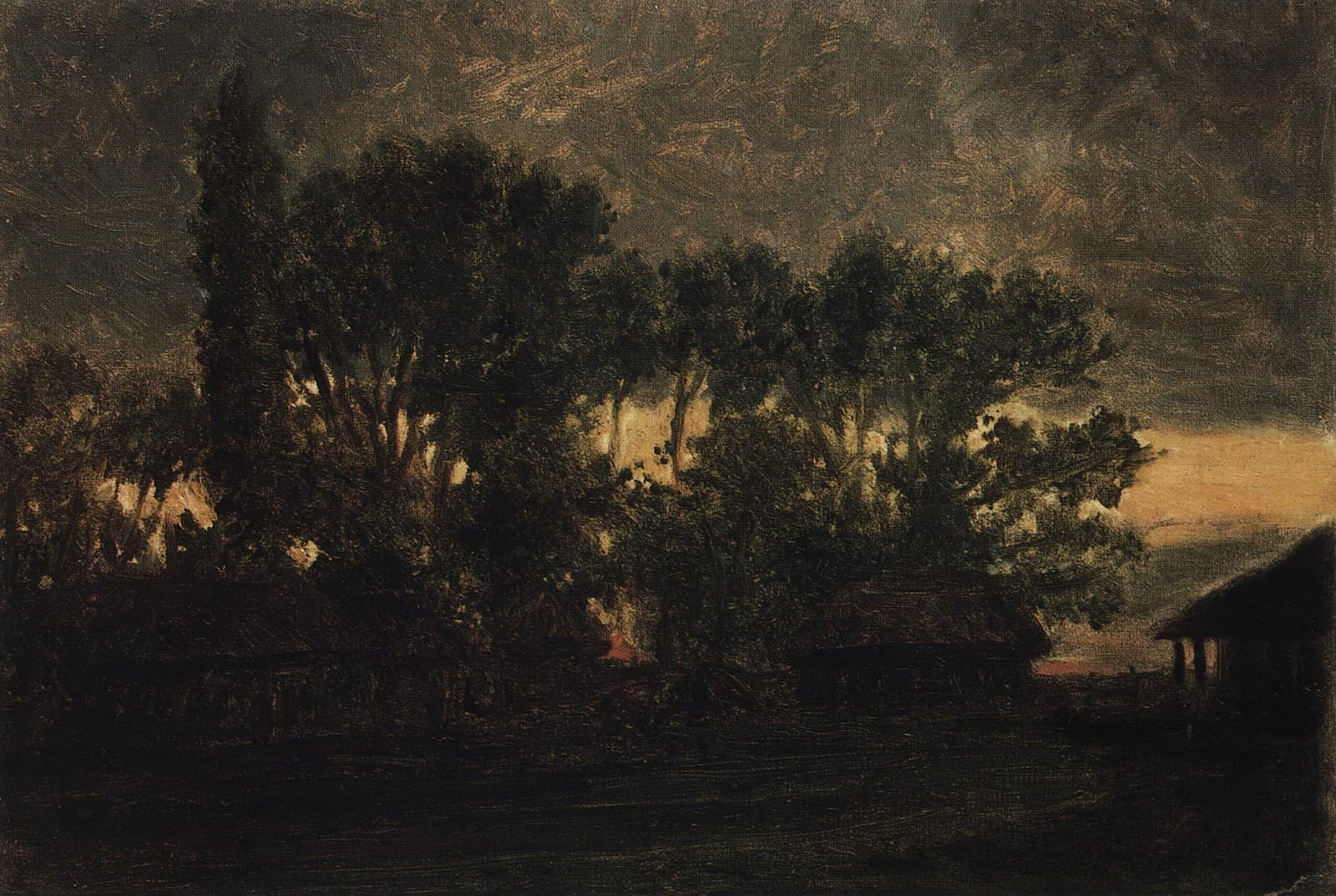
Dawn. Khutir Ivanivskyi
High-resolution, unwatermarked alternative from the same Khutir Ivanivskyi landscape series, in case the watermarked 500 px 'Moonlit Night' is unusable.
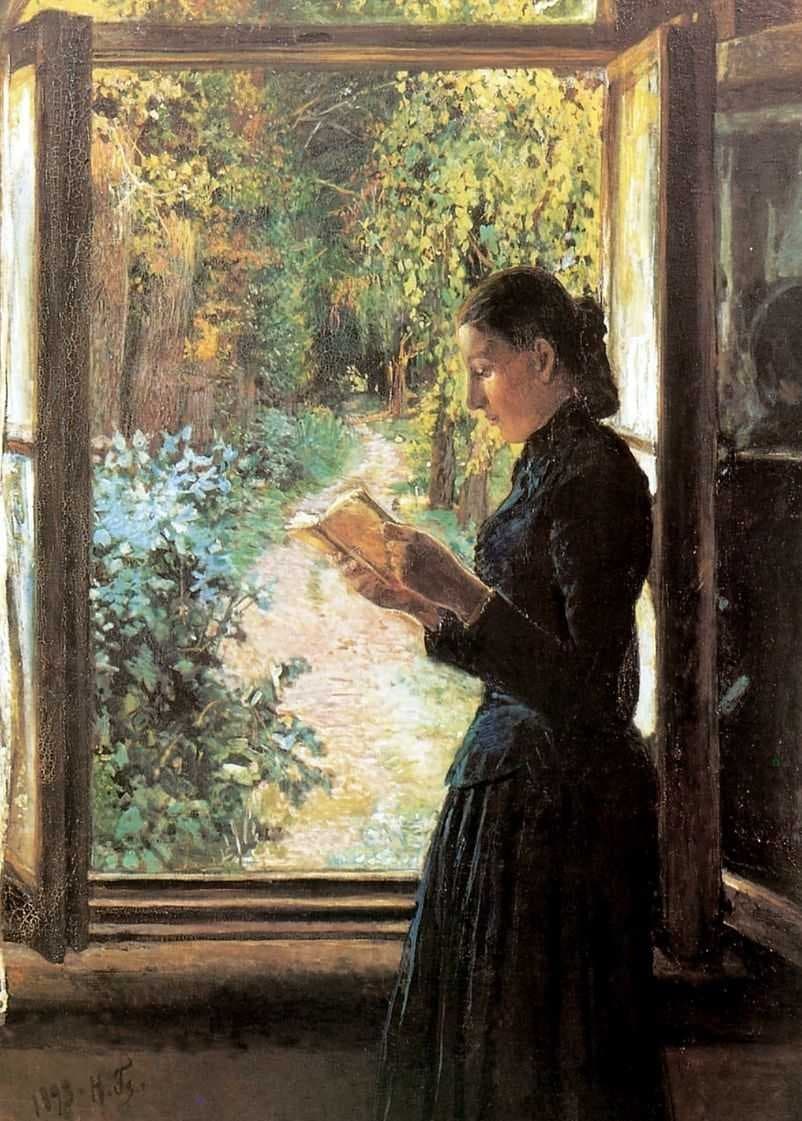
Portrait of Nataliia Petrunkevych
One of Ge's last works, painted at Ivanivskyi: the daughter of his Chernihiv neighbours stands reading by an open window with the twilight garden behind her. The full-length format and the dissolving green half-light make it the most lyrical portrait of his Ukrainian years.
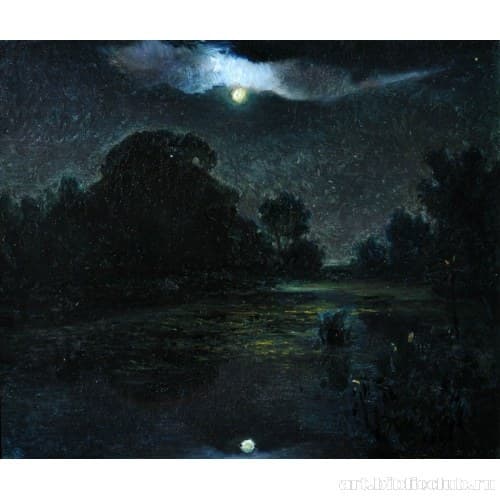
Moonlit Night
A nocturne painted at Ge's own khutir Ivanivskyi in Chernihiv gubernia, sometimes catalogued as Moonlit Night. Farmstead. It belongs to the small group of Ukrainian landscapes in which the moralist of the Passion cycle let himself work as a pure romantic of light.
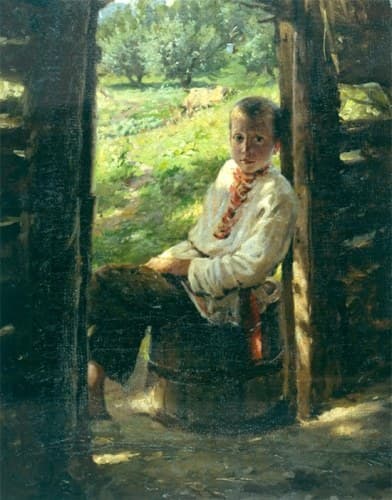
Portrait of a Ukrainian Boy
A study head of a village boy from the Chernihiv countryside around Ge's farmstead, painted with none of the ethnographic prettiness of the period. It is one of a small group of peasant portraits — with Old Peasant — that Ge made among his neighbours.