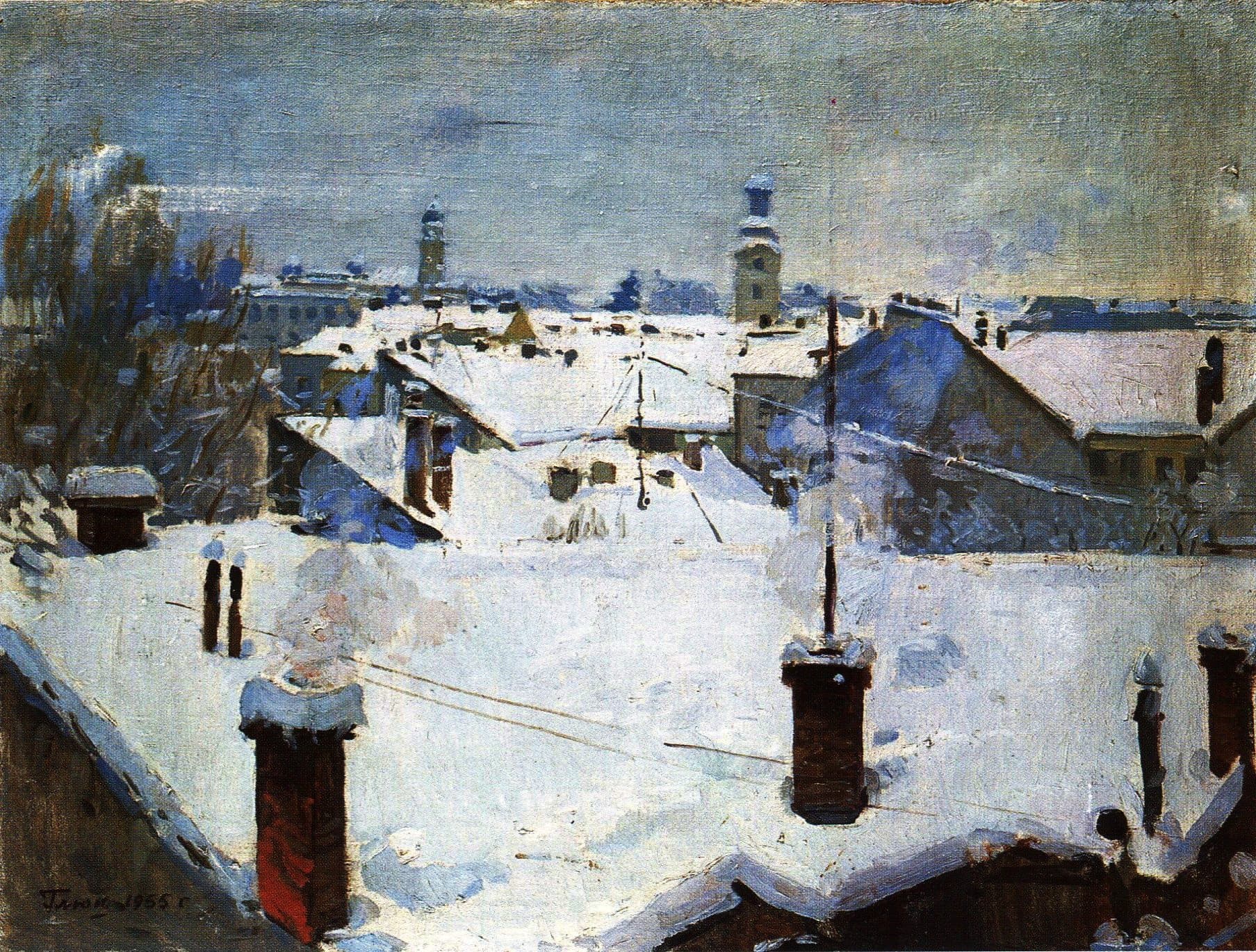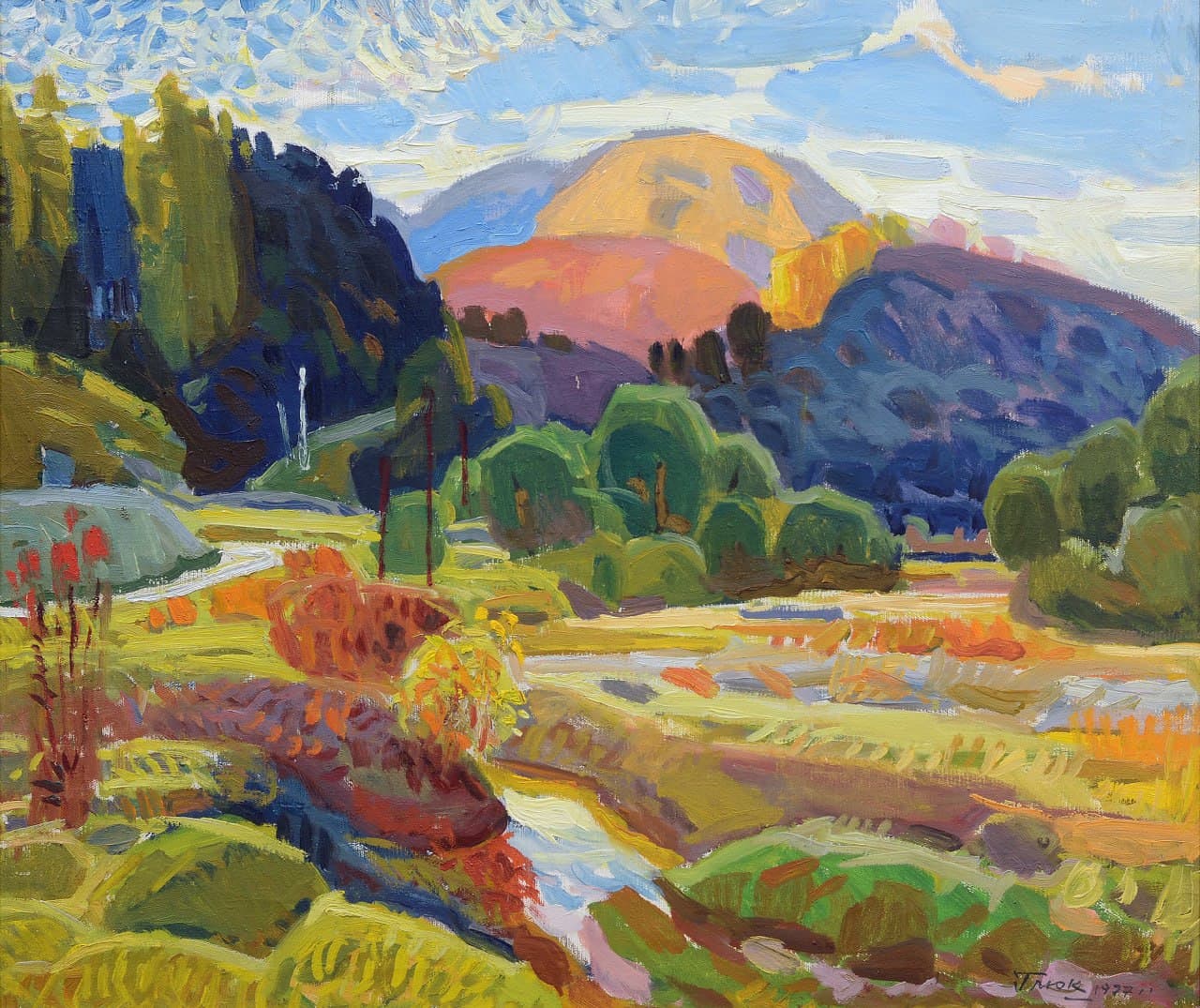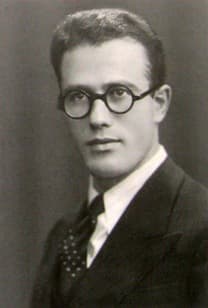
He painted genre scenes, portraits, and landscapes. Art historian Olena Polianska noted the artist’s consistent inclination toward depicting laborers—lumberjacks, collective farm workers—and their lives in the fields and mountains. This is a distinctive feature of the realist artist’s work.
Portraits occupied a significant place in the artist’s body of work. Psychologically nuanced portraits of his contemporaries convey to the viewer a profound insight into the subject through a kind of “spiritual confession” of those portrayed. Depicted in traditional costumes and modern attire, both indoors and outdoors, they bring a remarkable touch of tenderness and joie de vivre.
Hliuk became one of the founders of the Transcarpathian post-war landscape school, notes Igor Sharov. The decorative quality characteristic of this school significantly shaped the painterly style of the artist’s canvases. While in his portrait works Hluk showed a tendency toward monumentalizing images—this was particularly evident in his portrait-genre compositions—in his landscape canvases he revealed the principles of decorativism, stylistically close to the work of other Transcarpathian artists who were active during this era.