
Denys Horodnychyi (b. 1984) is a Ukrainian landscape painter based in Poltava. He works in oil on canvas and cardboard, mostly at small scale, on the rivers, fields and coastlines of Ukraine and occasional Mediterranean subjects. His stated aim is to catch the changing states and moods of nature rather than to describe a place.
Denys Horodnychyi was born in 1984 and lives and works in Poltava. He studied at the Poltava Children's Art School from 1996 to 2001 and then at the Yuriy Kondratyuk Poltava National Technical University from 2001 to 2007. His subject is almost entirely the Ukrainian landscape: the Psel and the Dnipro, riverbanks and rocky beaches, summer fields, and the light immediately after rain. He describes his own interest as expressing "the various states of nature, its mood" rather than topographical likeness, and works in a loose, tonal, broadly post-impressionist idiom in which weather and time of day drive the palette. Most of his paintings are small — many under 50 cm on the longest side, some as narrow as 13 × 37 cm — and are executed in oil on canvas or on cardboard, frequently sold framed. He has sold internationally through Artfinder since 2017, where more than sixty works are listed, and is also carried by Jose Art Gallery, Imagine Point Gallery and the Ukrainian dealer Etiud. Occasional works step outside Ukraine, such as a view of Limassol in Cyprus, but the core of the body of work stays with the rivers of the Poltava region. He publishes his own titles in English on the international platforms, which is why no Ukrainian titles are asserted for the individual works below.
Portrait: photograph sourced from d3rf6j5nx5r04a.cloudfront.net. © the photographer / rights holder; shown for editorial purposes. Contact us for attribution or removal.
Art Movements
Impressionism
Impressionism was a 19th-century French art movement (1870s-1880s) that revolutionized Western art by capturing fleeting moments and the shifting effects of light using visible brushstrokes, open composition, and vibrant colors. Focusing on modern life and landscapes, key artists included Claude Monet, Pierre-Auguste Renoir, Camille Pissarro, and Berthe Morisot. Usage Examples & Characteristics: Plein Air Painting: Painting outdoors to capture natural light, such as Monet’s studies of Rouen Cathedral or haystacks in varying weather conditions. Visible Brushwork: Thick, rapid, or broken brushstrokes intended to convey a sense of motion and the ephemeral nature of a scene. Everyday Subjects: Depicting leisure activities, urban life in Paris, or landscapes rather than historical or mythological scenes. Unusual Visual Angles: Inspired by photography, artists like Degas used candid-style, unconventional framing of subjects, such as dancers or laundresses. "Impressionist Music": A similar approach in music and dance, focusing on mood and atmosphere over rigid structure, with artists like Claude Debussy and Maurice Ravel.
Explore movement →1991–presentContemporary Ukrainian Painting
Painting made in independent Ukraine, from the 1991 declaration of independence onward. It is pluralist rather than programmatic: plein-air landscape and psychological portraiture continue alongside conceptual, minimalist and symbolist strands, with a marked turn after 2014 and especially after 2022 toward wartime subjects, national memory and the vernacular Ukrainian village.
Explore movement →Works by Denys Horodnychyi
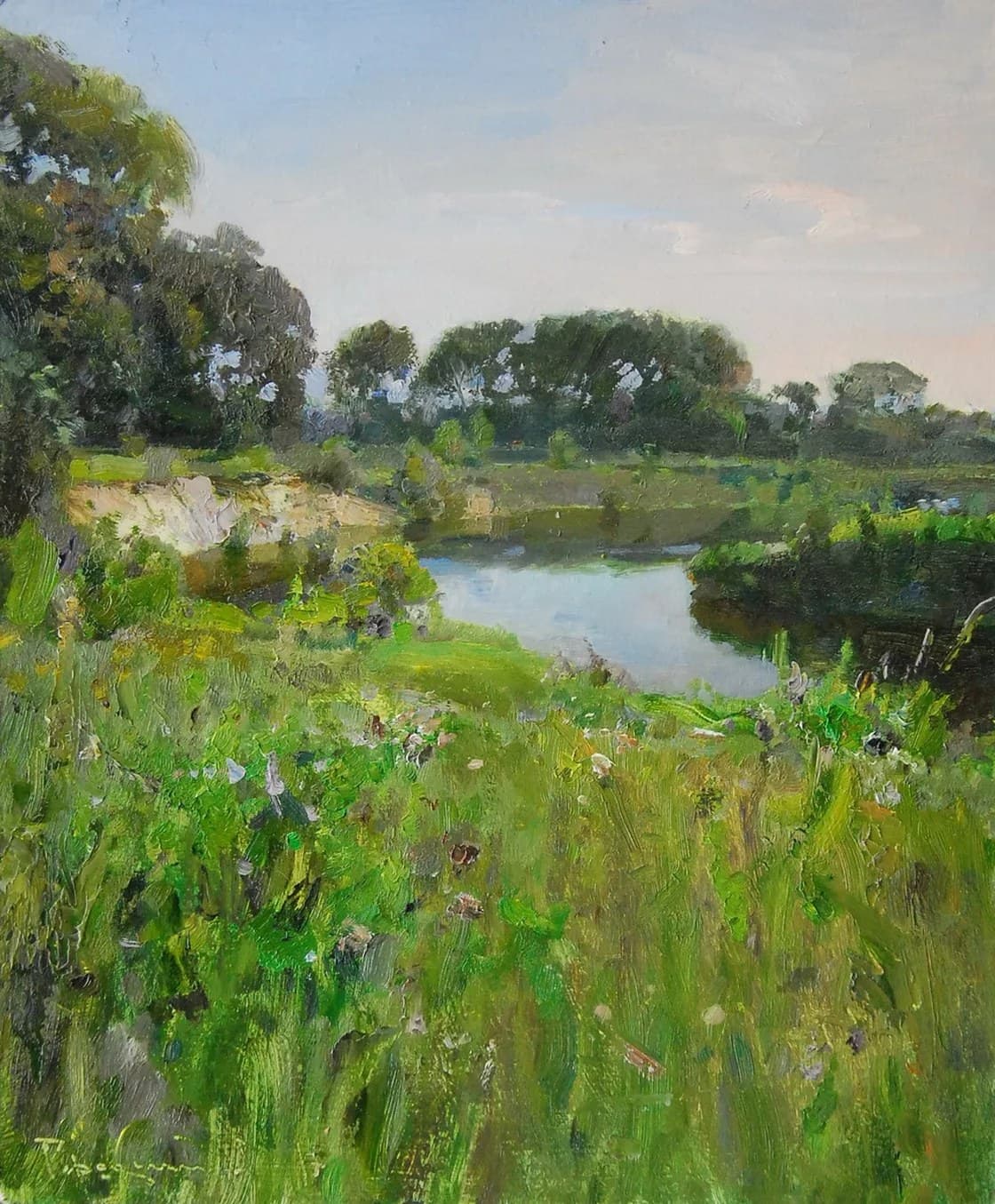
Psel
A small oil study of the Psel, the river that runs through the Poltava region and recurs throughout Horodnychyi's work. No year is recorded by the gallery.
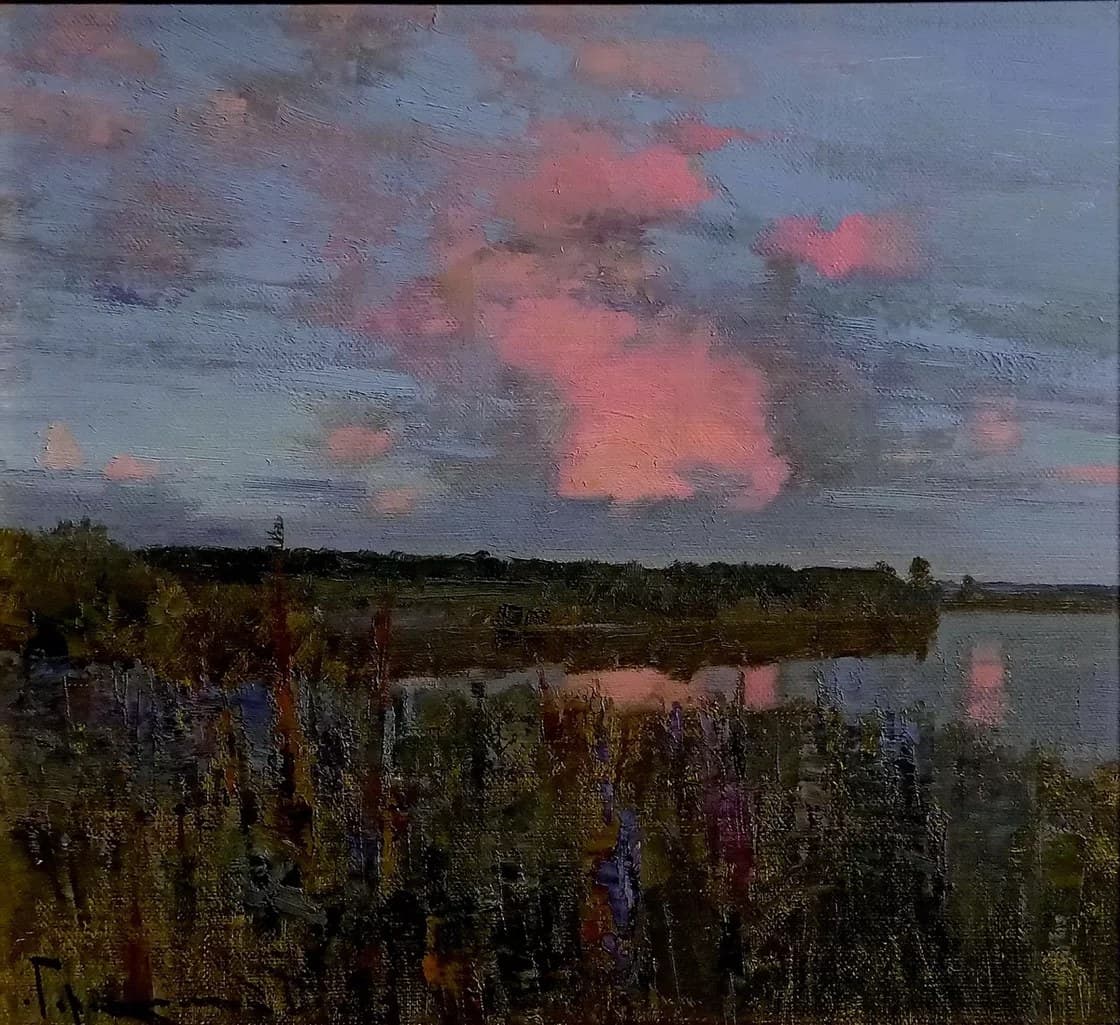
After the May rain
One of several paintings in which Horodnychyi works on the specific washed, high-contrast light of the moments after rain.
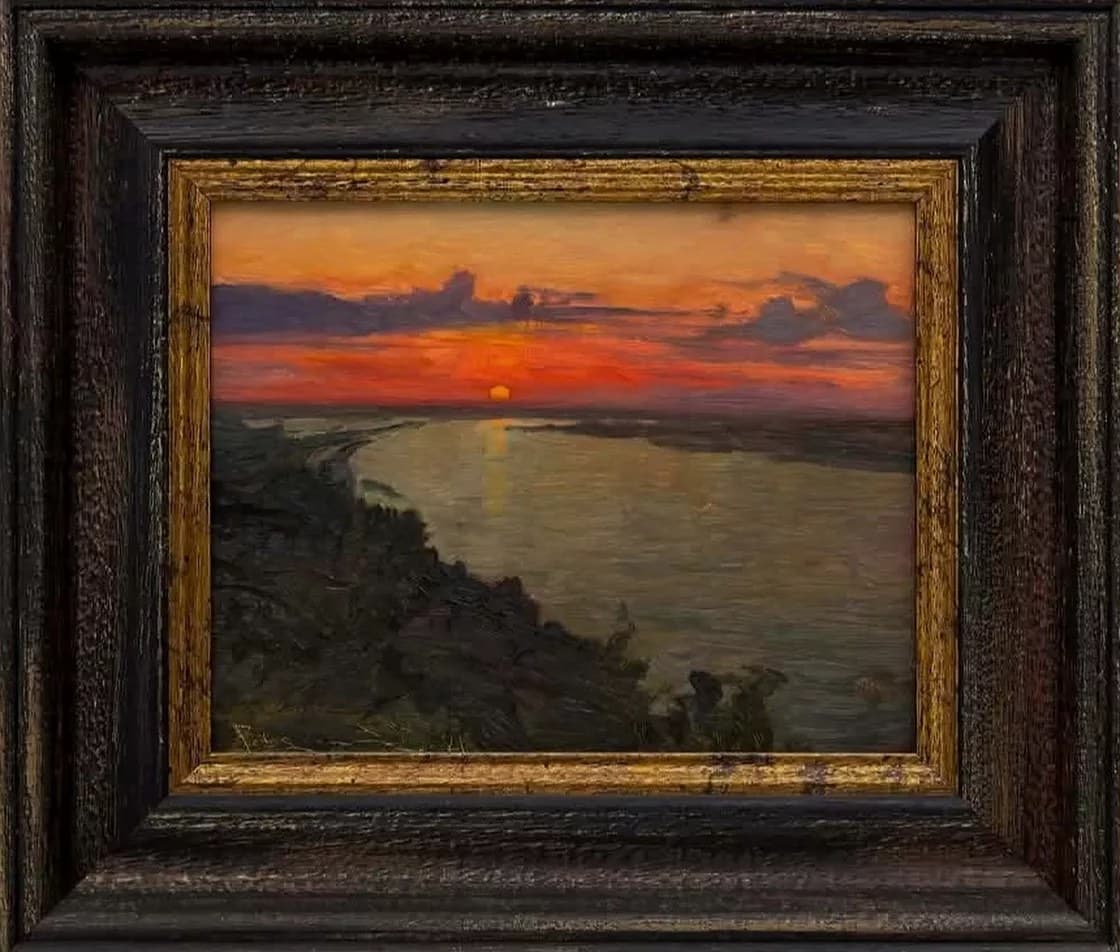
Evening coolness of the Dnieper
A small evening view on the Dnipro, sold framed; the cooling light on the water is the whole subject.
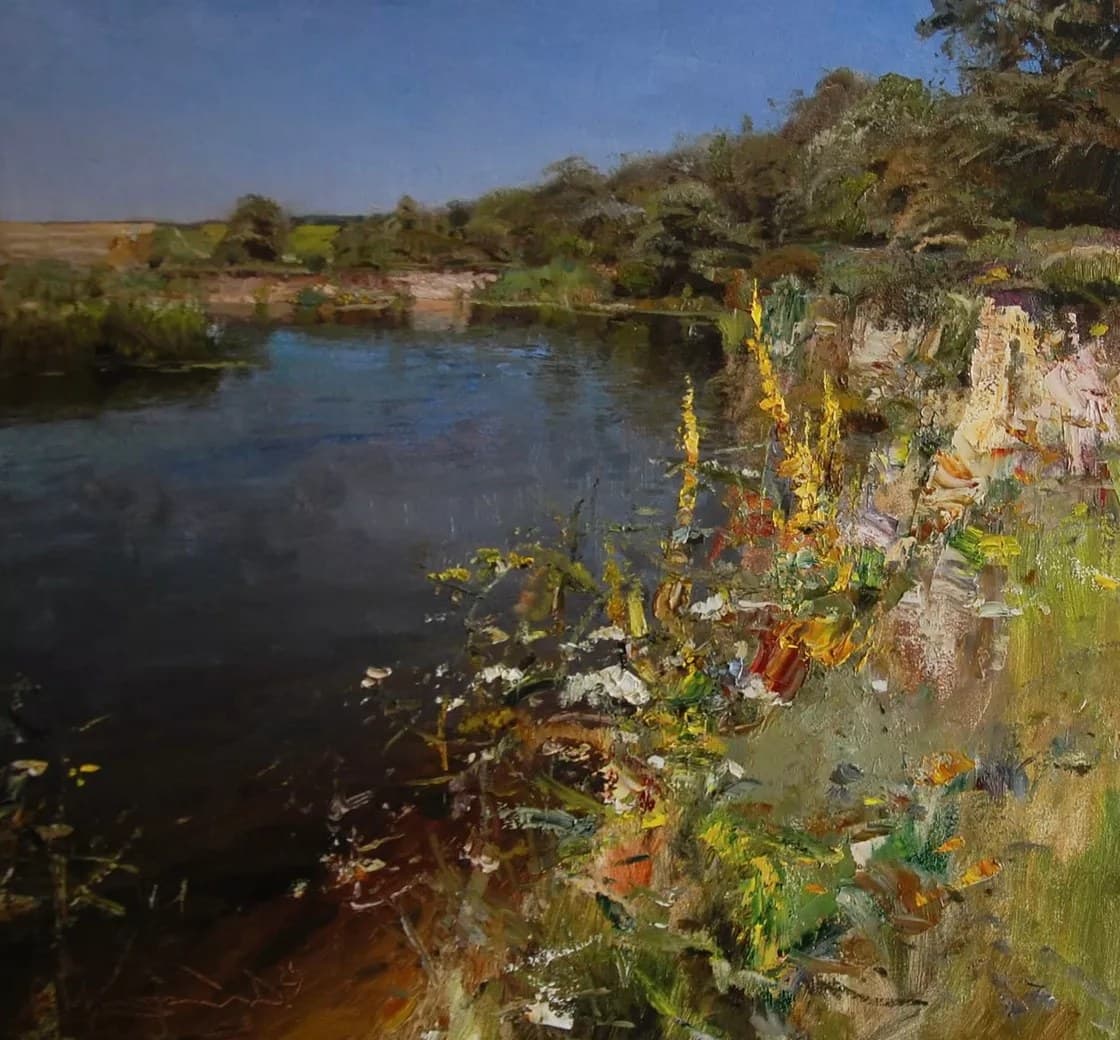
Breath of summer
An unframed summer landscape, at 47 × 44 cm one of the larger canvases in the artist's current Artfinder catalogue.