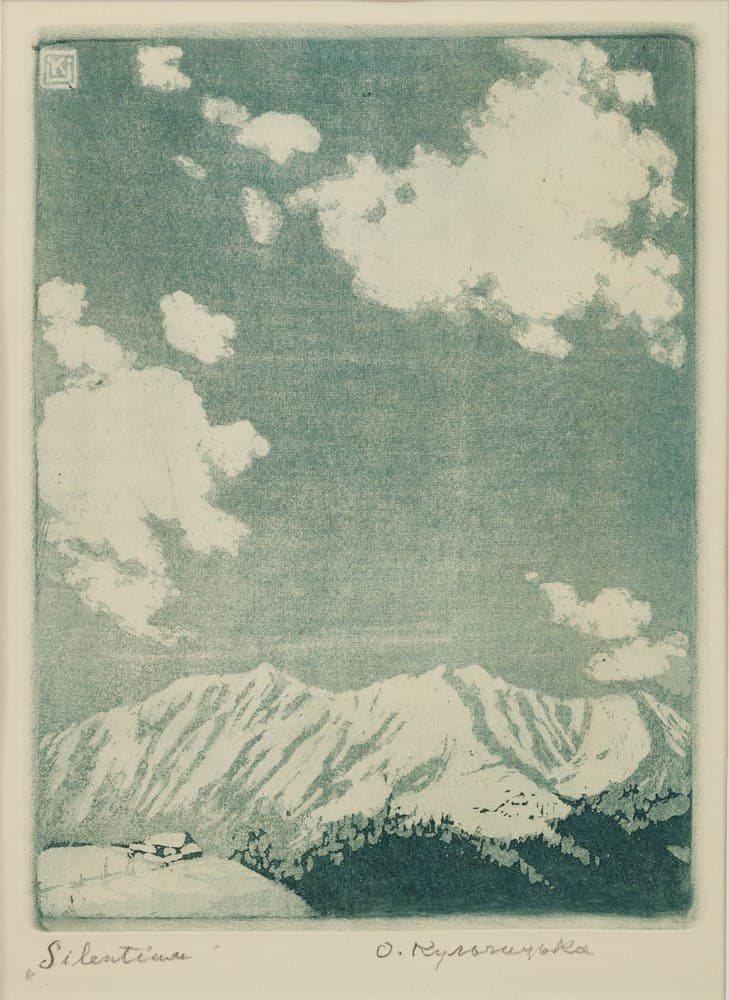
About the Artist
Olena Kulchytska
1887–1967
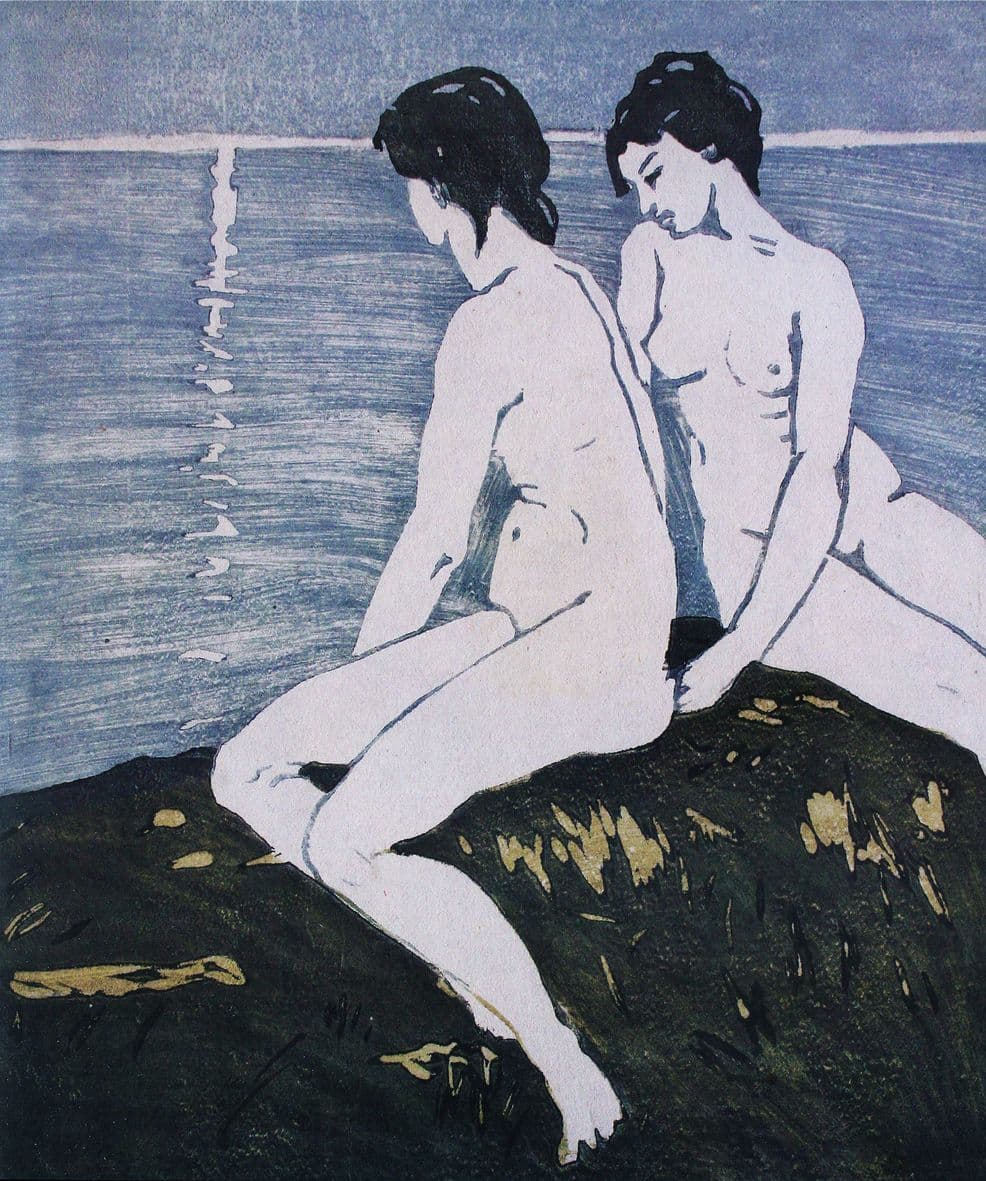
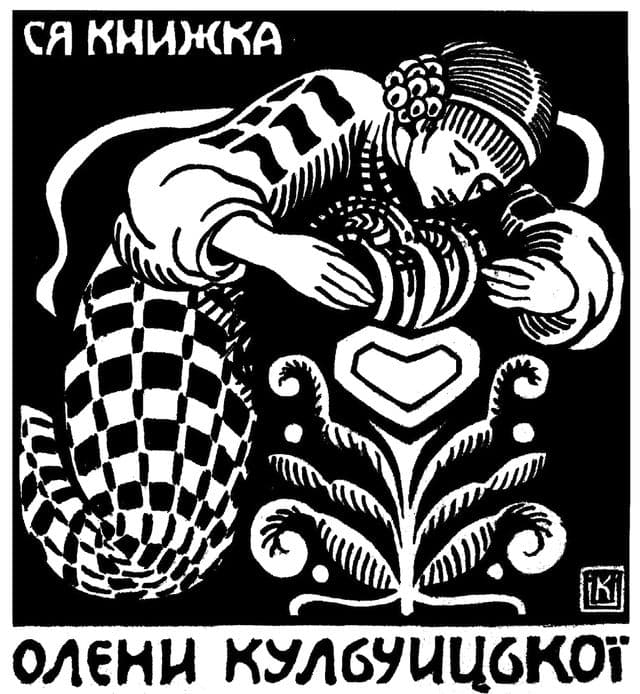
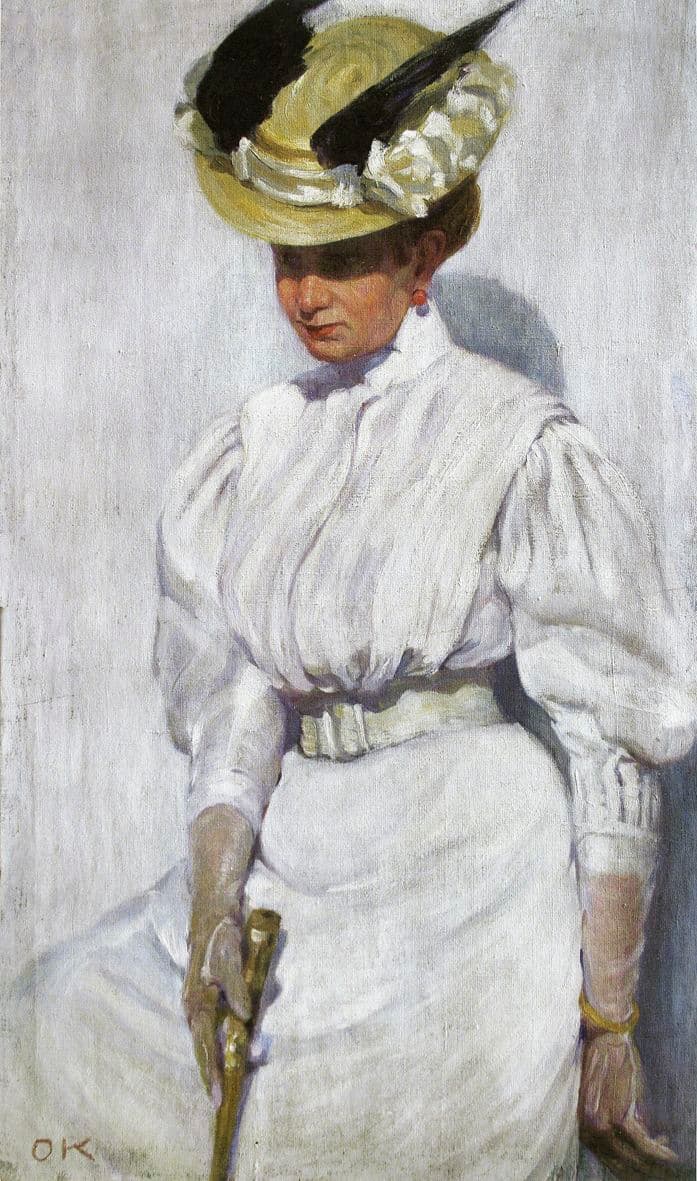
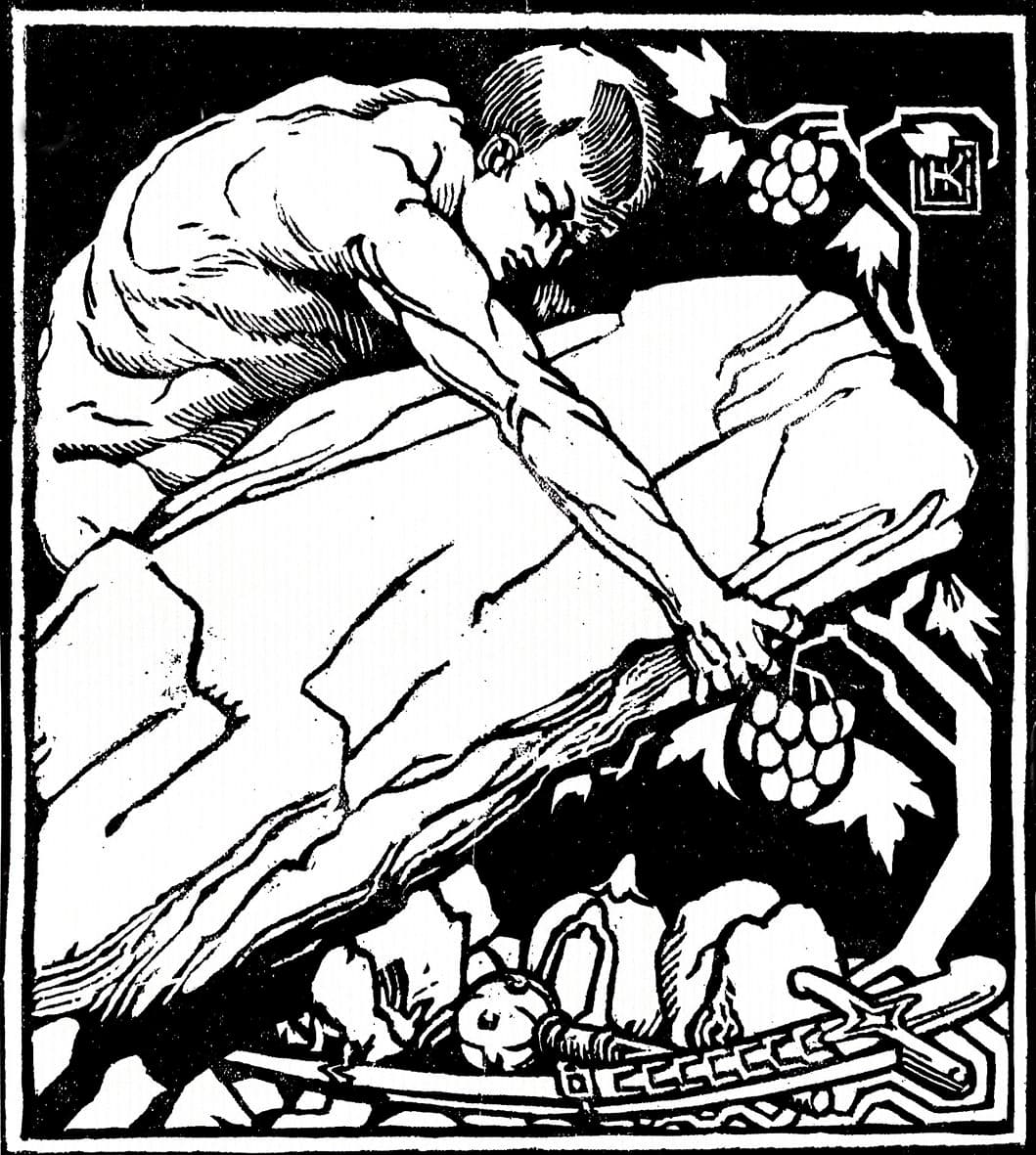
A Ukrainian artist working in various fields[3] of graphic art, painting, and carpet weaving, as well as an educator. People’s Artist of the Ukrainian SSR (1956). Member of the Supreme Council of the Ukrainian SSR during its 3rd and 4th convocations. Author of over 4,000 works of art that have become part of the golden fund of Ukrainian book illustration (“The Tale of Igor’s Campaign,” “Shadows of Forgotten Ancestors,” “Lys Mykyta,” and the three-volume work by ethnographer Stefanyk). A pioneer of children’s book illustration in Ukraine.
View artist profile →Movement
Lithography
Lithography is a planographic printmaking process based on the incompatibility of grease and water, where images are drawn with greasy materials on limestone or metal plates.
Invented in 1796, it allows artists to create varied tones and textures, with ink adhering only to the oily, drawn areas. It is widely used in fine art and commercial printing.
Key Aspects of Lithography Process
Basics: The technique relies on the repulsion of oil-based ink by a thin layer of water applied to the non-image areas of the stone or metal plate.
Materials: Traditionally, Bavarian limestone is used, though artists may use aluminum plates. Images are created using greasy crayons, chalks, or a liquid ink called tusche.
Printing Mechanism: The stone is etched with a mixture of gum arabic and nitric acid to fix the image. An oil-based ink is applied with a roller, and the print is created using a specialized press.
Types:
Fine Art Lithography: A manual process often involving delicate drawing, scraping, and hand-cranking a press.
Offset Lithography: A commercial technique where the inked image is transferred from the plate to a rubber cylinder before being transferred to paper, allowing for high-volume printing.
Photolithography: A modern method, crucial in semiconductor fabrication (as shown on ASML's technology page), which uses light to project patterns onto photosensitive wafers.
Explore movement →