About the Artist
Marfa Tymchenko
1922–2009
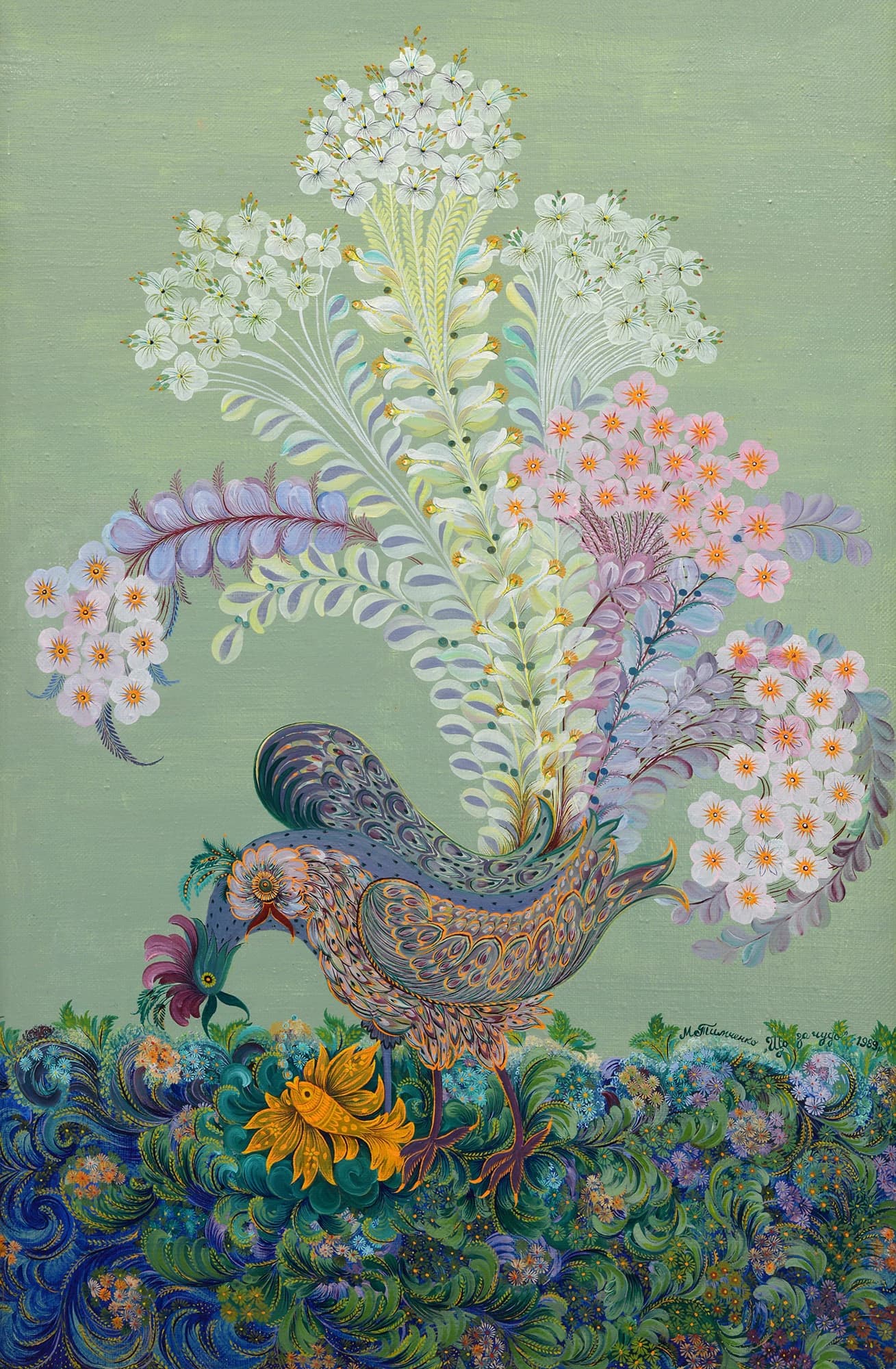
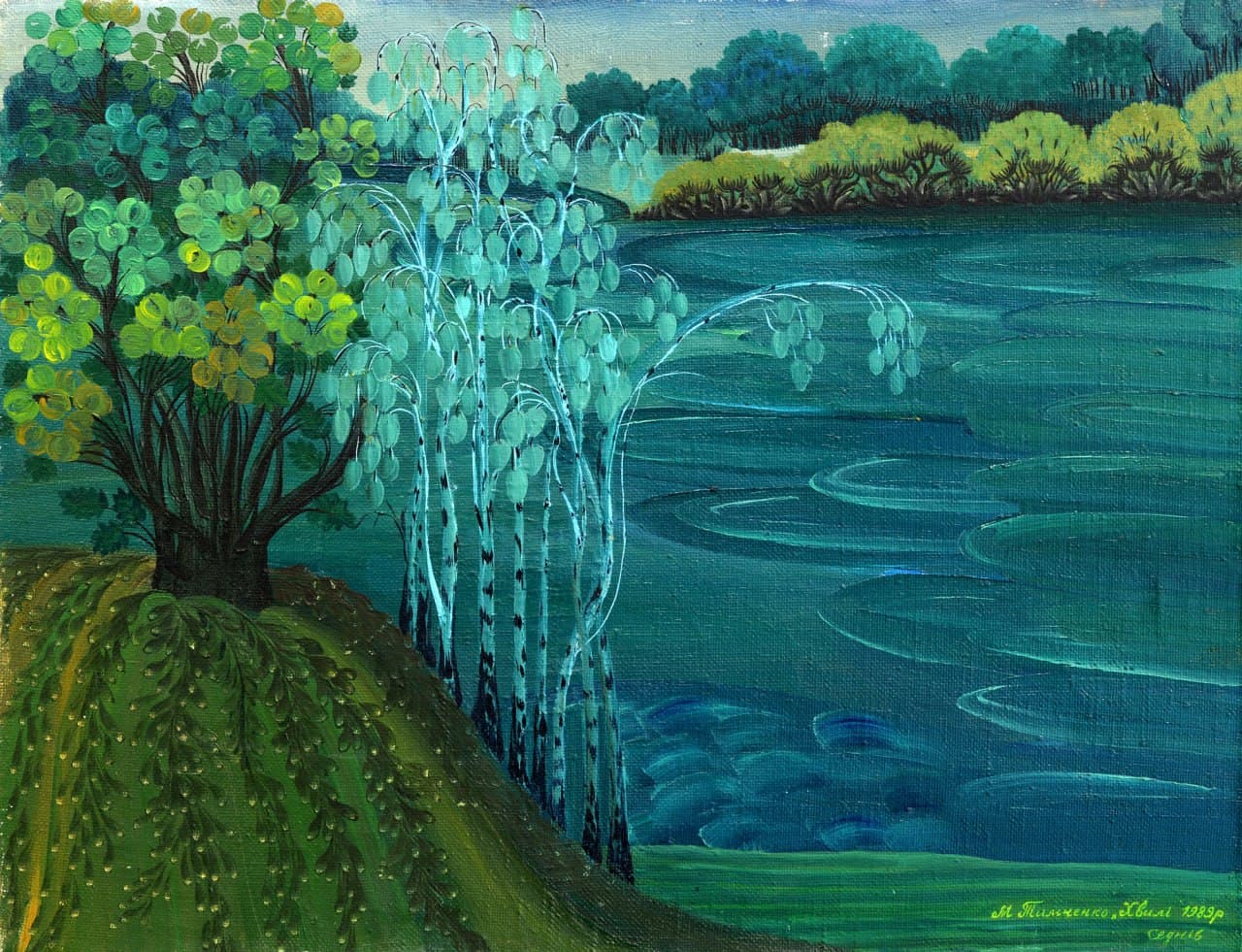
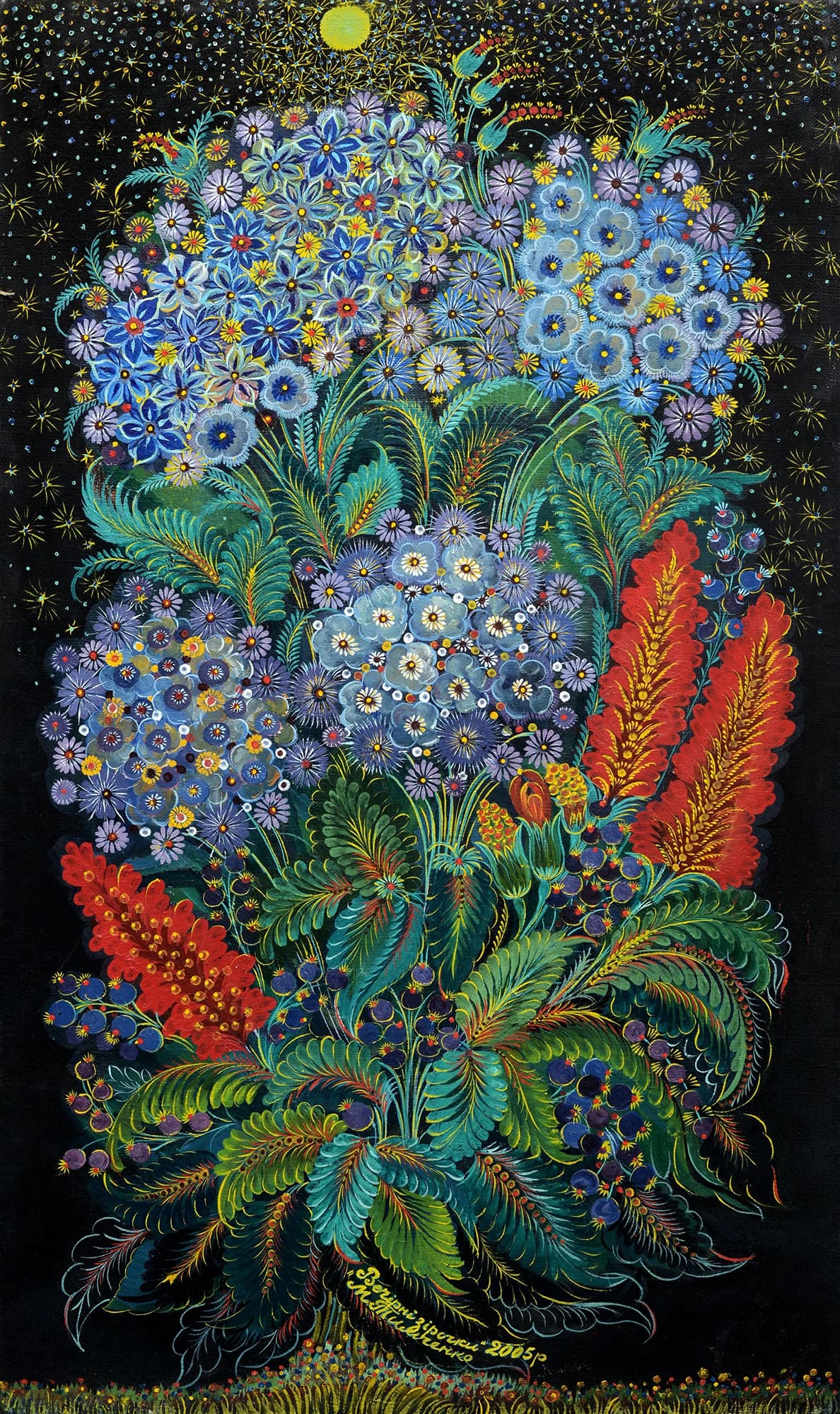
Marfa Tymchenko (1922–2009) was a Ukrainian artist. She was born in the village of Petrykivka, Dnipropetrovsk Oblast. She graduated from the two-year school of Petrykivka painting (1938). She studied at the Kyiv Art School of Masters of Folk Decorative Art (1938–1941). She worked at the Korosten Porcelain Factory (1940–1941); as a monumental artist in the folk art department of the Institute of Art Industry at the Academy of Architecture (1944–1947); as a textile artist at the Union of Artists of Ukraine (UAU) and in the Khudoprom artel (1947–1954). Member of the UAU (since 1950). In 1954, she was invited to the Kyiv Experimental Ceramics and Porcelain Factory as an artist, where she worked for 33 years. An active participant in exhibitions within the USSR and abroad (since 1947). Recipient of numerous orders, medals, and certificates.
View artist profile →Movements
Petrykivka Painting
Petrykivka painting is a traditional Ukrainian decorative folk art originating from the 18th-century village of Petrykivka, characterized by vibrant floral patterns, intricate brushwork, and symbolic imagery. Inscribed as UNESCO Intangible Cultural Heritage in 2013, this style historically adorned home walls and household items, representing beauty, nature, and spiritual protection.
Key Aspects of Petrykivka Painting:
Origin & Significance: Originated in Dnipropetrovsk Oblast; it features fantastic flowers, birds (like the firebird), and natural elements, often symbolizing light and harmony.
Technique: Traditionally, paintings used vibrant colors on a white background, often utilizing specialized, soft brushes (historically cat fur) to create detailed strokes, such as "onion flowers" or "berries".
Evolution: While historically applied to whitewashed house walls and ovens, modern Petrykivka is found on paper, wood, porcelain, and fabric, including black, green, or red backgrounds.
Symbolism: Common motifs include roosters (fire/awakening), viburnum (feminine beauty), and oak (masculinity), with the art intended to protect against evil.
Explore movement →