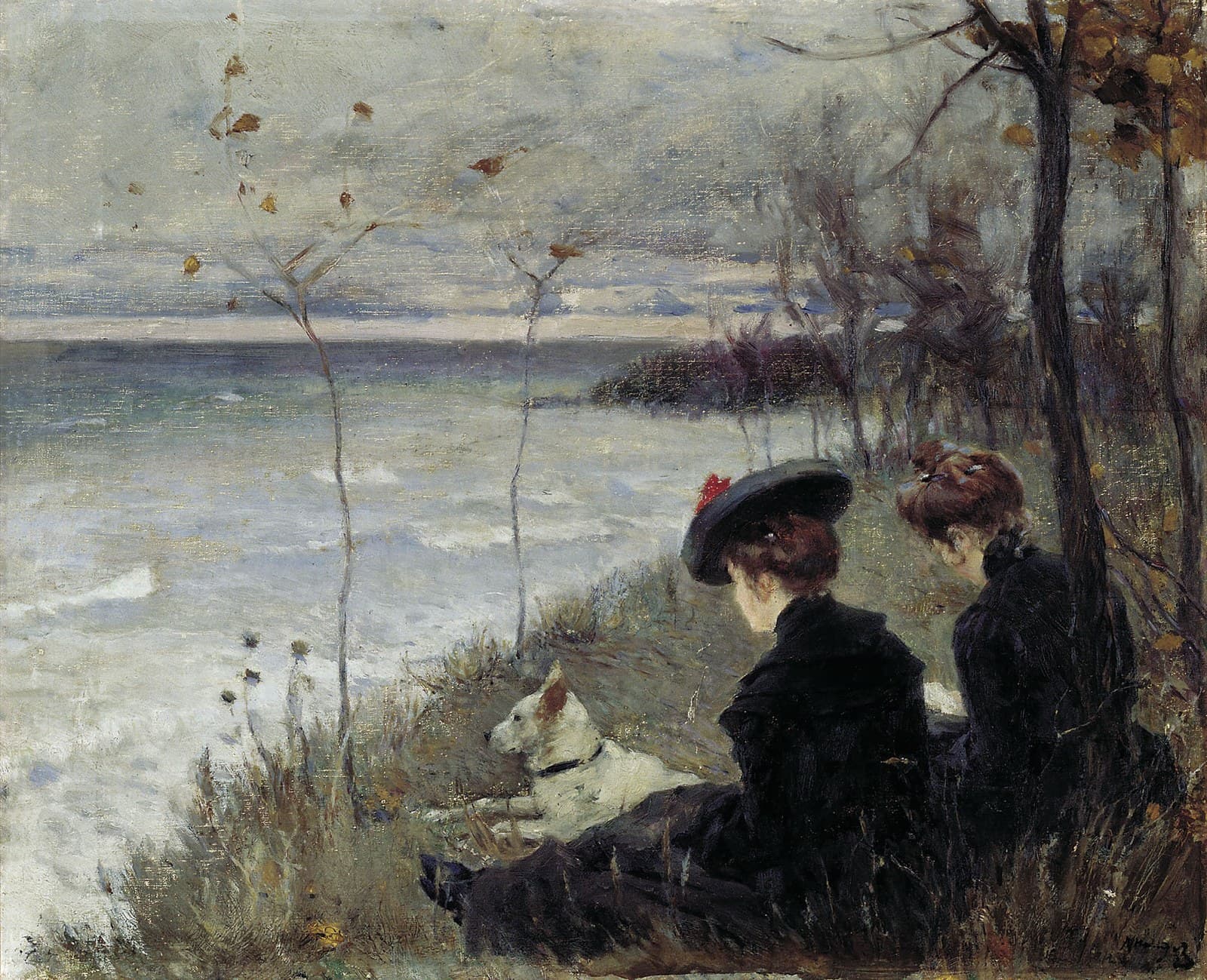
Autumn
Осінь
An early atmospheric landscape exemplifying Nilus's lyrical, muted Impressionist treatment of the Ukrainian autumn.
Related Works
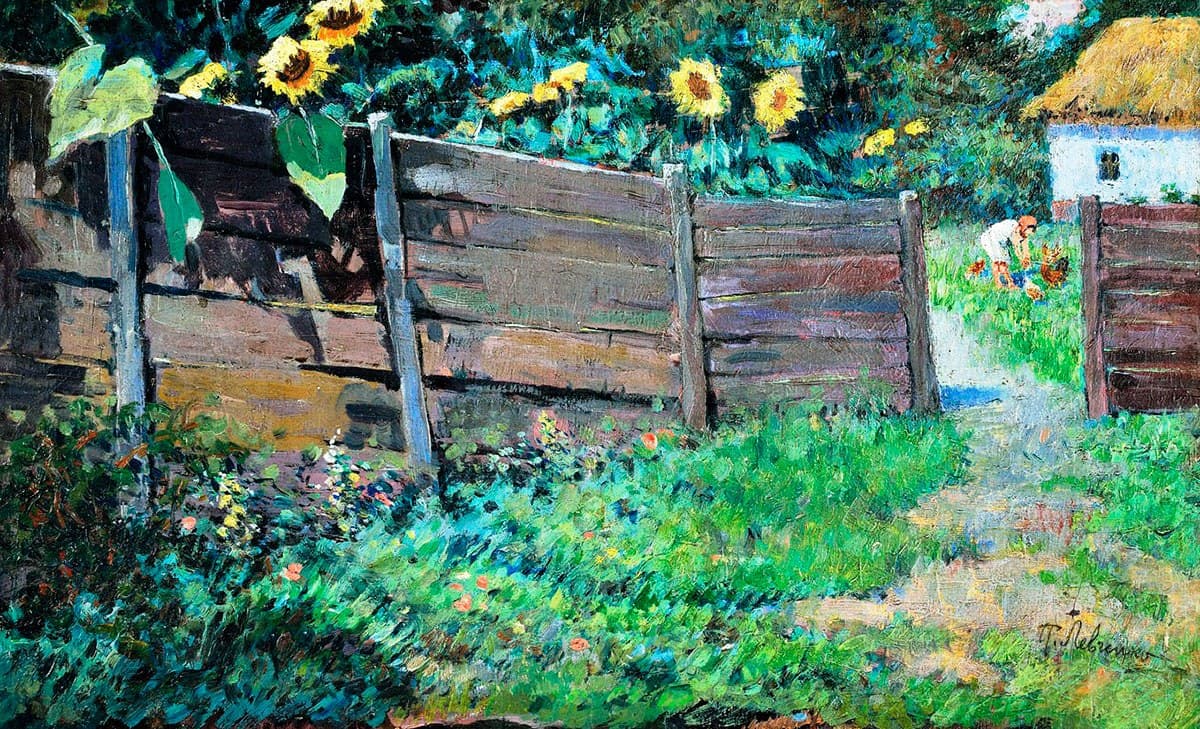
Summer in Ukraine (Summer in Little Russia)
Petro Levchenko
Requested priority title «Літо в Україні», via its historical variant «Лето в Малороссии».
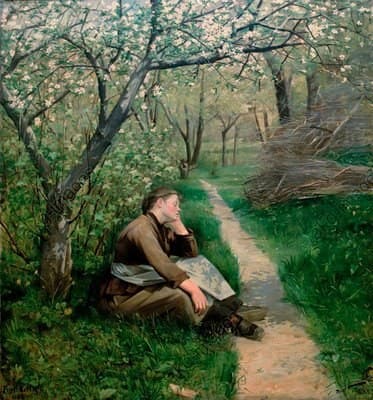
Spring
Mariia Bashkirtseva
A large decorative panel, begun from studies made in an old orchard, showing a young woman leaning back against a tree with her eyes closed and a faint smile, wrapped in blossoming apple and peach branches. Bashkirtseva described the idea in her diary as a figure dissolved into a tender green landscape, and painted it in the same muted browns and greens Bastien-Lepage used for his plein-air peasants.
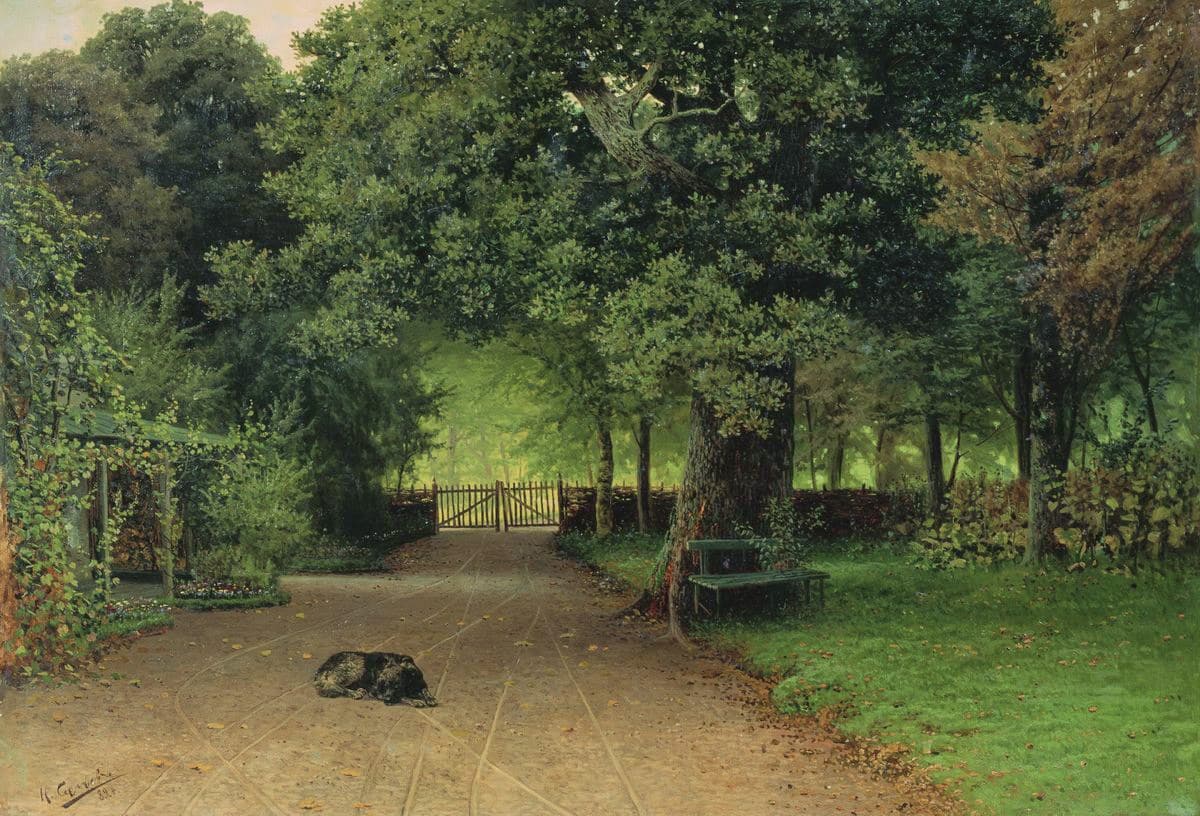
The Garden
Mykola Serheiev
An overgrown village garden painted in the year Serheiev received both the Order of St Stanislaus and an honourable mention in Paris. It is one of the clearest statements of his preferred subject: an enclosed, sun-filled garden with no anecdote in it.
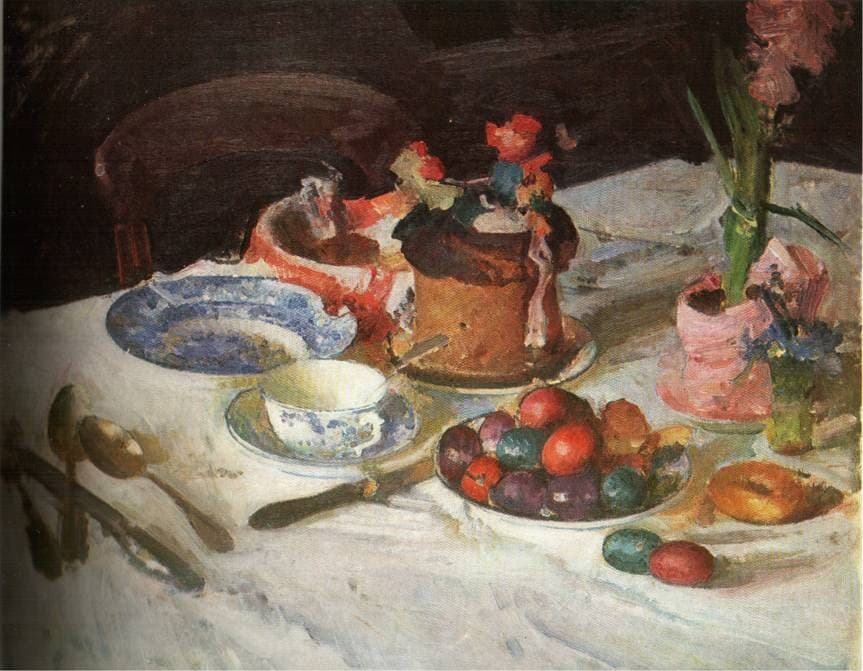
A Holiday Table
Petro Levchenko
One of the quiet interiors that form the second strand of Levchenko's output, showing a laid table in a domestic room. The picture treats an empty, waiting interior with the same atmospheric attention he gave to open landscape.